The sky has no limit; similarly, technology too!
Slowly but surely, technology is developing and achieving new heights that cannot even be described in words. Today, we are here to talk about Web 3.0 and its core. Throughout this guide, you'll discover some fantastic information regarding the principle of decentralization, its privacy factors, real-life examples, and much more!
So, without delay, let's learn something new and enhance your online experience.
What is Web 3.0?
Before you learn about Web 3.0, you should know two crucial things. First, Web 1.0, also known as the Internet. Second, Web 2.0, the user-generated web, points to the arrival of social media. These two leading factors established the internet's basic functionality and evolved into a more interactive and user-centric platform.
However, now everywhere we see, people are talking about Web 3.0. In the work-in-progress, it is still the most advanced technology that aims to boost users' experiences. Let's understand it in simple words.
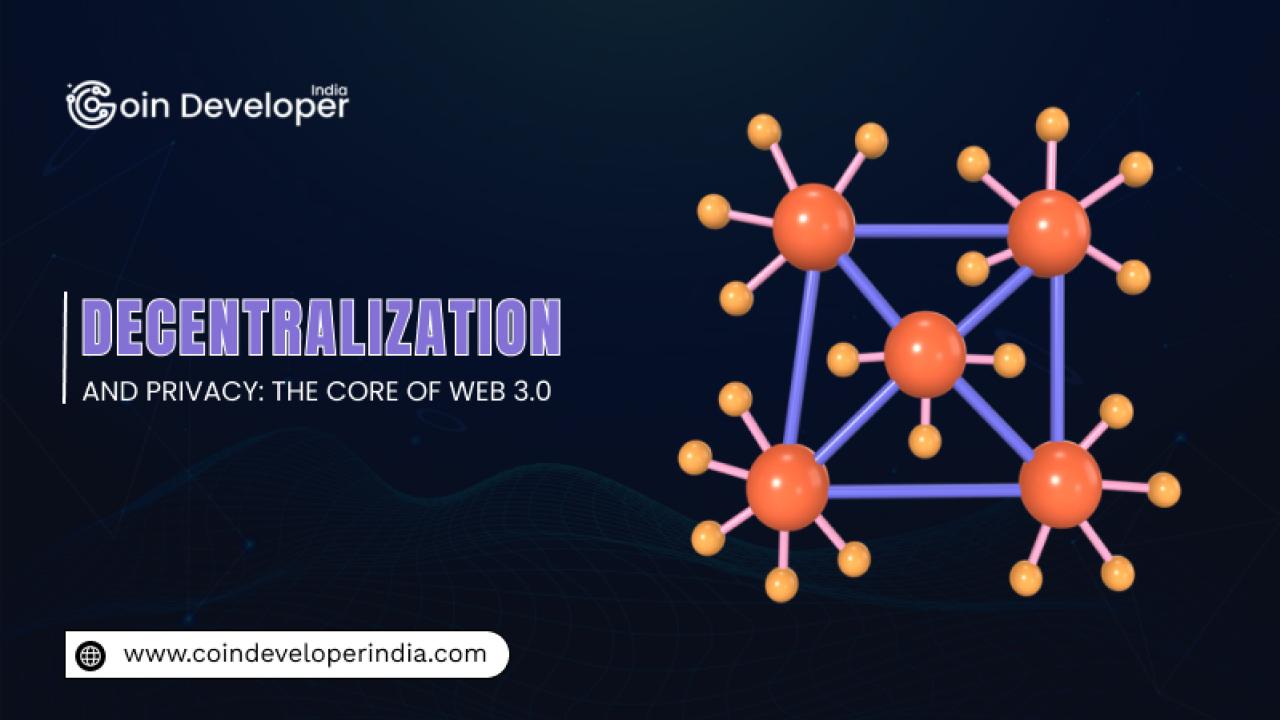
Web 3.0, also known as Web3, is the core concept for the next internet generation. Built on blockchain technology, this advanced internet is aiming for decentralisation. This technology typically transfers control away from large corporations to the user and gives them complete ownership over their data and online interaction.
The Principle of Decentralization
Once you've acknowledged in-depth information related to Web 3.0, now it's time to learn about its principles. This includes:
1. Subsidiarity: This principle suggests that the decision should be made at the lowest possible level, permitting locals to handle issues that can only be addressed at their level.
2. Empowerment: It allows individuals or the lower-level units with the authority and responsibility for decisions to stimulate a sense of ownership and accountability.
3. Flexibility: Decentralized systems are flexible and approachable according to local needs, and they can also be personalized according to specific circumstances rather than following a standard approach.
4. Coordination: With the help of coordination, individuals can easily align with their central goals, preventing conflicts between different units.
5. Efficiency: By permitting quicker decision-making and reducing the administrative burden, decentralization can enhance the efficiency associated with a centralized approach.
6. Accountability: Decentralization distinguishes the lines of responsibility and accountability that are vital in making decisions based on their actions and outcomes.
7. Risk Distribution: By spreading decision-making power among different units, decentralization helps prevent the concentration of vulnerability in an integrated system.
Privacy in Web 3.0
You might be wondering if Web 3.0 ensures user privacy. So, the answer is Web 3.0 typically aims to enhance user privacy compared to Web 2, but it's not a guarantee. While Web 3.0 offers tools like decentralized identity, zero-knowledge proofs, and others, the privacy concerns are addressed effectively.
However, here are some great ways in which Web 3.0 can magnify user privacy:
1. Data Ownership:
As we have discussed, Web 3.0 utilises blockchain technology, which helps shift the control of user data from centralised authorities to the user. However, all these are done using decentralized applications and smart contracts that allow users to manage their personal information with excellent transparency and control.
2. Incentives in Web 3.0 Ecosystem:
In Web 3.0, incentives play a crucial role in driving participation, encouraging community, and delivering the sustainability of the projects. These incentives range from financial rewards like tokens and staking rewards to their social and reputational benefits. Thus, these are specifically designed to align with the interests.
3. Data Sharing Never Ends:
Unlike Web 2.0, Web 3.0 aims to give users more control over their personal data. It lets users choose what, how, and with whom the information can be shared. This advanced technology also leverages high-tech technologies like blockchain and decentralized identity, which empower users with data ownership and control.
4. Smart Contracts and Data Ownership
In Web 3.0, both of these are systematically linked. Due to which it offers a pattern shift from unified control to user empowerment. In this model smart contract, self-executing agreements on blockchain, while data ownership facilitates decentralized technologies, grant complete control over digital assets and information.
Real-Life Examples of Web 3.0
After reading this guide, you might be curious about real-life examples of Web 3.0. Indeed, there are not just one but numerous examples of Web 3.0; however, some of the great ones include
1. Brave Browser:
If we mention Web 3.0, then we can't skip Brave Browser. Unlike traditional web browsers like Google Chrome and Mozilla Firefox, which continuously store used data and share it with advertising companies, Brave and other web-based browsers aim to solve this issue and ensure users block all ads and save their privacy.
2. Ethlance:
Another great example of Web 3.0 is Ethlance, which is a brilliant job-seeking platform. The significant difference between all available platforms in this field and Ethance is that it utilizes blockchain to find the best matches with proper job opportunities.
3. DTube:
It is an amazing decentralized video platform, offering its users an alternative to YouTube. This application allows content creators to earn cryptocurrency as rewards. Despite YouTube's functionality, this platform did not control its users regarding what they are likely to see on their feeds.
Conclusion
In this guide, we have discussed all the essential information related to the core of Web 3.0. With a decentralized and distributed architecture, this next-level technology aims to give users greater data ownership, control, and privacy.
Lastly, if you're looking for an ideal Web 3.0 development company, where you will get top-notch Web 3.0 solutions using blockchain, smart contracts, and dApps, then connecting with Coin Developer India is the perfect option.
In this niche, they stand out as the top company, delivering tailored Web 3.0 solutions and ensuring every client's requirement is meticulously met.