
Introduction
As businesses and consumers increasingly demand seamless, intelligent, and immersive digital experiences, the role of a Mobile App Development Company in Delhi becomes ever more pivotal. Positioned at a crossroads of technological innovation and cultural diversity, companies from Delhi and beyond are reshaping how apps are conceived, built, and embraced by users globally. Looking ahead to 2025 and beyond, what lies in store for mobile app development companies? This in-depth exploration will cover emerging technologies, evolving business models, best practices, and strategic imperatives shaping the future of this dynamic industry.
1. Technological Disruptors Reshaping the Landscape
1.1 Artificial Intelligence (AI) and Machine Learning (ML)
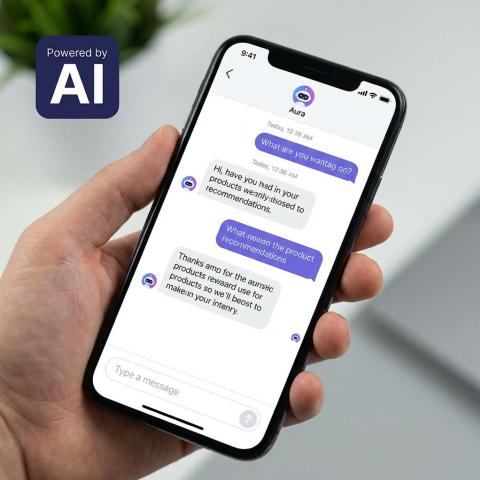
AI-driven functionalities—like personalization engines, predictive analytics, and intelligent assistants—are now integral to modern mobile apps. By 2025, expect these to evolve even further with on-device ML, offering faster, offline capabilities while preserving user privacy. For example:
-
On-device personalization: Apps will use device-resident models to anticipate user needs contextually without sending sensitive data to servers.
-
Voice and image understanding: Smarter voice assistants, real-time image recognition, and AR overlays will enhance in-app experiences for e-commerce, education, healthcare, and more.
1.2 Augmented Reality (AR) & Mixed Reality (MR)
While AR apps already exist—like virtual try-ons for fashion or home décor—mixed reality, blending physical and digital worlds, is gaining momentum. By 2025:
-
Wearables like AR glasses may be common, enabling hands‑free, context‑aware app interactions.
-
Routine scenarios—tourism guides, remote assistance, or navigation—could become MR-powered, enriching real‑world experiences with layered digital information.
1.3 5G and Beyond: Ultra‑Low Latency & High Bandwidth
The widespread rollout of 5G networks, offering high bandwidth and ultra-low latency, paves the way for:
-
Real-time multiplayer AR/VR gaming and collaborative apps.
-
Cloud-streaming apps where heavy processing happens server-side (e.g., for gaming, editing, or CAD) but feels instantaneous on mobile devices.
-
IoT integration, with connected devices syncing rapidly with apps.
Mobile app development companies must design responsive, latency-sensitive, and bandwidth-efficient apps to harness 5G fully.
1.4 Progressive Web Apps (PWAs) and Web‑Native Approaches
While native apps have dominated, PWAs—web apps that function like mobile apps—are gaining traction, especially in emerging markets. Advantages include:
-
Installation-free access.
-
Reduced development cost via code reuse.
-
Offline functionality and app-like UX through service workers.
Agile firms may adopt hybrid models that blend native and PWA benefits using cross-platform SDKs or embedding web‑views smartly.
1.5 Edge Computing & IoT Integration
The proliferation of smart devices—from wearables to home IoT—means mobile apps increasingly serve as control hubs. Coupled with edge computing, apps can:
-
Process sensor data locally for real-time decisions (e.g., health alerts, automated home controls).
-
Reduce cloud dependency, lowering latency and improving privacy.
Development firms need edge-friendly architectures and modular, robust APIs to support such scenarios.
2. Emerging Business Models & Revenue Streams
2.1 Subscription & Freemium Dominance
The “buy‑once” model is giving way to recurring revenue:
-
Subscription plans unlock premium features, updates, cloud sync, and ad-free experiences.
-
Freemium tiers let users explore core functionalities, with upsells for advanced tools, AI enhancements, or content.
Mobile app development companies are helping clients craft tiered monetization strategies while maintaining user retention.
2.2 In‑App Augmented Reality Commerce
AR-enabled shopping is no longer niche. From virtual furniture placement to fashion try-ons, AR commerce is growing:
-
Virtual trials encourage purchase confidence.
-
AR advertising overlays digital brand messaging in real-world contexts.
Development teams must integrate secure, high-performance AR modules and analytics to measure commerce effectiveness.
2.3 Super‑Apps & Platform Ecosystems
Inspired by giants like WeChat or Grab, "super-apps" bundle multiple services—messaging, e-commerce, payments, mobility—into one platform. This trend invites:
-
API‑driven modularity: Adding services as plugins without bloating core performance.
-
Third‑party ecosystems: Enabling partner apps and services to integrate, driving network effects.
Firms that build flexible, scalable backend systems stand to grow these super-app ecosystems.
2.4 Embedded Intelligence & Voice Commerce
Voice‑powered transactions are emerging:
-
Voice commerce (“v‑commerce”) allows ordering products, booking tickets, or performing searches via voice.
-
Contextual assistants—think apps that anticipate daily needs like restaurant reservations or route suggestions based on schedule.
Developers must integrate secure voice recognition modules, dynamic intent handling, and seamless UX flows for voice-first interactions.
3. Best Practices and Operational Evolution
3.1 Agile, Cross‑Functional Workflows
The traditional waterfall approach is becoming obsolete for fast‑moving markets. Agile methods, combined with cross‑functional teams—developers, UX designers, data scientists, and ops—are key to delivering iterative value.
-
Rapid prototypes using low‑code and no‑code tools validate concepts faster.
-
A/B testing & experimentation allow UX and feature tuning based on real user behavior.
3.2 DevOps & CI/CD Pipelines
Continuous Integration and Continuous Deployment (CI/CD) frameworks reduce time to market, bolster reliability, and facilitate automatic rollback:
-
Code reviews and automated testing ensure quality before deployment.
-
Feature flags help release or rollback features seamlessly, providing safer rollouts.
3.3 Design Systems & Accessibility‑First Approach
Consistent UX across platforms and accessibility for all users are not optional:
-
Design systems enforce UI patterns and streamline onboarding of new developers.
-
Accessibility standards (contrast ratios, screen readers, voice control, localization) ensure inclusivity.
3.4 Data Privacy, Compliance & Ethical AI
With regulations like GDPR, India’s proposed Digital Personal Data Protection Bill, and global standards evolving fast:
-
Apps must minimize user data collection, anonymize data, and allow opt‑outs easily.
-
Ethical AI practices—no black‑box models, no discriminatory decisions, transparent logic—are becoming non‑negotiable.
3.5 Sustainability & Green Coding
As users become eco-conscious, app developers need to consider energy-efficient code and resource usage:
-
Reducing background activity, optimizing graphics, and minimizing data transfers conserve battery and bandwidth.
-
Mobile app development companies may adopt sustainable practices, like carbon‑aware hosting or energy‑efficient SDK choices.
4. Strategic Imperatives for Mobile App Development Firms
4.1 Investing in R&D and Future Technologies
To stay competitive:
-
Establish innovation labs or skunkworks teams to prototype AR, AI, voice, or edge integrations.
-
Conduct pilot programs or partner with universities/accelerators to test emerging tech affordably.
4.2 Upskilling Talent & Hiring for Tomorrow
The workforce skilled in 2025 looks different:
-
Recruit or train on‑device ML engineers, AR/VR specialists, cloud-native developers, and UX designers fluent in voice and accessibility-first design.
-
Offer internal learning programs, workshops, and hackathons aligned with future trends.
4.3 Building Platform‑Agnostic Capabilities
With fragmentation among iOS, Android, PWAs, and emerging XR platforms:
-
Adopt frameworks and tooling that enable code reuse across platforms—like Flutter, React Native, or future cross-reality SDKs.
-
Maintain strong native performance via plugin modules where needed.
4.4 Partnering with Ecosystem Players
Collaborating with hardware manufacturers, telcos (for 5G/IoT use cases), or educational institutions can accelerate innovation:
-
Co-develop optimized experiences for specific hardware sets or network features.
-
Tap into early-adopter user bases.
4.5 Client Education & Thought Leadership
As technologies evolve rapidly, companies must position themselves as trusted advisors:
-
Publish whitepapers, host webinars, or conduct workshops on AI ethics, AR commerce, or accessibility.
-
Build domain expertise in sectors like telehealth, smart manufacturing, fintech, or edtech—where mobile apps play transformative roles.
5. Use‑Case Spotlights: What 2025 and Beyond Looks Like
5.1 Healthcare & Telemedicine Apps
By 2025:
-
Apps may leverage on‑device AI to monitor vital signs via camera or sensor inputs, alerting users or providers instantly.
-
Remote AR consultations: doctors guide patients or caregivers using live video with AR overlays (e.g., pointing to a rash, guiding physical therapy).
-
Integrations with home IoT devices ensure holistic health tracking.
5.2 E‑Learning & Edutainment
-
Mixed‑reality classrooms: Students use AR glasses to interact with 3D models during virtual labs.
-
AI‑tutors: Adaptive assistants analyze student progression and tailor lessons in real time.
-
Gamified learning: Real‑world scavenger hunts or interactive storytelling via PWAs keep engagement high.
5.3 Smart Retail & AR Shopping
-
Shoppers try products via AR in their homes—furniture, décor, fashion.
-
In-store apps offer layered AR info about products—reviews, customizations, live prices.
-
Voice assistants help shoppers reorder items, check availability, or bundle deals.
5.4 Smart Cities & Mobility
-
Mobility apps integrate AR for navigation in dense cityscapes, showing directions, bus info, or health advisories layered over real views.
-
On‑edge processing helps with immediate alerts—like congestion, air quality, or emergency evacuation paths.
6. Challenges Ahead & How Companies Can Address Them
6.1 Fragmented Device Ecosystem
With a range of phones, tablets, wearables, and wearable AR glasses, maintaining cross‑device consistency is harder.
Approach:
-
Adopt responsive design, modular UI components.
-
Run device farms and cloud-based cross-device testing.
-
Use progressive enhancement: core experience works everywhere; advanced features activate only when supported.
6.2 Balancing Innovation with Usability
Cutting-edge features can overwhelm users or drain batteries/resources.
Approach:
-
Introduce features progressively with user control.
-
Run UX studies to validate benefit vs. complexity.
-
Offer “Lite” modes for lower‑end devices or limited‑connectivity contexts.
6.3 Regulatory Uncertainty
Global regulatory landscapes—privacy laws, AI auditing, data localization mandates—are in flux.
Approach:
-
Build flexible compliance frameworks, adapters per region.
-
Stay plugged into policy forums, invest in legal/ethical advisory.
-
Prioritize privacy by design—minimize data collection, enable transparency.
6.4 Talent Shortages & Rapid Skill Obsolescence
Demand for ML, AR, and edge‑computing talent exceeds supply.
Approach:
-
Launch internal training, apprenticeships, or secondment programs.
-
Foster partnerships with universities or bootcamps.
-
Create compelling remote-work culture to attract global talent.
7. Looking Toward 2030 and Beyond: Visionary Imaginations
As we look beyond 2025, here are glimpses of what might become mainstream by 2030:
-
Neural interfaces: Apps may be controlled by brain-computer links for accessibility, gaming, or productivity.
-
Holographic projection: Instead of screens, apps present floating UX around users, interacting via gesture.
-
Ambient computing: Mobile devices act as part of a seamless ecosystem—your phone listens to context, predicts needs, and directs tasks to the most appropriate device (e.g., smartwatch, home console, car display).
-
Digital twins: Apps create real-time virtual replicas of systems—from machinery to human health—offering predictive maintenance or wellness monitoring.
Mobile app development companies brave enough to explore these frontiers will lead the next revolution — but even the pioneers of 2025 must anchor their innovations in user trust, usability, and measurable value.
8. Conclusion: Strategic Blueprint for 2025+
Here’s a consolidated strategic checklist for mobile app development companies aiming to thrive post-2025:
-
Embrace AI/ML, AR/MR, voice, and edge capabilities in app offerings.
-
Adopt agile, DevOps, and CI/CD workflows for fast iteration and reliability.
-
Prioritize UX, accessibility, sustainability, and ethical design in every project.
-
Invest in talent and build modular, cross-platform toolkits.
-
Cultivate partnerships and showcase thought leadership in emerging domains.
-
Ensure agility toward regulation and leverage privacy-by-design principles.
-
Balance innovation with practicality, making sure every new feature solves real user problems.
-
Anticipate tomorrow’s possibilities (neural UIs, digital twins) while delivering value today.
Together, these steps chart a course where innovation meets responsibility—and where mobile apps become ever more integral to human life.