The Myth of Endless Inspiration
For centuries, creativity has been romanticised as a mysterious force that strikes when we least expect it. Artists wait for the muse, writers stare at blank pages, and innovators hope for that elusive “aha” moment. Yet, anyone who has ever tried to create consistently knows inspiration is not endless. In fact, creative droughts are some of the most frustrating experiences for students, professionals, and even seasoned creators.
The problem is not that people lack imagination but that modern life drains the mental space needed for ideas to bloom. Between constant notifications, deadlines, and the pressure to perform, creativity is often pushed aside for efficiency. Original thought requires silence, curiosity, and time, all of which are in short supply.
Why Creative Blocks Feel So Heavy
Creative droughts are not simply moments of laziness. They carry an emotional weight that can be paralyzing. A student facing an essay deadline feels the panic of an empty page. A professional designing a presentation feels the pressure of an audience that expects originality. An entrepreneur building a brand fears that without a breakthrough idea, their vision will fade into the noise of competition.
This pressure often leads to self-doubt. The more someone tries to force inspiration, the more it resists. Creative blocks can make intelligent, capable people question their own abilities. The cycle is exhausting, and it often leads to procrastination disguised as busyness.
Machines as Creative Partners, Not Replacements
The rise of artificial intelligence has sparked debates about whether machines can replace human creativity. But perhaps the better question is not whether AI can be creative on its own, but whether it can help humans think more creatively. When used thoughtfully, AI tools can act as catalysts, shaking us out of repetitive patterns and opening doors to new perspectives.
For example, drafting emails is a task that drains mental energy without offering much creative satisfaction. An AI email writer can take on that burden, freeing the mind for bigger, more imaginative challenges. By automating routine communication, it creates space for creative thought to flourish.
The Power of Seeing Things Differently
At the heart of creativity is perspective. Original ideas often come from looking at familiar things in new ways. A Paraphrasing Tool can serve as a surprisingly useful companion here. By rephrasing a sentence or concept, it offers alternative angles that might not have crossed your mind. While the tool itself is not inventing new ideas, it provides a spark that can push your thinking in unexpected directions. Sometimes the smallest shift in wording is all it takes to unlock a breakthrough.
Clarity as a Creative Superpower
Cluttered writing and confusing communication do more than waste time. They also smother creativity. When a mind is bogged down trying to decode unclear text, it has little energy left to generate new ideas. A readability checker helps eliminate that problem by simplifying complex sentences and removing barriers to understanding. In doing so, it creates space for creativity to flow. Clear communication is not just efficient, it is liberating.
Students and the Weight of Originality
For students, the pressure to be creative is particularly intense. Every essay, project, or presentation is not only a test of knowledge but also an evaluation of originality. Yet, schools often overload students with information without teaching them how to transform it into fresh ideas. Platforms like myessaywriter.ai offer support by helping structure thoughts, generate outlines, and refine writing. Rather than replacing the student’s voice, these tools reduce mental clutter so students can focus on critical thinking and creative expression.
Creativity in the Age of Noise
It is ironic that we live in a time of endless information yet struggle with original thought. Part of the problem is that we are constantly reacting instead of reflecting. Social media rewards speed and repetition, not depth. Workplaces value efficiency over exploration. In such an environment, creativity becomes a luxury rather than a habit.
This is where AI, paradoxically, can help us reclaim creativity. By handling routine tasks, simplifying complex writing, and offering fresh perspectives, these tools restore the breathing room we need to think differently. They cannot generate passion, imagination, or human insight, but they can remove obstacles that stand in the way.
The Future of Human-AI Creativity
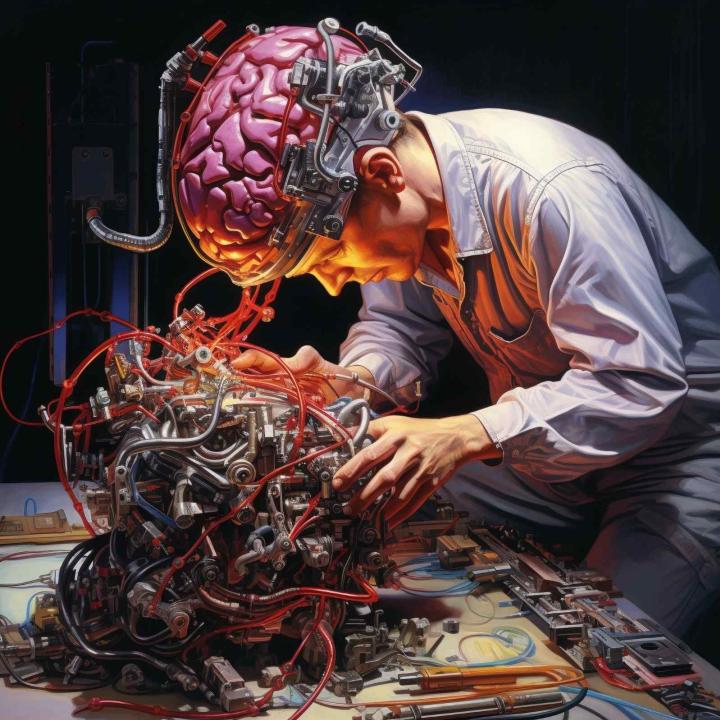
The most exciting possibility is not machines replacing creators but machines partnering with them. Imagine a future where writers use AI to experiment with different voices, designers use it to spark visual inspiration, and educators use it to help students frame arguments more clearly. The goal is not to reduce originality but to expand it, giving people the mental space and confidence to take risks.
Originality will always belong to humans because it is shaped by our experiences, emotions, and values. What AI offers is not originality itself but the tools to access it more consistently. By treating AI as a partner rather than a rival, we can transform the creativity drought into a creativity spring.
Want to read more? Check out these blogs:
AI-Powered Peer Review Assistants: The Next Invisible Hand in Research Publishing
Beyond Plagiarism: How AI Detects Idea Recycling in Research Writing