
The Business Pain: When AI Growth Becomes AI Chaos
AI adoption inside enterprises rarely starts with a master plan. It often begins with small experiments—one team using a chatbot, another testing generative AI for content, and a data team building predictive models. Each initiative delivers quick wins, so adoption spreads fast.
But over time, this organic growth creates chaos. Different tools, unclear data usage, inconsistent approvals, and no centralized oversight. Leadership may not even have full visibility into how many AI systems are running or what data they rely on.
This lack of control introduces serious risks. Sensitive data can be exposed, biased models can influence decisions, and unverified AI outputs can reach customers. What started as innovation becomes a governance challenge.
An effective AI governance framework turns this chaos into structured, scalable AI adoption.
Industry Reality: AI Is Scaling Faster Than Oversight
Across industries, AI investment is accelerating. Enterprises want efficiency, automation, and competitive advantage. However, governance often lags behind deployment.
Regulations are evolving, customers are more privacy-aware, and stakeholders expect transparency. Organizations can no longer afford a “move fast and fix later” approach with AI.
Enterprises that succeed in scaling AI treat governance as a core strategy, not an afterthought. They understand that long-term AI success depends on trust, compliance, and accountability.
What an Effective AI Governance Framework Achieves
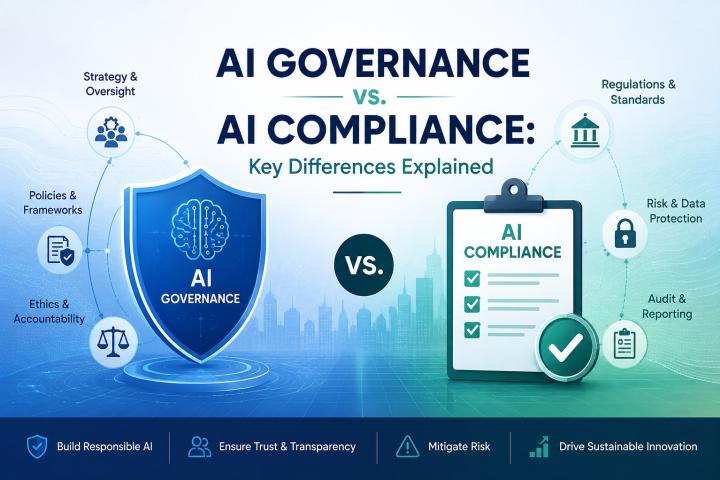
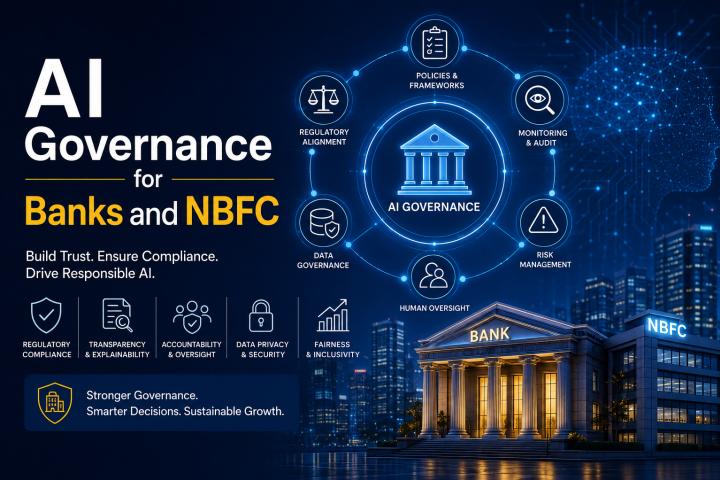
An AI governance framework provides structure for how AI is approved, deployed, and monitored across the organization. It connects business strategy with responsible AI use.
Instead of limiting innovation, governance enables it. Teams gain clarity on approved tools and data usage. Leaders gain visibility into AI initiatives. Risk and compliance teams gain proper documentation and oversight.
The shift is simple but powerful—AI moves from being experimental to being operational and reliable.
Moving From Chaos to Control: Practical Implementation
Implementing AI governance does not require stopping innovation. It requires organizing it.
The first step is visibility. Enterprises need a clear view of where and how AI is being used. Many organizations are surprised by how widespread adoption already is.
Next comes policy design. Clear guidelines around data usage, model validation, and acceptable AI applications reduce uncertainty. Employees know what is allowed and what requires review.
Then comes process integration. Governance works best when it fits into existing workflows rather than sitting outside them. Model approvals, monitoring, and risk checks should be part of the AI lifecycle.
Finally, continuous monitoring ensures models remain accurate, unbiased, and compliant over time. Governance is not a one-time setup—it evolves with technology and regulation.
The Architecture Behind Strong AI Governance
A practical governance structure often includes four connected layers.
Policy Layer
Defines principles for responsible AI use, risk tolerance, and compliance standards.
Process Layer
Covers model approvals, audits, documentation, and monitoring workflows.
Technology Layer
Uses tools for model tracking, bias detection, and performance monitoring.
People Layer
Aligns leadership, legal, compliance, and AI teams around shared accountability.
When these layers work together, governance becomes part of daily AI operations.
Why Many Enterprises Seek Expert Support
Designing governance internally can be complex. It requires expertise in AI, risk management, compliance, and cybersecurity. Many enterprises lack a unified team that covers all these areas.
AI consulting partners help organizations assess maturity, define governance models, and implement oversight systems. They ensure governance aligns with business goals so it supports growth rather than slowing it.
For enterprises scaling AI across departments, expert guidance often shortens the path from chaos to control.
The Business Value of Control
Organizations with strong AI governance gain more than compliance. They build trust with customers, regulators, and partners. They reduce costly risks and avoid reactive fixes. Most importantly, they scale AI with confidence.
Controlled AI adoption leads to sustainable innovation. Teams can experiment within clear boundaries, and leadership can invest knowing risks are managed.
Final Thoughts
AI is becoming a core part of enterprise strategy. As adoption grows, so does the need for structure and oversight. An effective AI governance framework brings order, accountability, and clarity to AI initiatives.
Enterprises that move from chaos to control position themselves for safer scaling, stronger trust, and long-term AI success.