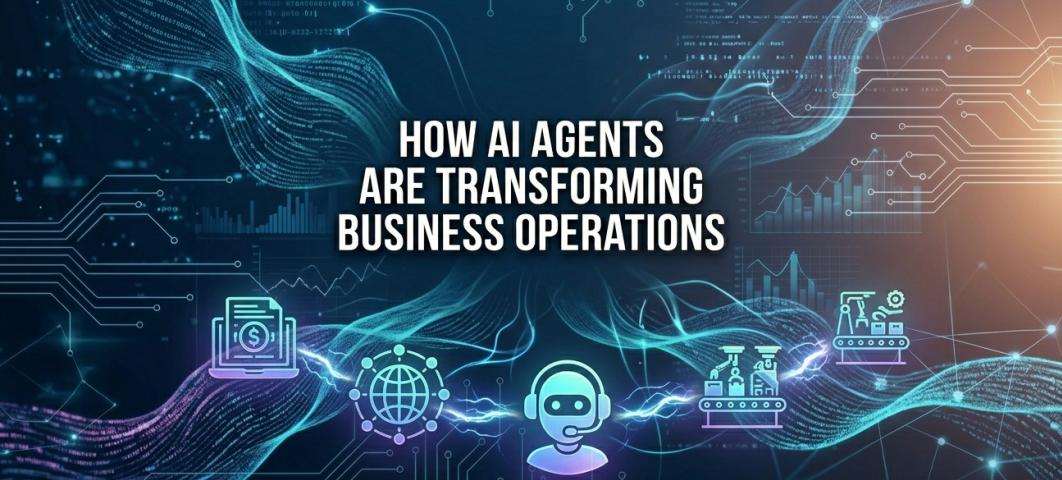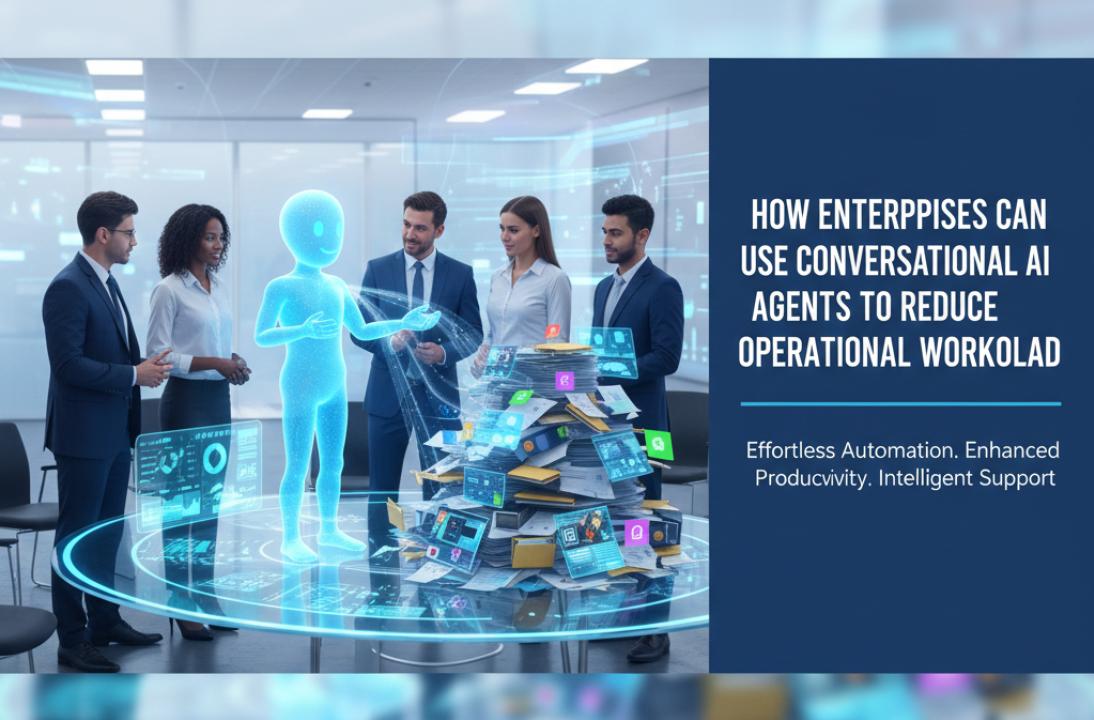
Enterprise organizations today manage complex operational ecosystems. Customer inquiries, internal support requests, data retrieval, scheduling, reporting, and workflow coordination consume thousands of human hours every month. As businesses scale, these repetitive workloads expand faster than operational teams can handle. This is where Conversational AI Agents are changing how enterprises function.
Rather than acting as simple chatbots, modern AI-driven agents understand context, connect with internal systems, execute actions, and provide real time responses. Enterprises are now investing in AI Agent Development Services to build intelligent assistants that reduce manual effort, improve response accuracy, and lower long term operating costs.
For decision makers, the question is no longer whether conversational AI has value. The focus is how to implement it strategically for measurable operational impact.
The Operational Burden Facing Enterprises
Large organizations face three consistent challenges in daily operations.
First, high volumes of repetitive communication. Customer service teams answer similar questions thousands of times per week. Internal IT desks handle password resets, access requests, and troubleshooting. HR departments respond to policy queries and onboarding questions.
Second, slow information retrieval. Employees waste time searching for documents, data dashboards, or process instructions across disconnected systems.
Third, workflow delays. Approval chains, ticket routing, and task handoffs create friction that slows execution.
According to industry research from Gartner and McKinsey, enterprises spend up to 30 percent of operational time on repetitive and low complexity tasks that can be automated through conversational interfaces.
This inefficiency directly impacts productivity, employee satisfaction, and customer experience. Conversational AI Agents address these gaps at scale.
What Conversational AI Agents Actually Do
Conversational AI Agents go beyond scripted responses. They interpret user intent, manage multi step interactions, access databases, trigger workflows, and learn from historical conversations.
In an enterprise environment, these agents can:
- Handle customer inquiries across chat, email, and voice channels.
- Assist employees with internal support requests.
- Retrieve business data and generate reports.
- Schedule meetings and manage calendars.
- Initiate approvals and workflow processes.
- Guide onboarding and training interactions.
Generative AI Agents further enhance these capabilities by producing human quality responses, summarizing documents, and creating contextual recommendations.
To achieve this level of functionality, organizations partner with an AI Agent Development Company that builds custom conversational systems aligned with internal infrastructure, compliance rules, and security requirements.
Reducing Customer Support Workload
Customer support remains one of the most resource intensive enterprise functions. Conversational AI Agents reduce workload by resolving routine queries instantly and escalating complex cases to human agents only when necessary.
This model delivers three benefits.
First, faster resolution time. Customers receive immediate responses without waiting in queues.
Second, reduced staffing pressure. Human agents focus on higher value interactions.
Third, consistent service quality. AI agents follow defined knowledge frameworks and do not deviate from approved communication standards.
Enterprises that adopt conversational automation in customer service report cost reductions of 20 to 40 percent according to industry benchmarks.
This is one of the fastest return on investment use cases for AI Agent Development Services.
Streamlining Internal Enterprise Operations
Internal operations are equally suited for conversational automation. Employees often spend valuable time submitting IT tickets, searching knowledge bases, or asking administrative questions.
Conversational AI Agents act as a unified interface to internal systems. An employee can request software access, reset credentials, retrieve HR policy information, or check project status through a simple conversation.
This reduces dependency on support teams and improves employee experience. It also creates structured data trails that help leadership identify process bottlenecks.
When integrated with ERP, CRM, HRMS, and workflow tools, conversational agents become a central operational layer that keeps departments moving efficiently.
Intelligent Workflow Automation
One of the strongest enterprise applications lies in workflow orchestration. Generative AI Agents can collect inputs, validate information, trigger approvals, and notify stakeholders without manual coordination.
Examples include:
- Purchase request initiation and approval.
- Vendor onboarding processes.
- Compliance documentation handling.
- Project task assignments.
- Finance reconciliation queries.
By embedding conversational interfaces into these workflows, enterprises reduce delays, minimize human error, and maintain audit ready process tracking.
A specialized AI Agent Development Company ensures that these automations integrate securely with existing infrastructure while following governance requirements.
Data Access and Decision Support
Decision makers rely on timely information. Conversational AI Agents can act as real time data assistants.
Executives can ask for sales performance summaries, pipeline forecasts, or operational metrics and receive instant reports generated from internal databases. This reduces dependency on analytics teams for routine queries.
Generative AI Agents also summarize lengthy documents, extract insights from reports, and prepare briefing notes. This saves hours of manual preparation and improves decision velocity across leadership levels.
This application directly connects conversational AI to business intelligence, improving responsiveness in competitive markets.
Why Enterprises Choose Custom Development
Off the shelf chatbot platforms often fail to meet enterprise security, compliance, and integration needs. This is why organizations prefer custom AI Agent Development Services.
Custom development allows:
- Integration with proprietary systems.
- Secure access control.
- Domain specific knowledge training.
- Brand aligned communication tone.
- Compliance with data privacy regulations.
Enterprises also gain long term scalability. As business processes evolve, conversational agents can be retrained and expanded without rebuilding systems from scratch.
For organizations seeking long term transformation, partnering with an experienced AI Agent Development Company becomes a strategic technology investment rather than a simple automation project.
Building the Right AI Agent Team
Successful implementation requires more than technology. Enterprises often choose to Hire Skilled AI Agent Developers who understand AI model integration, backend system connectivity, security architecture, and conversational experience design.
This multidisciplinary expertise ensures that conversational systems deliver consistent performance, accurate responses, and stable uptime. It also ensures responsible deployment of Generative AI Consulting practices such as data governance, ethical AI usage, and bias management.
A professional development partner provides technical depth and strategic guidance throughout deployment and scaling.
Measuring ROI from Conversational AI
Enterprise leaders expect measurable results. Conversational AI performance is evaluated through:
- Reduction in support ticket volume.
- Lower average handling time.
- Increased first contact resolution.
- Improved employee productivity.
- Faster workflow completion.
- Higher customer satisfaction scores.
Organizations that implement conversational automation effectively often achieve payback periods within 6 to 12 months depending on scale.
This combination of cost savings and productivity improvement makes conversational AI one of the most practical AI investments available today.
The Road Ahead
Conversational AI Agents are rapidly becoming core infrastructure for modern enterprises. As Generative AI Agents evolve, conversational systems will handle increasingly complex reasoning, cross department coordination, and predictive decision support.
Enterprises that invest early in structured AI Agent Development Services gain long term operational advantage. They build flexible automation layers that adapt to growth, market change, and evolving customer expectations.
For strong startups, conversational AI provides a way to scale operations without scaling headcount at the same pace. For large enterprises, it modernizes legacy processes and unlocks operational agility.
The future of enterprise efficiency will be conversational, contextual, and deeply integrated into everyday workflows.