Introduction
Choosing the right internet connection is one of the most important decisions for your home or business. With the growing need for streaming, online gaming, remote work, and smart home devices, having the right connection can greatly enhance speed, reliability, and overall performance.
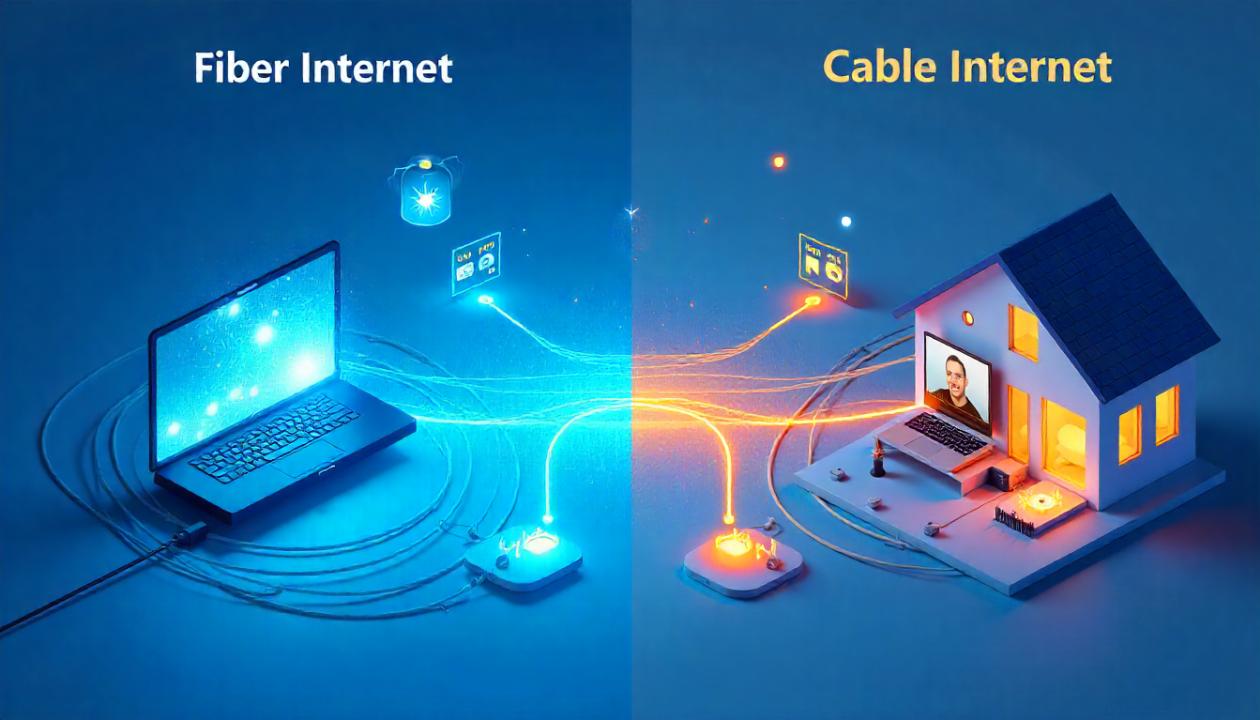
Two of the most common broadband options are Fiber Internet and Cable Internet. Each has its advantages and disadvantages. It's essential to understand the differences before making a choice. This guide will help you learn about Fiber vs Cable Internet, so you can find the best option for your needs with UbiFi, your trusted connectivity partner.
What is Fiber Internet?
Fiber Internet uses fiber-optic cables to send data as pulses of light. This technology allows for very fast speeds, stable connections, and minimal lag. It's ideal for households or businesses that depend heavily on high-speed internet.
Key Benefits of Fiber Internet:
- Ultra-fast download and upload speeds
- Symmetrical performance for uploads and downloads
- Low latency for gaming, streaming, and video calls
- Highly reliable and future-proof
What is Cable Internet?
Cable Internet uses coaxial cables, the same infrastructure that brings cable television to homes. It provides high-speed internet access to many households, especially in urban and suburban areas.
Key Benefits of Cable Internet:
- Widely available with established infrastructure
- Consistent download speeds for streaming and browsing
- More affordable plans compared to fiber
- Simple installation process
Fiber vs Cable Internet: Detailed Comparison
Choosing the right internet connection can significantly affect your online experience. Here’s a clear look at how fiber vs cable compare across key factors:
1. Speed and Performance
- Fiber: Offers gigabit speeds up to 5 Gbps with equal upload and download speeds. It's perfect for multiple devices, HD streaming, online gaming, and remote work.
- Cable: Typically delivers speeds from 100 Mbps to 1 Gbps. This works well for most households but may have slower upload speeds.
2. Reliability
- Fiber: Extremely reliable and not affected by electrical interference or weather conditions.
- Cable: Generally reliable, but may slow down during peak hours due to shared bandwidth.
3. Latency (Ping Times)
- Fiber: Very low latency, making it ideal for real-time gaming, video calls, and live streaming.
- Cable: Higher latency than fiber, which can affect online gaming and cloud-based work.
4. Coverage and Availability
- Fiber: Rapidly expanding but still limited in rural areas. It's more likely to be accessible in urban and suburban regions.
- Cable: Widely available almost everywhere, thanks to its long-standing infrastructure.
5. Cost Considerations
- Fiber: Installation can be more costly if new lines are needed. Monthly plans are often higher but offer better performance.
- Cable: Usually more budget-friendly, with easier installation when coaxial cables are present.
6. Future-Readiness
- Fiber: Built to handle increasing bandwidth needs, new technology, and high-capacity applications.
- Cable: Good for current demands but may need upgrades as data needs grow.
Pros and Cons of Fiber Internet
Pros:
- Blazing fast and symmetrical speeds
- Highly reliable with low latency
- Supports multiple devices and heavy internet usage
- Ideal for modern work-from-home setups and streaming
Cons:
- Limited availability in some areas
- Installation can be costly if fiber isn’t already available
- Not necessary for users with light internet needs
Pros and Cons of Cable Internet
Pros:
- Broadly available in most areas
- Affordable and easy to install
- Solid performance for casual users
Cons:
- Speeds fluctuate during peak hours
- Upload speeds are slower than download speeds
- Higher latency compared to fiber
Why Choosing the Right Internet Matters
The type of internet connection you choose can impact your daily life in several ways:
- For remote work: Fiber’s equal speeds make uploads, downloads, and video conferencing smooth.
- For entertainment: Cable Internet supports streaming, browsing, and gaming without major interruptions for most households.
- For smart homes or tech-heavy households: Fiber ensures smooth operation for multiple devices and advanced applications.
UbiFi provides solutions for every situation, helping you access fast and reliable internet, even where fiber or cable coverage is limited.
FAQs About Fiber vs Cable Internet
1. Is Fiber Internet faster than Cable?
Yes. Fiber Internet usually offers much higher speeds, especially for uploads, and is better for demanding activities.
2. Can Cable Internet handle multiple devices?
Yes, but speeds might slow down during peak hours if many devices are online at once.
3. Is Fiber Internet available everywhere?
Not yet. Fiber coverage is expanding, but rural areas may still need to rely on cable or other internet options.
4. Is Cable cheaper than Fiber?
Generally, yes. Cable often has lower installation and monthly costs, making it a budget-friendly choice for casual users.
5. Which is better for gaming?
Fiber is preferable due to its low latency and steady speeds. However, Cable can still provide decent gaming performance for most players.
6. How does UbiFi help where fiber and cable are unavailable?
UbiFi offers high-speed fixed wireless internet solutions for areas not served by traditional fiber or cable networks, ensuring reliable connectivity everywhere.
Conclusion
When deciding between Fiber and Cable Internet, consider your needs, location, and budget. Fiber Internet shines in speed, reliability, and future readiness, making it great for high-demand households and remote work. Cable Internet remains a solid and cost-effective option that works well for everyday needs.
With UbiFi, you can find the internet solution that suits your life>