
Let’s face it: in today’s world, content is everywhere. Scroll your feed for just a few minutes—videos, carousel posts, blog links, ads, memes, newsletters. It never stops. Amid this noise, your biggest challenge isn’t just making content—it’s making content that sticks.
Whether you’re a content creator, a marketer, a small business owner, or a blogger with big ambitions, the pressure to continually churn out engaging, fresh ideas can feel relentless. You’ve likely had that familiar moment: staring at your screen, cursor blinking, thinking, What the heck do I post next?
Here’s the good news: you don’t have to rely on luck, inspiration, or bursts of creativity. With the right process, mindset, and tools, you can build a steady engine of content ideas—ideas that resonate, generate engagement, and keep your audience coming back for more.
In this guide, we’ll walk through:
-
How to truly understand your audience
-
Reliable methods to generate content ideas
-
Tools and resources to fuel your creativity
-
Content formats and frameworks that hook
-
Smart ways to repurpose and scale ideas
-
How to systemize your content idea pipeline
-
Mistakes to avoid
-
Final takeaways
-
A bonus list of prompts to kickstart your next 20 ideas
Let’s jump in.
1. Understand Your Audience Deeply
If content is conversation, your audience is your conversation partner. You have to listen before you speak.
Build Rich Audience Personas
Personas are more than demographics. They’re semi-fictional representations of your ideal followers or customers—complete with dreams, struggles, and daily routines.
When you flesh out personas with emotional and behavioral detail, you can craft content that feels personal.
What to include in a persona:
-
Name, age, location, profession
-
Values, beliefs, and motivations
-
Hobbies, media consumption habits
-
Biggest frustrations and desires
-
Where they hang out (online/offline)
-
Questions or obstacles they frequently face
Example Persona
Name: Samira, 29, freelance graphic designer in Mumbai
-
Loves minimalistic design and clean aesthetics
-
Works from client referrals, feels insecure about marketing
-
Struggles with consistency, pricing, and burnout
-
Spends time on Instagram, Pinterest, design communities, and Substack
-
Wonders: “How do I find clients without chasing?” or “How do I package my services?”
When you hold Samira in mind, you’re more likely to produce content like:
-
“How to Price Your Design Services Without Underselling”
-
“Daily Habits That Keep Creatives Inspired”
-
“Case Studies: From Zero to 5 Clients in 30 Days”
Listen to Real Conversations & Signals
People tell you exactly what they want—if you know where to listen. Use these sources:
-
Comments and DMs on your content
-
Forum threads (Reddit, Quora)
-
Facebook / LinkedIn groups in your niche
-
Survey responses or polls
-
Customer feedback or support questions
-
Product reviews of competitors
Track recurring questions like: “How do I start with no experience?” or “Why does my engagement drop after a few posts?” These are content seeds.
Example: You notice many followers asking: “How do I stay creative under burnout?” That question itself becomes a content idea: “5 Ways to Protect Your Creativity When You’re Burnt Out.”
Use Analytics Like a Treasure Map
Don’t ignore your past content—it’s your best indicator of what works. Dig into your analytics to find patterns and possibilities.
Where to look:
-
Google Analytics / your blog’s analytics: Which pages got the highest visits, time on page, bounce rates?
-
Instagram / TikTok / YouTube analytics: Which posts got the most saves, shares, comments? What content do people watch all the way through?
-
Newsletter or email analytics: Which subject lines got high open rates or clicks?
Questions to ask:
-
What topics consistently perform well?
-
Are there content formats (video, carousel, threads) that do better?
-
What content pieces sparked conversations or DMs?
Use that data to double down, but don’t replicate blindly. Combine insights + empathy + creative twist.
2. Reliable Methods to Generate Content Ideas
Now that you’ve tuned into your audience, let’s build systems to consistently produce ideas.
Mind Mapping (with a Twist)
Mind mapping isn’t just drawing branches—it's structured creativity. Begin with one core topic (e.g. “content strategy”) and branch into subtopics:
-
SEO
-
Social media
-
Email marketing
-
Branding
Then from each subtopic, branch further:
SEO → keyword research, on-page SEO, link building, updates
Social media → reels, carousels, user-generated content, trends
Once your branches are laid out, go deeper: ask “Why?”, “How?”, “What if?”, “Who?”, “When?” for each node.
This process helps surface unique angles you might not initially think of.
Content Pillars & Topic Clusters
Pick 3–5 big themes core to your brand. These become your content pillars—the stable foundation from which ideas radiate.
Example (for a productivity creator):
-
Time management
-
Mindset & habits
-
Tools & tech
-
Creative workflows
Under each pillar, generate 10–20 specific topics or sub-angles. For instance, under “Tools & tech,” you might explore:
-
How to get started with Notion
-
Tools to automate your social media
-
Low-cost tools every starter should use
This approach ensures alignment and consistency while giving you flexibility for variety.
Reverse-Engineering What Works
Don’t fear your competitors—learn from them. Identify content in your niche that’s resonated or gone viral. Then reverse-engineer:
-
What format did they use?
-
What headline or angle got attention?
-
What value did they provide (education, entertainment, inspiration)?
-
What could you add or twist to make it fresh?
Example: You see a post titled “5 Habits That Changed My Life.” You could reframe it for your audience: “5 Habits That Helped Me Break Through Creative Burnout (as a Freelancer).”
The “What, Why, How, Who, When” Framework
For any topic you have, use these prompts to generate multiple ideas:
-
What is [topic]?
-
Why does it matter?
-
How do you implement it?
-
Who needs it?
-
When is it useful or least obvious?
Example (Topic: “Morning Routine”)
-
What is a morning routine?
-
Why is it important for creatives?
-
How do I build one that’s sustainable?
-
Who benefits most from a morning routine?
-
When should you adjust your routine?
You’ll get several slantable content ideas from one main topic using this framework.
SCAMPER Technique
This classic creative thinking tool can be applied to content:
-
Substitute — What can you swap (tools, format, audience)?
-
Combine — Can you mix two topics or formats?
-
Adapt — Can you adjust something to a new audience or niche?
-
Magnify / Minify — Can you expand or condense the concept?
-
Put to other use — Can the content be applied elsewhere (e.g., podcast, video)?
-
Eliminate — Can you strip it down to the essential insight?
-
Rearrange / Reverse — Can you flip perspective or reorder steps?
3. Tools & Resources to Fuel Your Creativity
You don’t have to rely on your brain alone—there are fantastic tools that do heavy lifting for idea generation.
AI & Writing Assistants
-
ChatGPT (or GPT models): Ask it “10 content ideas for [your niche],” or have it expand on one idea. Use it to brainstorm, outline, or repurpose.
-
Jasper / Copy.ai / Rytr: These are more marketing-focused writing assistants—great for rapid headline testing, captions, or first drafts.
Tip: Use these tools as starting points, not final content. Always human-check, edit, and add your voice.
Keyword & SEO Tools
-
Ubersuggest: Good for beginner-friendly keyword ideas.
-
SEMrush / Ahrefs / Moz: For deep dive keyword research, trend analysis, competitive insights.
-
Keywords Everywhere: To see search volume when browsing.
These tools help you discover what people are searching for now. The difference between a “what is content strategy” blog and a “latest content strategy trends 2025” piece might be a few months of search trend shifts.
Social Listening & Question Tools
-
Reddit / Quora: Search your niche + “how to,” “help with,” “why is,” etc.
-
Answer the Public: This tool visualizes what people ask about a topic.
-
Google Trends: Compare trending interest in different topics over time.
-
Exploding Topics: Great for spotting emerging topics before they blow up.
Content Inspiration Platforms
-
BuzzSumo: Discover popular articles in your niche and see engagement metrics.
-
Feedly: Aggregate blogs or sources you follow; get notified about fresh content.
-
Flipboard / Pocket: Save interesting pieces; use them later to spark ideas.
4. Content Formats & Frameworks That Hook
It’s not just what you say — how you say it matters. Certain structures and formats naturally keep attention.
Problem → Solution → Result (Transformation Story)
This narrative arc is deeply human—people love stories, especially ones where they can see transformation.
-
Problem: Describe pain or struggle
-
Solution: Show the approach or method you used
-
Result: Reveal the outcome or transformation
Example: “I had no email list six months ago. I created a free guide + simple funnel. Now I send weekly emails to 2,000 subscribers and earn $1,200/month in sales.”
Add data, visuals, and emotion to make it vivid.
Listicles & “X Ways to…”
We love lists—they’re scannable, promise clear takeaways, and feel satisfying. But don’t do “10 generic tips.” Go specific, relatable, or niche.
-
“7 Productivity Hacks for Remote Designers”
-
“5 Content Ideas for Financial Bloggers During Market Crashes”
How-Tos & Tutorials
These build authority and provide real value. Step-by-step content is evergreen and highly shareable.
-
“How to Plan a Month of Instagram Content in 60 Minutes”
-
“How to Use ChatGPT to Brainstorm Content Ideas”
-
“How to Craft Headlines That Convert (With Examples)”
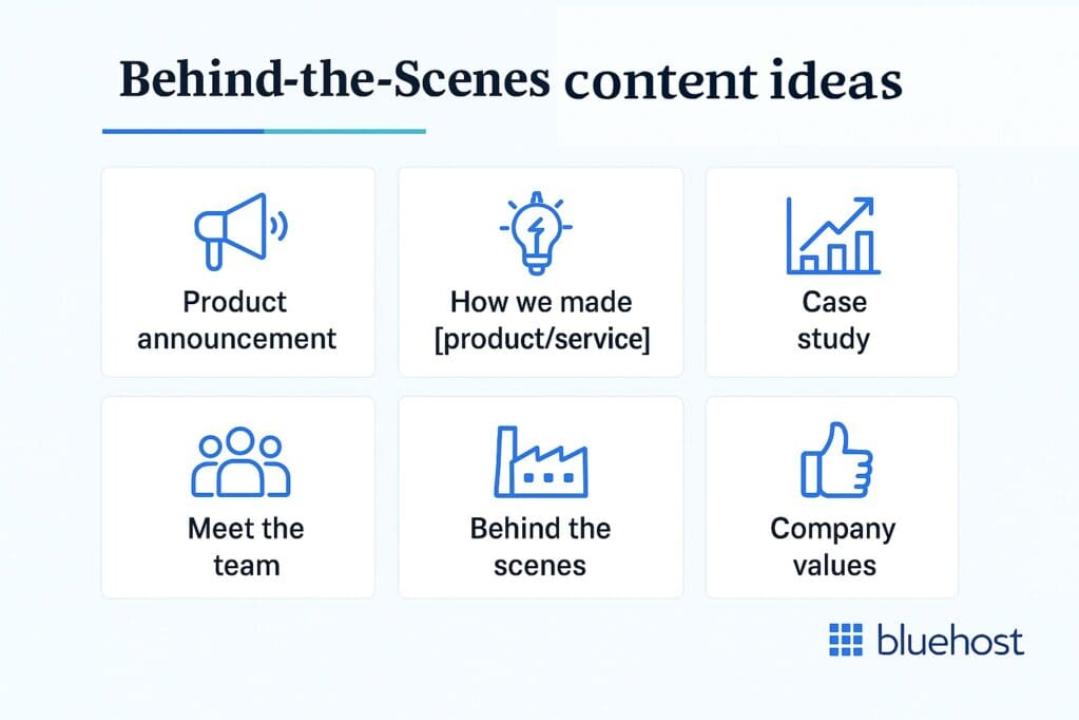
Behind-the-Scenes, Case Studies & Personal Stories
Personal stories bridge the gap between you and your audience. They build authenticity.
-
Show your failures, your pivots, what didn’t work—then what did.
-
Share your real decision-making process.
-
Offer raw transparency about numbers, struggles, and lessons.
Example: “Here’s how I messed up a product launch—why I failed, what I changed, and how I recovered.”
Comparisons & Versus Posts
People like to compare options. That tension creates curiosity.
-
“Notion vs. Trello: Which Works Better for Creators?”
-
“Instagram vs. TikTok for Small Businesses in 2025”
Checklists, Cheatsheets & Templates
These are highly practical and often saved or bookmarked. They’re great for lead magnets too.
-
“The Only Email Launch Checklist You’ll Ever Need”
-
“Content Planning Template for Lazy Creators”
5. Repurpose, Stretch & Scale: One Idea, Many Versions
You don’t need a brand-new idea every time—you need more uses for each idea.
Cross-Platform Adaptation
Take a single content piece and repackage it:
-
Blog → LinkedIn article → Twitter thread → Instagram carousel → Reel → Podcast snippet
-
Video → blog post + quote graphics + short clips
-
Newsletter → blog → social quote cards
This way, you reach different audiences with one core message.
Update, Refresh & Refresh Again
Older content that once performed well can be revamped:
-
Update data, tools, or references
-
Add a new perspective or newer examples
-
Reoptimize for SEO using current keywords
-
Re-promote it as a “revisited” or “2025 update” piece
This is less effort than writing from scratch and often yields surprising traction.
Series, Spin-Offs & Deep Dives
When a topic gets traction, explore its subtopics. Make a series.
Example: Your article “How to Build Your Content Strategy” becomes:
-
Part 1: Define Pillars & Audience
-
Part 2: Content Calendar & Workflow
-
Part 3: Promotion & Repurposing
-
Part 4: Metrics That Matter
Or turn a blog into smaller micro‑content: pull quotes, short videos, mini‑threads.
6. Systemize Content Ideation (so you’re never stuck)
Consistency without burnout is the real mark of a pro. A system helps you avoid scrambling when inspiration is low.
Maintain a Living Idea Bank
Use tools you actually open (Notion, Trello, Google Sheets, Airtable):
-
One tab or board for content pillars
-
Subitems for headlines, angles, notes
-
Tag ideas by platform, format, priority
-
When inspiration hits (on a walk, commute, shower), drop ideas in
Tip: Use voice memos or note‑apps on your phone so ideas don’t get lost.
Batch Brainstorming Sessions
Set aside dedicated time (weekly or monthly) purely for ideation. No content creation—just ideas.
During the session:
-
Start with warmups (e.g. pick random words or images)
-
Use frameworks (What/Why/How, SCAMPER)
-
Challenge each idea: what’s the fresh angle?
-
Aim to leave with at least 20 raw ideas
Use Prompts or Idea Generators
Work from fill-in-the-blank templates or prompt lists to break mental blocks. (I share 25 at the end.) You can also feed prompts into AI to generate dozens more.
Collaborate & Crowdsource
Your audience is a goldmine:
-
Ask them directly: “What’s your biggest struggle with [topic]?”
-
Run polls or Q&A stickers on Instagram / LinkedIn
-
Use live sessions or webinars to solicit questions
-
Partner with peers in your niche to co-create or brainstorm
Two or more people bringing different perspectives often leads to richer ideas.
Ship First, Polish Later
Don’t wait for the “perfect” moment. Publish, test, and iterate. Some ideas will work, some won’t—and that’s how you learn.
Maintain a “feedback & iteration file” to note what worked or didn’t. Use this data in future ideation.
7. Common Mistakes That Stall Your Idea Flow
Even with the best intentions, creators hit roadblocks. Here are common traps—and how to avoid them.
Copying Without Adding Value
Imitation is not innovation. If you replicate a popular post, ask: How can I make it deeper, more specific, more relevant for my audience? Without your unique voice, it falls flat.
Ignoring Your Audience’s Feedback
If people leave the same questions or complaints repeatedly, that’s a red flag. Always circle back to what your audience is telling you and adjust.
Chasing Trends That Don’t Match Your Brand
It’s tempting to jump on viral trends. But if a trend doesn’t align with your brand or expertise, you risk diluting your identity. Use trends selectively and in a way that maps back to your core message.
Overthinking & Waiting for Perfection
The “right idea” will usually come while you’re working, not before. Waiting for perfect inspiration kills momentum. Ship, refine, and learn.
Neglecting for Better Tools & Processes
Working from scratch each time is exhausting. The investment in better tools, processes, and systems might feel overhead now—but it saves you from content droughts later.
8. Conclusion: Turning Ideas into Impact
If content were a conversation, your goal is to hook, serve, and retain your audience. That doesn’t happen by chance—it requires empathy, structure, experimentation, and consistency.
When you:
-
deeply understand your audience
-
use frameworks to generate ideas
-
leverage tools to fuel creativity
-
choose formats that resonate
-
repurpose content smartly
-
systemise your ideation
-
learn from your mistakes
…you build a self-sustaining engine of content that doesn’t just exist—it connects.
The real magic is not in the one brilliant idea—it’s in generating dozens, testing them, noticing patterns, and evolving. The more you practice, the sharper your sense for what will work becomes.
Now, let’s equip you with a practical boost. Here’s a list of 50 content prompts you can drop into your idea bank today and start turning into posts, articles, videos, or whatever your format of choice may be.
Bonus: 50 Content Idea Prompts to Jumpstart Your Next 20 Topics
-
The biggest mistake I made when I started [X]…
-
How I went from [A] to [B] in [time period]
-
3 tools I use every day for [your niche]
-
What I would do if I started over today
-
Step-by-step breakdown of my workflow for [task]
-
A myth in [your niche] that needs debunking
-
Why I stopped doing [popular tactic]
-
What most beginner [niche people] get wrong
-
A behind-the-scenes look at my [process / project]
-
What I learned from failing at [project]
-
5 signs you're struggling with [problem]
-
How to avoid [common mistake]
-
My favorite books, podcasts, or creators that changed me
-
A challenge I faced and how I overcame it
-
What I wish someone told me at the beginning
-
One surprising truth about [your niche]
-
A tool / platform I recently discovered and love
-
Comparison post: A vs. B in [your field]
-
A day in the life of a [your role]
-
How to do [topic] with minimal resources
-
How to scale [process] from small to large
-
What’s working for me right now (monthly update)
-
Content ideas for [special season / holiday / event]
-
Predictions or trends for the next year in your niche
-
What success means to me in [your niche]
-
My favorite templates, checklists, or frameworks
-
How I repurpose old content for new life
-
5 lessons I learned the hard way
-
Small changes that had big impact
-
Strategies for staying creative during burnout
-
How to turn feedback or criticism into content
-
Audience Q&A: answer top 5 audience questions
-
What tools I’d drop if I had to start over
-
My metric system: what I track and why
-
How to build habits that support your content creation
-
What’s the hardest part of [your journey]
-
A controversial opinion I have about [industry]
-
Content ideas based on what your audience is searching
-
How to expand or niche down your content theme
-
What lost relevance in your niche—and why
-
Predictions I got wrong (and how I’m adapting)
-
How I organize my ideas, notes, and inspiration
-
My personal rituals (morning / evening / work)
-
Advice to my past self (from 1 year ago / 5 years ago)
-
How I maintain motivation & consistency
-
How to get unstuck when your creativity is blocked
-
What I do when a content idea fails
-
Mistakes I see people repeatedly making
-
Contrasting viewpoints: two opposite opinions in your field
-
A roadmap: what to expect in your niche over next 3–5 years
- AI SEO Tools
- Best Web Hosting in India
- SEO Packages: Affordable Monthly Plans