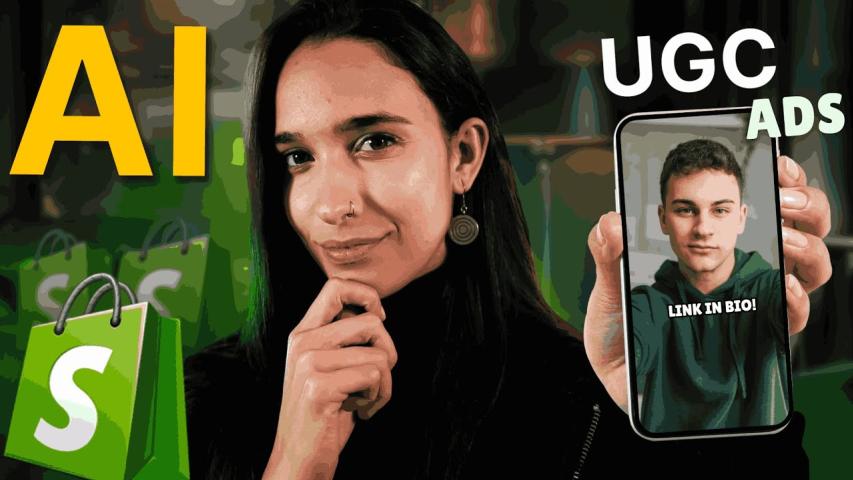
In the rapidly evolving digital landscape, a new acronym is making waves: AI UGC. This innovative concept stands for Artificial Intelligence-Generated User-Generated Content. It represents a powerful convergence of user creativity and advanced AI capabilities, offering exciting possibilities for content creation, marketing, and community engagement.
Understanding AI UGC
Here's how AI typically contributes to UGC:
Content Generation: AI can generate text (articles, captions, stories), images (illustrations, photos from descriptions), videos (short clips, animations), and even audio (music, voiceovers) based on user prompts or existing data.
Content Enhancement: AI tools can refine existing UGC by suggesting edits, improving grammar, optimizing visuals, or adding special effects.
Personalization: AI can help tailor UGC to specific audiences or individuals, making it more relevant and impactful.
How to Use AI UGC: Practical Applications
1. Empowering Content Creators & Influencers
Brainstorming & Idea Generation: AI tools can help creators overcome writer's block by generating fresh content ideas, headlines, or story outlines.
Drafting & Editing: AI can quickly draft initial versions of blog posts, social media captions, or video scripts, which creators can then refine and personalize.
Visual Content Creation: Imagine describing a scene and having an AI generate a stunning image or a short animation for your social media post or video.
Repurposing Content: AI can transform a long-form article into several social media posts, short video scripts, or even an infographic, maximizing content reach
2. Enhancing Marketing & Branding:
Personalized Marketing Campaigns: Businesses can use AI to help customers generate personalized product designs, custom messages, or even tailor ad creatives based on their preferences.
Interactive Experiences: AI-powered tools can enable users to create custom digital avatars, virtual try-ons, or interactive stories, increasing engagement with a brand.
Scalable Content Creation: Brands can run campaigns where users provide simple prompts, and AI generates unique brand-aligned content that can be shared across platforms, effectively multiplying UGC.
Community Building: Providing tools for users to easily create and share AI-enhanced content related to a brand or product can significantly boost community engagement and loyalty.
Product Customization: AI can allow customers to design their own products (e.g., custom apparel, personalized gifts) by inputting text descriptions or selecting options, with AI generating the visual representation.
While AI UGC offers immense potential, it also comes with considerations: