The Changing Face of Indian Construction
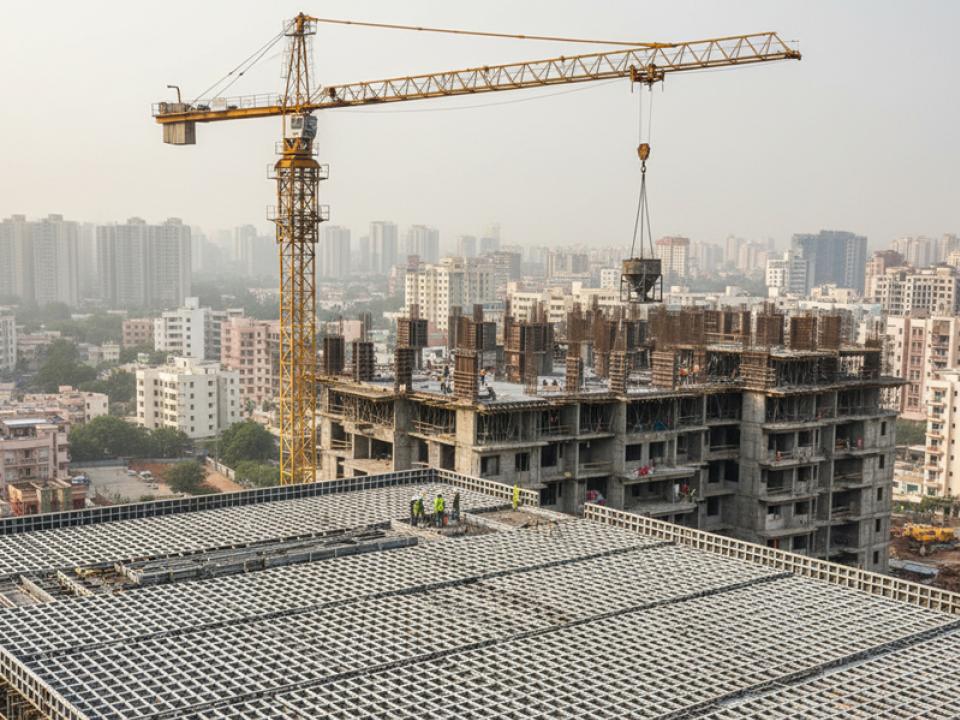
If you’ve walked past a modern construction site in Delhi, Mumbai, or Pune lately, you might’ve noticed something different. Gone are the chaotic piles of bricks and mortar scattered everywhere. Instead, you’ll see neat aluminum molds, precision work, and clean lines this is the world of Mivan Construction.
The Indian real estate sector is evolving faster than ever. Population growth, rapid urban migration, and people wanting durable homes have pushed the industry to reinvent itself. The old “brick by brick” >
I still remember back in the late 90s, seeing workers carrying heavy trays of cement on their heads, mixing it by hand. The idea of casting an entire wall or floor in one go sounded like science fiction back then. But today, with Mivan Construction, it’s real, and it’s transforming the very way our cities grow.
What Exactly is Mivan Construction?
Let’s put it simply. Mivan Construction is a formwork system that uses aluminum molds to cast walls, slabs, and columns together in one go. Instead of building walls first and then adding beams and slabs, this system allows everything to be poured as a single unit of reinforced concrete.
Developed in Europe decades ago, Mivan made its way to India in the early 2000s, and since then, it’s been the silent revolution behind some of the fastest-built housing projects in the country.
You can call it a “monolithic” system — because it creates one solid structure without joints. That means fewer cracks, smoother finishes, and most importantly, much faster completion times.
To give you a sense of scale a traditional building might take 24 months to complete, while the same structure using Mivan Construction could be done in nearly half the time.
The Secret Behind Its Speed and Strength
Now, what makes Mivan Construction so effective isn’t just the technology — it’s the process. Everything is pre-measured, planned, and engineered before the first pour of concrete.
Each aluminum mold is designed like a puzzle piece. Once placed, the structure is filled with concrete, forming the skeleton of the building in a single cast.
That’s the beauty of it — you get a uniform, jointless structure, which makes it stronger and more earthquake-resistant. It’s also highly water-resistant, which is a big relief in Indian conditions where monsoons can test even the toughest constructions.
One of the senior engineers I met once joked, “With Mivan, we don’t build — we assemble.” He wasn’t wrong. The precision is so high that even the window openings, door frames, and service shafts come ready-made in the mold design.
Why Developers Are Switching to Mivan Construction
Real estate developers aren’t easy to impress. But Mivan Construction has done just that. It offers speed, quality, and long-term cost benefits that are hard to ignore.
In cities like Delhi and Noida, developers have started adopting Mivan for large housing societies, especially high-rise towers where timelines are strict and labor costs are climbing.
Another advantage is consistency. With traditional methods, different teams may work on different parts of the building — leading to uneven quality. With Mivan, you get the same finish from the ground floor to the penthouse.
It’s not only developers who benefit. Homebuyers also see the difference. The walls are smoother, there’s less leakage, and the overall finish feels premium. The apartments have a solid feel, the kind that doesn’t rattle or crack after a few monsoons.
The Ripple Effect on Homebuyers and Tenants
Now, when a technology like this changes how buildings are made, it naturally affects everyone who lives inside them too.
For tenants, the benefits are visible quite literally. Homes built with Mivan Construction have fewer maintenance problems, especially those annoying seepage spots or uneven walls.
Owners too have peace of mind knowing that their property will retain its strength and value for decades. That’s why real estate in areas like Rohini, Dwarka, and Gurgaon using Mivan has seen higher resale interest.
But there’s also a subtle legal and social ripple here — something tied to law tenants rights. When construction quality goes up, disputes between landlords and tenants over maintenance, safety, or damage tend to drop. Better-built homes mean fewer conflicts.
I’ve seen older tenants often argue about wall cracks, seepage, or structure issues. Many of those cases end up in legal back-and-forths about who pays what. But with Mivan-built homes, those issues rarely surface. So in a quiet way, Mivan Construction is improving how law tenants rights play out in real life — by simply making better houses.
Challenges That Still Remain
Of course, nothing is perfect. And Mivan Construction isn’t magic — it has its own hurdles.
The initial setup cost is high. Aluminum molds are expensive and need precision manufacturing. Smaller builders may find it difficult to justify those costs for small projects.
Then there’s the need for trained labor. You can’t just pick anyone from a regular site crew and hand them these molds. It takes skill, planning, and proper coordination between engineers and site teams.
I’ve heard site managers complain that even a small alignment error can throw the whole process off, meaning you can’t “eyeball” it like you do with brickwork. But then again, that’s what separates modern methods from the old ways — discipline and design over improvisation.
How Mivan Construction Connects to Law and Tenant Rights
You might wonder what construction has to do with legal frameworks or law tenants rights. But the connection runs deeper than it appears.
A strong, well-built structure is the foundation (no pun intended) of safety and accountability. When developers use Mivan Construction, they are essentially reducing the chance of future legal disputes that might arise from poor construction or safety hazards.
For instance, Indian housing laws increasingly emphasize the builder’s liability period — a window where the builder must address structural faults. Such flaws are much less likely to occur in a Mivan-built home. meaning better compliance with housing laws and fewer legal headaches for both builders and residents.
Moreover, under law tenants rights, tenant's have a legal expectation to live in a safe and habitable space. A home built through Mivan Construction easily meets those standards. So even indirectly, this method supports the legal ecosystem by ensuring structural reliability and tenant comfort.
The Future of Indian Cities with Mivan Technology
Mivan Construction would be one of the fastest runners if India's cities were a race.
To achieve their lofty goals, government programs like "Housing for All" and PMAY (Pradhan Mantri Awas Yojana) mainly rely on Mivan technology. Millions of homes cannot be constructed quickly enough with outdated techniques..
What excites me most is how Mivan Construction blends speed with sustainability. Because it reduces waste and uses precise quantities of concrete, it’s far more environmentally responsible than the dusty, waste-heavy methods of the past.
Imagine tall, long-lasting, low-maintenance homes for everyone, not just the wealthy, in places like Delhi, Mumbai, or Lucknow. Mivan can assist in bringing about that kind of change.
And as construction evolves, so does the whole idea of living in a city. Tenants demand safer homes. Laws adapt to protect their rights. Builders compete to deliver better quality faster. It’s like every layer of urban life benefits from this quiet construction revolution.
Final Thoughts
Sometimes progress doesn’t shout. It just works quietly, efficiently — and before you know it, the skyline looks different. That’s what Mivan Construction has done for India.
From slashing project timelines to giving tenants stronger, safer homes, this technology has become the backbone of modern urban India. Yes, it has its challenges — costs, skill needs, and the learning curve — but the payoff is worth it.
What began as a foreign innovation has now become deeply Indian, powering everything from affordable homes to luxury high-rises. And as laws around housing and tenant rights become more structured, Mivan’s precision and reliability fit perfectly into that vision.
Cities will continue to grow. People will continue to seek homes that are not just beautiful but built to last. And when they do, Mivan Construction will likely be the silent force shaping that future skyline — one smooth, solid wall at a time.