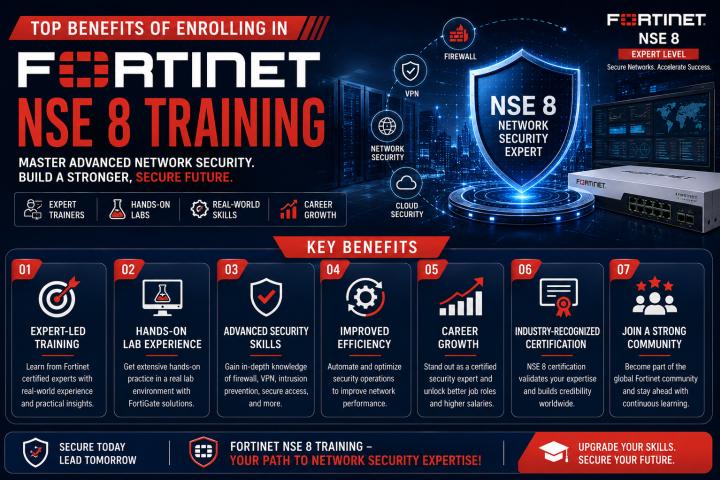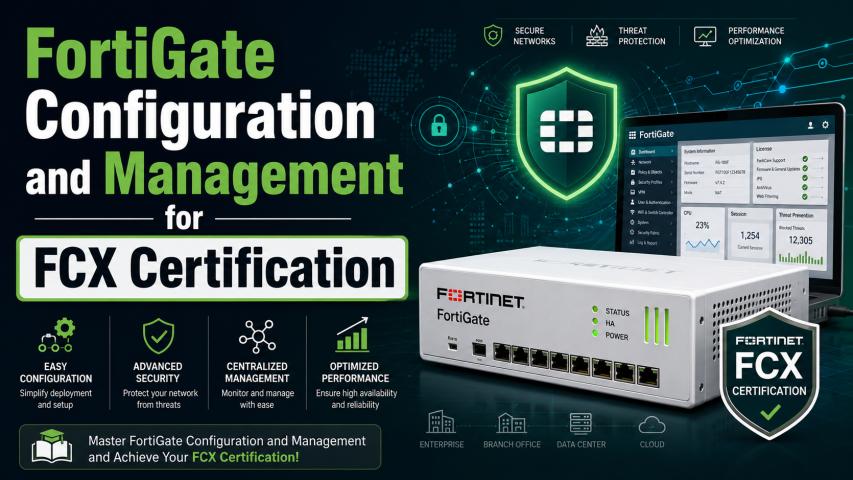
Fortinet’s advanced security architecture ecosystem plays a critical role in enabling enterprises to achieve scalable, resilient, and adaptive cyber defense capabilities. As network environments become increasingly hybrid and threat vectors evolve, security professionals preparing for expert-level validation must refine their architectural comprehension and hands-on deployment excellence. Many advanced learners align this preparation with NSE8 Training FCX Certification pathways to streamline enterprise-class readiness and capability maturity. This resource supports individuals pursuing Fortnite NSE 8 Training and Certification by providing a structured exploration of key architectural components and strategic learning focus areas associated with this title.
Understanding Advanced Fortinet Architectures
At the enterprise scale, Fortinet’s architecture emphasizes a unified defense fabric capable of orchestrating multi-layer security, integrated threat intelligence, and automated response workflows. Instead of operating as isolated tools, Fortinet technologies collaborate to deliver contextual security enforcement and streamlined policy execution across physical, virtual, and cloud infrastructures.
Core architectural attributes include:
• Distributed security enforcement across all digital entry points
• System-wide telemetry sharing and threat correlation
• Unified policy management across heterogeneous network segments
• Automation-driven response and remediation workflows
• Cloud-native, virtualized, and on-premises deployment flexibility
This architecture ensures streamlined protection from access edge to data center core, supporting zero-trust enforcement, scalable segmentation, and high-availability security operations.
Key Components of Fortinet’s Expert-Level Architecture
1. Fortinet Security Fabric
The Security Fabric serves as the central nervous system, integrating network, endpoint, cloud, and application security elements. Its fabric connectors and APIs allow synchronized threat intelligence and enterprise-wide enforcement.
Focus areas for NSE8 aspirants include:
• Fabric connectors and automation triggers
• Distributed threat analytics and policy inheritance
• Fabric-level fault tolerance and redundancy
2. FortiGate as the Architectural Anchor
FortiGate is responsible for deep packet inspection, threat filtering, and secure routing. Mastery includes understanding high-availability clustering, multi-WAN connectivity, secure segmentation, and deep policy logic.
Required competencies:
• Data plane vs. control plane behavior
• SSL inspection at scale
• Intrusion defense, WAF, and DoS mitigation policies
3. Secure Access & OT Security Layers
Modern enterprises extend beyond conventional IT boundaries into OT and IIoT ecosystems. Fortinet’s architecture unifies access control, identity-aware policy enforcement, and micro-segmentation.
Key focus domains:
• NAC integration and identity-based segmentation
• Zero-Trust edge enforcement
• Secure wireless and switch environments
4. Cloud and Multi-Cloud Workloads
NSE8 aspirants must architect security across AWS, Azure, and GCP environments, ensuring application-aware controls and workload segmentation.
Elements to master:
• FortiGate-VM deployments
• Cloud-native routing and VPN design
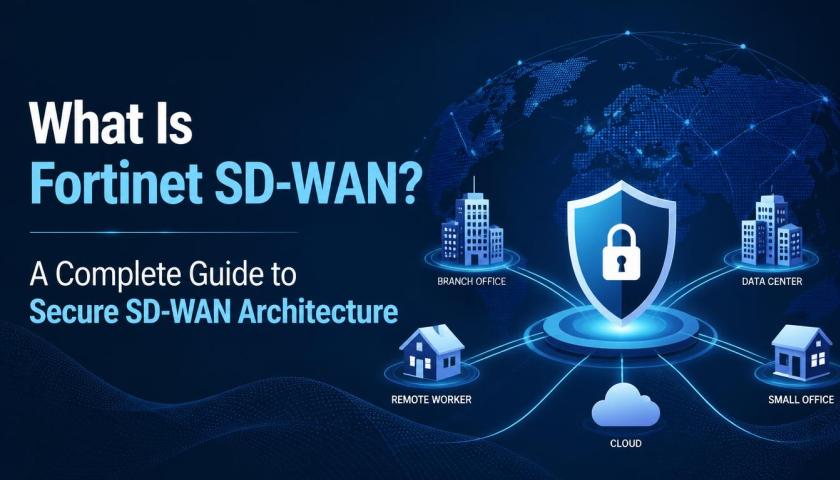
• Secure SD-WAN overlays in hybrid environments
5. Management, Visibility, and Orchestration
FortiManager and FortiAnalyzer drive centralized monitoring, configuration orchestration, event forensics, and governance alignment.
Critical skill areas:
• Enterprise-wide policy orchestration
• Fabric-wide event correlation and incident analysis
• Compliance reporting and audit-grade data visualization
Hands-On Competencies for NSE8 Candidates
Theory alone is insufficient; practical execution determines readiness.
Execution capabilities should include:
• Designing high-availability network segmentation
• Configuring IPS, SSL decryption, and application controls
• Deploying redundant edge-gateway and cloud architectures
• Performing real-time troubleshooting and incident mitigation
Lab practice should emphasize scenario-driven challenges and multi-platform complexity.
Strategic Learning Recommendations
For aspirants seeking structured advancement:
• Study Fortinet design guides and deployment blueprints
• Engage in scenario-based virtual labs
• Map architecture decisions to operational risk reduction
• Participate in expert community discussions and case reviews
• Document troubleshooting patterns and performance insights
This reinforces applied understanding and elevates technical decision-making proficiency.
Career Impact for Advanced Fortinet Professionals
Professionals who master this architecture position themselves strongly for roles such as:
• Senior Network Security Architect
• Enterprise Cyber Defense Strategist
• Cloud Security Lead / SOC Transformation Engineer
• Security Infrastructure Consultant
These roles demand a blend of architecture alignment, operational rigor, and threat-intelligence fluency.
Final Perspective
Advanced Fortinet security architecture expertise represents a high-value capability in global cybersecurity leadership pathways. With a disciplined learning approach, hands-on execution, and architecture-driven thinking, NSE8 aspirants can confidently prepare for complex assessment environments and real-world enterprise implementations.
In conclusion
mastering Fortinet’s expert-level architecture ecosystems empowers professionals to deliver resilient, scalable, and intelligence-driven cyber defense outcomes, reinforcing readiness for advanced certification success and strategic security leadership roles.