Enterprises and advanced startups continue to explore how AI-driven systems can strengthen decision cycles, improve operational efficiency, and support long term innovation. Many leadership teams want practical insights drawn from real implementations instead of theoretical advice. Understanding how other organizations planned, executed, and scaled their solutions makes it easier to reduce risk and improve return on investment. This article highlights case studies that illustrate strategic patterns, technical practices, and measurable outcomes that define successful adoption through modern AI Development Services. The goal is to help decision-makers anticipate challenges and make informed choices for upcoming initiatives.
How enterprises identify the right starting point for AI programs
Enterprise AI projects often begin with small but focused use cases that demonstrate value without straining internal teams. Most companies face a long list of potential opportunities, but the most successful ones prioritize problems that offer measurable outcomes within a predictable timeline. This helps build confidence, align leadership expectations, and create a structured roadmap for future phases.
The strongest early-stage decisions usually emerge from data quality assessments, operational audits, and workflow mapping. Companies often discover hidden inefficiencies that become ideal candidates for automation or prediction systems. For instance, delays in customer service response times, production bottlenecks, and inventory fluctuations often appear repeatedly in enterprise case studies. Addressing these areas with custom models allows organizations to validate impact quickly.
A common pattern is the focus on clear metrics and controlled experimentation. Teams that begin with defined performance indicators understand the value of their investment sooner. They also handle stakeholder communication more effectively because measurable outcomes are easier to communicate across business units.
Successful enterprises often follow steps such as:
- Reviewing current workflows for repetitive tasks
- Documenting major data sources
- Checking compliance readiness
- Building small datasets for rapid prototyping
- Setting validation metrics early
- Preparing internal teams for AI-assisted roles
These steps create a foundation that supports future expansion without forcing the company to rebuild essential components later.
Execution lessons from large scale operations
Organizations with high throughput environments, such as logistics, retail, finance, and healthcare, introduce complexity that smaller systems rarely encounter. These companies manage vast data flows, ongoing regulatory requirements, and strict reliability expectations. Enterprise case studies show that the most effective implementations are built on repeatable frameworks rather than one-time deployments.
Large enterprises benefit from modular architecture, structured pipelines, and centralized monitoring. These elements help maintain accuracy and reliability even as workloads fluctuate. Many companies use this approach to reduce manual interventions, shorten response cycles, and improve forecasting accuracy. When teams support the system with sound governance rules, they reduce the risk of model drift and service disruptions.
The practical lesson is that scale demands stability more than speed. Systems must be built to support growing workloads, changing data patterns, and new feature requests without requiring complete redesigns. Enterprises that adopt this mindset experience fewer disruptions and gain more value from long term investments.
Key practices observed across real cases include:
- Establishing clear version control for models
- Creating automatic failover conditions
- Running continuous testing cycles
- Documenting pipeline components
- Maintaining human oversight during critical decisions
When companies combine strong engineering processes with domain knowledge, AI solutions become durable components rather than short-lived experiments.
How fast-growing startups improve timelines with external partnerships
Startups with adequate funding often aim to achieve rapid product development while keeping engineering teams focused on core areas. Many rely on external expertise when they need advanced skills that would take time to develop internally. A partnership with an experienced AI Development Company helps shorten build cycles, improve quality, and reduce the risk of avoidable mistakes.
Startups benefit from guidance in areas like architecture planning, performance optimization, and long-term maintainability. Instead of allocating resources to trial and error, they leverage proven frameworks that accelerate their release cycles. This leads to faster user feedback loops and helps them improve product-market fit.
Case studies show that these partnerships increase predictability and reduce operational pressure. Startups also gain independent audits, better documentation, and stronger testing procedures, all of which improve overall product stability.
Typical advantages include:
- Faster prototype releases
- Better alignment between business goals and technical execution
- Access to specialized machine learning and data engineering skills
- Reduced development overhead
- More accurate timeline forecasting
- Balanced resource allocation across teams
Startups that follow this model often gain flexibility and confidence, especially when planning global expansion or preparing for enterprise-grade client needs.
ROI lessons drawn from Full-Stack AI Development examples
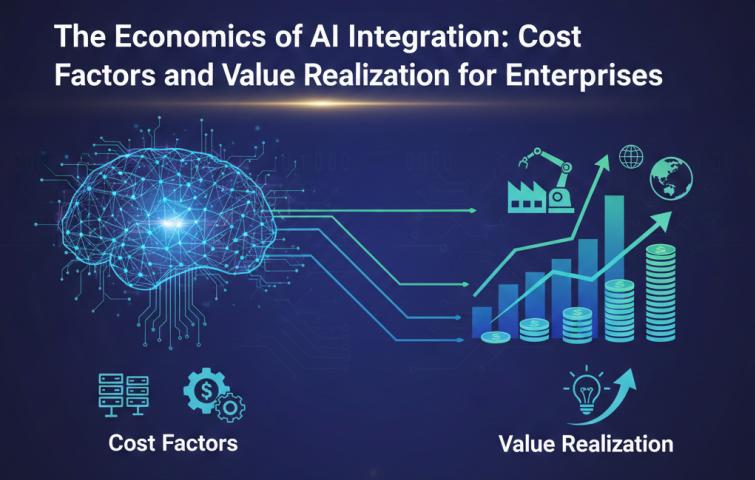
ROI measurement shapes how enterprises justify budgets, scale solutions, and determine future strategy. Many companies initially struggle because AI outcomes depend on multiple moving parts such as data quality, adoption rates, maintenance cycles, and integration efficiency. Case studies from Full-Stack AI Development projects highlight the importance of structured ROI measurement instead of instinct-driven evaluation.
Strong ROI frameworks focus on the relationship between problem severity, cost savings, and the accuracy of predictions or automations. When teams track performance from the beginning, they understand which models deliver real improvements and which ones need refinement.
Common indicators observed in enterprise projects include:
- Reduction in processing time
- Lower operational costs
- Decrease in manual errors
- Improvement in customer satisfaction
- Faster delivery or response cycles
- Increase in revenue opportunities
The most valuable lesson is that ROI grows when AI systems remain consistent over time. Enterprises that maintain regular monitoring and versioning enjoy stable performance and better long term results. They also gain insights for future prioritization, since clear metrics reveal which departments benefit most from ongoing automation.
When ROI becomes predictable, leadership gains confidence, which helps secure additional investment and creates momentum for larger digital transformation programs.
Scaling enterprise AI systems after achieving early success
Once initial models produce positive results, enterprises must prepare for expansion across departments or regions. Scaling introduces new challenges involving data synchronization, compliance, performance, and cross-functional alignment. Many organizations underestimate the effort required for this phase, but case studies reveal patterns that help teams handle expansion effectively.
The most important element is building a structure that adapts to new workloads without losing reliability. Companies that rush scaling without long term planning often face downtime, inconsistent predictions, or increased maintenance costs.
Enterprises that scale successfully treat expansion as an engineering upgrade rather than a simple rollout. They consider security, latency, governance, and ongoing optimization before bringing the system to additional teams.
Strategies observed across case studies include:
- Creating centralized data governance
- Introducing automated quality checks
- Building redundancy for critical services
- Updating older systems that are incompatible with new pipelines
- Training internal teams for monitoring and oversight
- Rolling out capabilities in phased deployments
Enterprises that follow these practices maintain accuracy and continuity even as usage grows across new markets, departments, and customer segments.
Frequently Asked Questions
1. What is the primary value of using AI Development Services for enterprises?
They help enterprises plan, build, test, and maintain AI systems that improve operational efficiency and decision-making. These services guide companies through structured processes, giving them predictable outcomes and measurable improvements.
2. Why do organizations partner with an AI Development Company instead of relying only on internal staff?
Companies often need skills that are not available in house. External experts contribute proven architectures, industry knowledge, and strong engineering practices. This leads to faster development cycles and more reliable deployments.
3. When do businesses benefit from Custom AI Development Services?
They are most useful when a company’s needs are highly specific or when existing tools cannot integrate with internal systems. Custom solutions help organizations achieve accuracy, control, and performance aligned with their operational environment.
4. What makes Full-Stack AI Development useful for complex industries?
It provides end to end support covering data pipelines, modeling, optimization, deployment, and monitoring. Complex industries benefit because this structure reduces breakdowns and ensures continuity.
5. How should enterprises prepare for long term scaling of AI solutions?
They should invest in governance, documentation, data quality frameworks, and team training. Strong planning ensures that models stay accurate, systems remain stable, and expansion takes place with reduced risk.
Conclusion
Enterprise case studies consistently show that successful AI initiatives begin with clear goals, reliable data foundations, and realistic expectations. Companies that follow structured planning, consistent monitoring, and continuous improvement generate stronger long-term results. Startups and global enterprises both benefit from stable engineering, careful ROI tracking, and thoughtful scaling strategies.