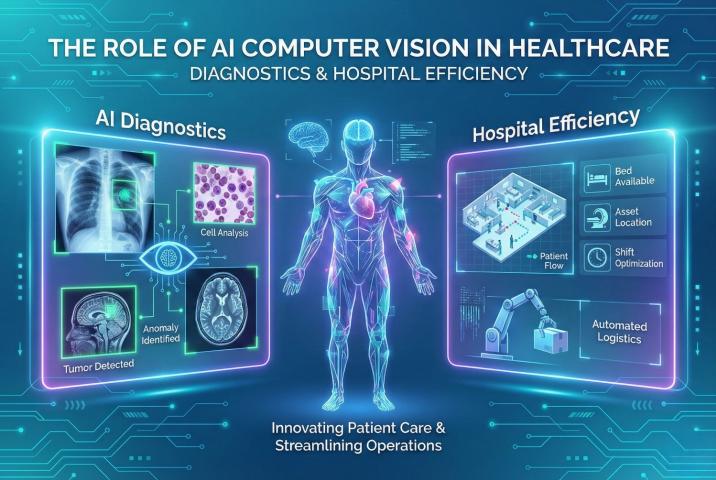
AI computer vision is shaping a new standard for diagnostic accuracy and operational efficiency across global healthcare systems. For enterprises and well-funded startups, the interest lies in using intelligent image and video analysis to strengthen clinical decisions and streamline complex workflows. As the volume of medical imaging grows each year, many organizations now evaluate how Computer Vision Services can reduce delays, enhance consistency, and support long-term digital transformation. This article explores how computer vision is used in diagnostic pipelines, operational processes, and enterprise-level decision making.
AI Computer Vision’s Contribution to Diagnostic Performance
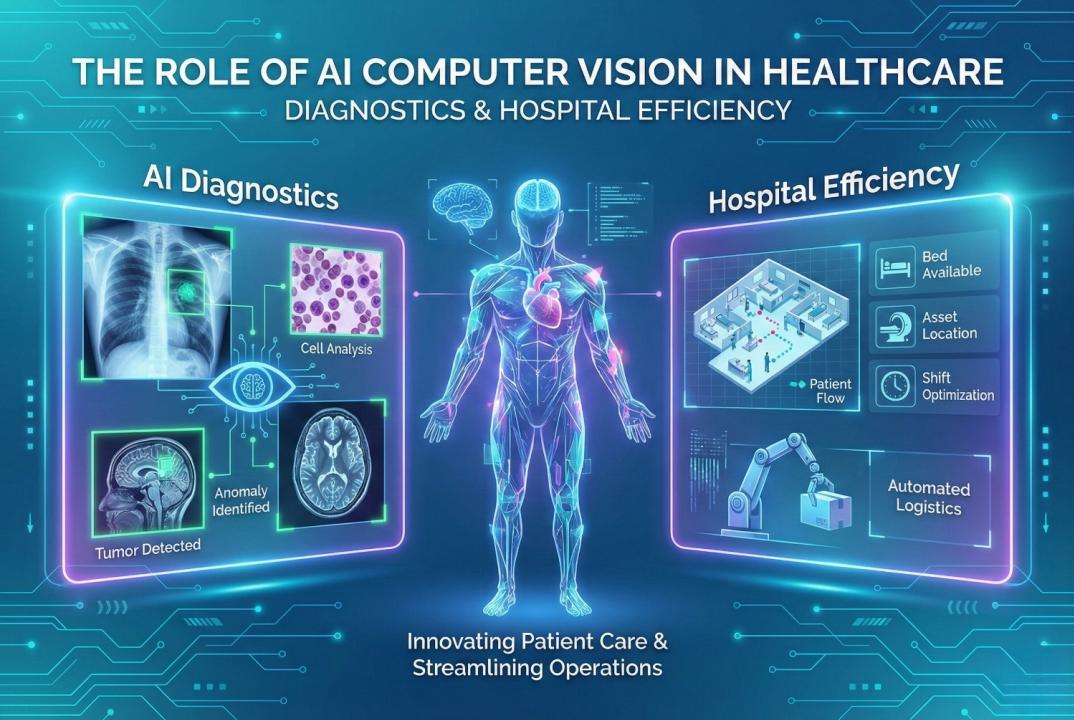
Healthcare diagnostics often involve time-consuming image analysis across multiple modalities, including MRI, CT scans, X-rays, and ultrasound. Human interpretation remains central, but the growing workload has increased the risk of oversight and slow turnaround times. AI computer vision provides a structured method for processing images at high speed while maintaining accuracy.
The technology identifies abnormalities, compares findings across patient histories, and supports physicians with objective insights. This improves the reliability of early disease detection and reduces the burden on radiology teams. Many enterprises rely on this approach to reduce diagnostic cycle times, especially in settings where patient volumes continue to accelerate.
Typical diagnostic contributions include:
- Automated image labeling that reduces manual processing.
- Highlighting subtle patterns that are difficult to detect during long review hours.
- Categorizing findings by urgency to help physicians prioritize cases.
- Detecting changes in follow-up scans to support treatment evaluation.
- Reducing variability across different radiologists’ interpretations.
- Improving documentation through structured outputs.
By enhancing accuracy and consistency, AI systems help organizations maintain clinical reliability even during peak patient load.
Operational Improvements Through Computer Vision in Hospital Environments
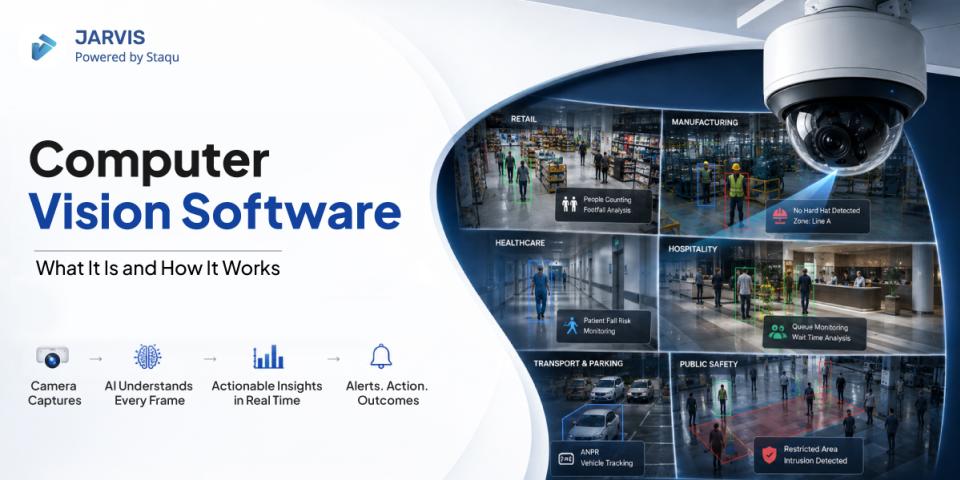
Clinical operations involve constant movement of patients, staff, equipment, and supplies. Manual oversight of these activities can be inefficient and prone to delays, especially in large hospitals. Computer vision helps address this by interpreting video streams from existing infrastructure and extracting actionable insights.
These capabilities reduce bottlenecks in daily workflows and support teams responsible for maintaining service quality. The goal is to ensure smoother patient flow, better equipment management, and faster response to critical incidents.
Operational efficiency gains often include:
- Tracking high-traffic areas to reduce crowding in emergency units.
- Monitoring bed availability and patient movement patterns.
- Detecting falls among high-risk patients in real time.
- Verifying hygiene compliance across critical stations.
- Monitoring supply levels and supporting inventory accuracy.
- Managing access control to sensitive zones.
- Supporting incident reporting through automated visual logs.
These improvements contribute to predictable operations and help healthcare leaders maintain consistency across complex clinical settings.
Enterprise-Level ROI From Computer Vision for Healthcare
For enterprises and high-growth healthcare startups, technology evaluation begins with clear ROI expectations. AI computer vision offers multiple quantifiable benefits, ranging from reduced clinical errors to time savings in operational activities. The return comes from automation, improved decision making, and optimized resource use.
Organizations typically measure ROI using factors such as reduced diagnostic review times, fewer safety incidents, improved patient throughput, and better usage of imaging equipment. Leaders often find that the greatest value emerges when the technology is integrated into multiple workflows instead of isolated pilot deployments.
ROI considerations include:
- Identifying manual tasks that consume significant clinical time.
- Estimating potential reductions in operational delays.
- Measuring improvements in staff utilization and scheduling.
- Reviewing integration costs with existing systems.
- Understanding regulatory requirements that may affect timelines.
- Evaluating how data quality influences model performance.
Enterprises that track these metrics from the beginning develop clearer investment strategies and gain higher returns from each deployment cycle.
The Importance of Strategic Guidance in Computer Vision Adoption
Healthcare environments involve strict compliance, sensitive patient data, and specialized hardware systems. This makes expert guidance essential. Many organizations benefit from strategic support when planning their computer vision roadmap, especially if they lack in-house AI teams or prior experience with large-scale deployments. This ecosystem of support often falls under computer vision consulting services, which help enterprises adopt the technology in a structured and risk-aware manner.
Consulting teams conduct workflow assessments, evaluate data availability, and recommend architecture models that fit organizational budgets. They ensure that each step, from pilot testing to system integration, follows a clear and compliant process. For enterprises planning multi-region adoption, this guidance reduces risk and helps them align with international healthcare standards.
Support typically includes:
- Use-case validation across clinical and operational settings.
- Compliance planning is aligned with regional regulations.
- Implementation roadmaps for phased adoption.
- Data quality audits and annotation strategies.
- Integration alignment with medical record systems.
- Training programs for clinical and administrative teams.
This structured approach ensures that investments lead to dependable outcomes and long-term usability.
The Role of Modern Computer Vision Platforms in Long-Term Scalability
Scalability is one of the main challenges for organizations planning multi-department rollouts. High-resolution imaging and continuous video analysis demand strong compute resources and optimized software pipelines. Modern platforms solve this by providing flexible, modular architectures that support real-time processing, hybrid deployment, and model lifecycle management. These capabilities define the value of robust computer vision software suitable for enterprise environments.
Scalable platforms typically support features such as GPU acceleration, edge processing, multimodal image compatibility, strong auditing controls, and integration with imaging systems. These features ensure consistent performance even as data volumes increase. Enterprises that choose adaptable platforms experience fewer upgrades, lower data management costs, and stronger continuity in clinical operations.
FAQs
1. What are the main advantages of using AI computer vision in healthcare settings?
AI computer vision improves diagnostic accuracy, reduces manual review time, and supports faster response during critical events. It helps hospitals improve performance across clinical and operational workflows while reducing the load on staff.
2. How does a Computer Vision Company support healthcare organizations during adoption?
A specialized vendor provides development teams, integration expertise, data guidance, and compliance support. Healthcare organizations rely on this experience to ensure stable and safe deployments within regulated environments.
3. What can enterprises expect from machine vision solutions in medical environments?
These systems automate monitoring, analyze imaging data, and provide structured insights for decision makers. They help reduce operational delays and support precision-driven diagnostic processes across departments.
4. Why do healthcare teams invest in computer vision solutions for clinical diagnostics?
These solutions offer consistent analysis, assist with early disease detection, and help clinicians manage rising imaging workloads. They also support better performance tracking across long-term treatments.
5. What makes computer vision development services valuable for large hospitals?
Development teams design, test, and deploy models suited to clinical data and imaging infrastructure. They also address integration challenges and create tailored modules that enhance diagnostic reliability.
Conclusion
AI computer vision is becoming an essential part of healthcare innovation, supporting more accurate diagnostics and smoother hospital operations. Enterprises and high-growth startups benefit from improved efficiency, reduced errors, and scalable data-driven decision-making.