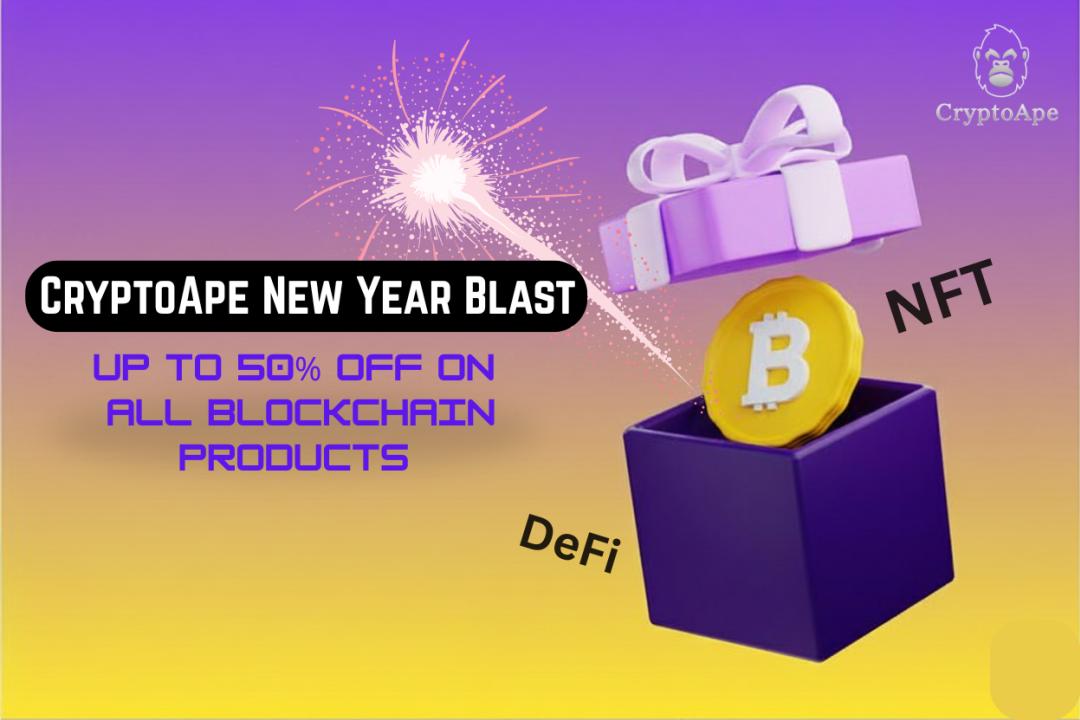
Blockchain adoption is no longer limited to early adopters or niche technology firms. Today, startups, enterprises, and digital-first businesses are actively exploring blockchain-based platforms to improve transparency, automation, and user trust. As the New Year begins, CryptoApe has introduced a limited-period initiative that reduces the cost barrier to blockchain development by offering up to 50% off across its blockchain product ecosystem.
Rather than positioning this as a sales-driven campaign, it’s better understood as an opportunity for businesses to evaluate, build, or scale blockchain solutions at a lower financial risk. This article explores what the New Year Blast includes, who it may be relevant for, and how organizations can approach blockchain development more strategically in the coming year.
Understanding the Purpose of the CryptoApe New Year Blast
The New Year Blast is structured around accessibility. Blockchain development often involves significant upfront investment—particularly for platforms such as crypto exchanges, DeFi applications, or NFT marketplaces. By reducing development costs, CryptoApe aims to make experimentation and deployment more practical for a wider range of businesses.
From a technology standpoint, the offer applies to both pre-built blockchain frameworks and custom development services, allowing flexibility based on business size, industry, and technical requirements.
Why Blockchain Development Is Gaining Momentum in 2025
Blockchain technology has steadily moved from experimentation to implementation. Several factors are contributing to this shift:
Increased demand for decentralized financial systems
Growing focus on data ownership and transparency
Expansion of Web3 applications beyond cryptocurrency
Maturing regulatory clarity in multiple regions
As organizations look to modernize digital infrastructure, blockchain-based systems are being evaluated for long-term scalability rather than short-term trends.
Blockchain Products Covered Under the New Year Initiative
Crypto Exchange Development Platforms
Crypto exchange platforms remain one of the most widely adopted blockchain use cases. These platforms facilitate digital asset trading while integrating security protocols, liquidity mechanisms, and compliance tools.
From an informational perspective, modern crypto exchange software typically includes:
Order matching engines
Secure wallet infrastructure
Risk management controls
User authentication and compliance layers
Lower development costs can make it easier for businesses to test exchange models without committing to large capital expenditures.
DeFi Application Development
Decentralized finance applications operate through smart contracts rather than centralized intermediaries. DeFi platforms support use cases such as decentralized trading, lending, staking, and yield mechanisms.
For businesses researching DeFi adoption, key considerations often include:
Smart contract reliability
On-chain transparency
User interface simplicity
Network scalability
The New Year cost reduction allows teams to prototype and deploy DeFi products with measured financial exposure.
NFT Marketplace Development
NFT marketplaces support digital ownership verification across sectors such as gaming, media, ticketing, and digital collectibles. Beyond art-focused platforms, NFTs are increasingly being explored for utility-driven applications.
Typical NFT marketplace features include:
Token minting functionality
Creator royalty mechanisms
Wallet integrations
Multi-chain compatibility
For organizations evaluating NFT-based models, reduced development costs can support market testing before large-scale rollout.
Web3 Application Development
Web3 applications focus on decentralization, peer-to-peer interaction, and user-controlled data. These applications often integrate blockchain, smart contracts, and decentralized storage systems.
Common Web3 use cases include:
DAO governance platforms
Decentralized identity systems
Blockchain-based gaming environments
Token-powered communities
From a strategic viewpoint, Web3 development aligns with long-term shifts toward user-centric digital ecosystems.
Smart Contract Development and Auditing
Smart contracts form the operational backbone of blockchain platforms. Errors or vulnerabilities in these contracts can lead to significant risks, making development and auditing equally important.
Smart contract services typically involve:
Business logic translation into code
Security-focused development practices
Automated testing
Independent auditing processes
Lower entry costs can help teams prioritize security without compromising budgets.
Who May Benefit Most from This Initiative
Early-Stage Startups
Startups exploring blockchain ideas can use the New Year initiative to validate concepts before seeking additional funding.
Growing Technology Companies
Mid-sized firms planning to integrate blockchain features into existing platforms may find the reduced development cost beneficial.
Enterprises Exploring Digital Transformation
Larger organizations assessing blockchain for operational efficiency or transparency can approach pilot projects with lower financial exposure.
Practical Considerations Before Starting Blockchain Development
Before moving forward with any blockchain project, businesses should consider:
Clear problem definition and use case relevance
Target users and adoption strategy
Regulatory and compliance requirements
Long-term maintenance and scalability
Cost savings are most effective when paired with thoughtful planning and realistic implementation goals.
Long-Term Value of Starting Blockchain Projects Early in the Year
Launching or upgrading blockchain platforms early in the year allows organizations to:
Align technical development with annual business goals
Allocate resources more effectively
Conduct phased testing and improvements
Respond faster to market feedback
From a planning perspective, timing can be as important as technology choice.
Conclusion
The CryptoApe New Year Blast provides a practical opportunity for businesses to approach blockchain development with reduced financial risk. By lowering cost barriers across multiple blockchain products, it enables experimentation, planning, and implementation in a more controlled and strategic manner.
For organizations considering crypto platforms, DeFi systems, NFT marketplaces, or Web3 applications, the New Year presents a natural checkpoint to evaluate technology direction. When approached thoughtfully, blockchain development can support long-term digital growth rather than short-term experimentation.
Get a Practical Overview Through a Demo Session
Curious to see how a blockchain solution would actually work for your business use case?
Request a free demo to explore the platform’s core features, user flow, and technical capabilities in a practical, no-obligation walkthrough. This helps you evaluate functionality, scalability, and real-world applicability before making any development decisions.
FAQs
1. What types of blockchain products are included in the CryptoApe New Year Blast?
The initiative covers a broad range of blockchain solutions, including crypto exchange platforms, DeFi applications, NFT marketplaces, Web3 applications, and smart contract development services.
2. Is this offer suitable for businesses new to blockchain technology?
Yes. The reduced development cost can help beginners explore blockchain use cases without committing to large upfront investments.
3. Does the discount apply to custom blockchain development?
In most cases, both customizable frameworks and fully tailored blockchain solutions are included, depending on project scope and requirements.
4. How does lower development cost impact project quality?
Cost reductions are related to seasonal pricing, not reduced technical standards. Quality, security, and scalability considerations remain essential.
5. When is the right time to start a blockchain project?
Starting early in the year allows for better planning, phased deployment, and alignment with long-term business objectives.