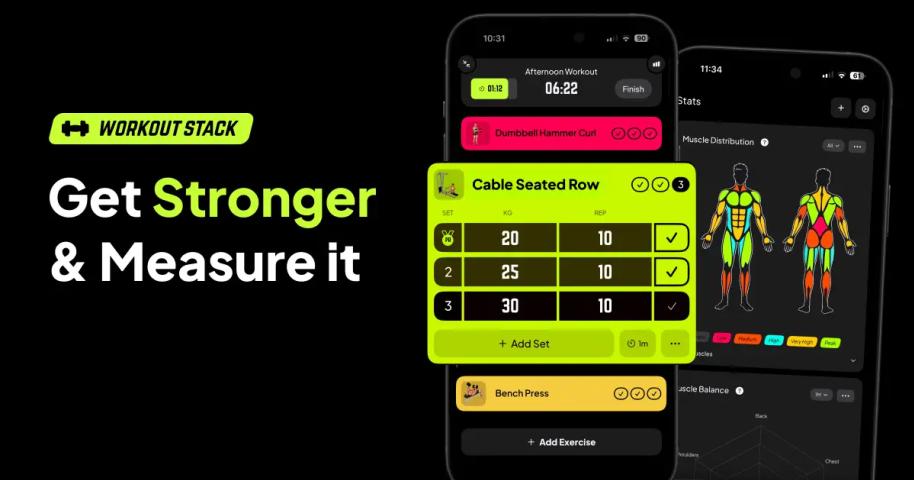
The digital fitness world has been going through quite a lot of changes in recent years, and among gym-goers, one deservedly popular application is Hevy—a simple yet powerful workout tracker that easily allows users to maintain a clean UI, intuitively log, and have structured progress tracking along with community engagement. In building a Fitness App Like Hevy, you'd need much more than basic tracking features. Modern users expect intelligence, automation, and personalization, all with seamless performance across devices.
The guide will outline everything one needs to know: from core features, user experience design, and technology stack to AI-driven enhancements and the cost to build apps like Hevy, and finally, the full development process of a top-tier fitness application development company.
Why Apps Like Hevy Are Gaining Popularity
Before designing a Workout App Like Hevy, it’s important to understand why it works so well. Gym users today don’t want distractions—they want tools that help them focus.
What makes Hevy successful?
Zero clutter, no unnecessary elements
Ability to create structured routines Exercise library with videos Community features and progress shar Smart analytics without overcomplication
This balance of simplicity and capability is exactly what users expect from modern gym apps.
If you’re building a workout tracker app like Hevy, your development strategy should follow the same principles while adding features that make your app stand out.
Essential Features Your Gym Workout App Must Include
A true Hevy alternative requires depth, speed, and personalization. Below is a uniquely crafted feature breakdown that avoids repeating generic fitness app structures:
1. Ultra-Fast Workout Logging
Tracking a workout should take seconds — not minutes.
Your app should:
- Allow swipe-based logging
- Auto-fill last used weights
- Suggest progression for each set
This reduces user frustration and keeps them engaged longer.
2. Routine Builder With Smart Recommendations
Unlike basic apps, a Fitness App Like Hevy must let users:
- Build custom routines
- Rearrange exercises quickly
- Create variations of existing plans
Adding AI can enhance this with automated routine suggestions based on performance history.
3. Clean Visual Progress Dashboard
Gym users want to visualize how far they’ve come.
Provide:
- Volume progression per muscle group
- Weekly load comparison
- PR badges and milestones
Make analytics exciting, not overwhelming.
4. Exercise Library With Form Videos
A workout tracker is incomplete without a rich exercise database.
Include:
- HD demonstration videos
- Multiple angle views
- Step-by-step instructions
- Common form errors and corrections
This improves user performance and safety.
5. Community + Social Sharing
Hevy’s social wall is extremely popular.
You can enhance it by including:
- Workout posts
- Streak badges
- Private groups for friends
- Personal best share cards
Fitness communities significantly boost app retention.
6. Offline Syncing
Gym networks are inconsistent. Your app must:
- Save all workouts offline
- Sync automatically when connected
This feature alone differentiates premium workout apps.
7. AI-Enhanced Features (To Surpass Hevy)
If you want your app to be truly competitive, integrate AI elements:
- AI form detection using the camera
- AI training recommendations
- AI-based recovery and rest-day suggestions
This puts your app in a higher league.
Advanced Features to Stand Out From Competitors
To compete with top apps, your app must be more than just a tracker. Consider adding:
• Wearable Integration
Connect with:
- Apple Watch
- Garmin
- Fitbit
- Samsung Health
This adds automatic heart rate and calorie tracking.
• Gym Equipment Scanning
Let users scan QR codes on machines to track:
- Machine used
- Sets performed
- Target muscles
• Nutrition Add-On (Optional)
Even though Hevy doesn’t offer it, adding:
- Macro tracking
- Meal suggestions
- Barcode scanning
- makes your app more holistic.
• Smart Rest Timer
A timer that adjusts based on:
- Previous set intensity
- Fatigue levels
- Heart rate (if wearables connected)
This is a premium-level feature loved by athletes.
Development Process: How to Create a Fitness App Like Hevy
A reliable fitness app development company follows a detailed development workflow to ensure a polished, scalable product.
Below is a unique step-by-step process:
1. Product Discovery & Competitive Research
Identify:
- Your target audience
- The exact gaps in existing apps
- Unique value propositions for your version
Document user journeys, data flow, and app interactions.
2. UI/UX Design Focused on Speed & Simplicity
The interface should be:
- Black/white minimal theme
- Clean fonts
- Large touch-friendly logging buttons
- Eye-friendly dark mode
A fitness app’s success depends heavily on usability.
3. Choosing the Right Tech Stack
- Backend
Node.js / Django / Laravel
- Frontend
Flutter / React Native
- Database
PostgreSQL / MongoDB
- AI & ML
Python, TensorFlow, MediaPipe
- Cloud
AWS/Google Cloud
This ensures your app is scalable for millions of users.
4. Core Development
Your developers build:
- Workout creation engine
- Logging system
- Analytics engine
- AI modules
- Social features
Each module must be robust and independently testable.
5. Testing in Real Gym Environments
Before launching, test:
- Logging speed
- Offline mode
- Device battery consumption
- Data accuracy
- AI form detection in real lighting conditions
Real-world testing sets exceptional apps apart.
6. Deployment & Launch
Deploy across:
- Google Play Store
- Apple App Store
Implement A/B onboarding screens to improve conversions.
7. Maintenance & Continuous Feature Updates
A Hevy alternative must evolve.
Add:
- New exercises
- Updated AI features
- Seasonal challenges
- New UI themes
Constant upgrades keep the app fresh.
Cost To Build Apps Like Hevy
The final cost depends on features, AI complexity, UI design quality, and platform choices.
Estimated Cost Breakdown
Feature Type | Cost Range (USD) |
Basic Workout Tracker | $20,000–$35,000 |
Mid-Level App (Routines + Social Wall) | $40,000–$70,000 |
Advanced AI-Powered Hevy Alternative | $80,000–$150,000+ |
A top fitness mobile app development company ensures optimized cost without compromising performance.
Why Hire a Professional Fitness App Development Company?
Partnering with experts gives you:
- Industry-specific UI/UX expertise
- AI and wearable integration skills
- Experience building large-scale fitness apps
- Faster delivery
- Better security, accuracy & user engagement
You need a team that understands fitness mobile app development deeply to build a market-ready product.
Final Thoughts
Building a Workout Tracker App Like Hevy requires a combination of simplicity, speed, and intelligent automation. Users today don’t want generic fitness apps—they want platforms that understand their goals, track progress effectively, and offer a seamless training experience.
With the right partner—a trusted fitness app development company, you can build a powerful, AI-driven gym app that not only matches Hevy but surpasses it with smart features, cleaner UI, and modern integrations.