
AI development companies are no longer experimental partners brought in for side projects. They now sit at the operational core of modern businesses that intend to scale without inflating payroll, latency, or decision risk. This shift is not cosmetic. It is structural. AI development agencies are being used to hardwire intelligence into workflows that previously depended on brittle human processes and outdated software logic.
Operational Intelligence That Does Not Sleep
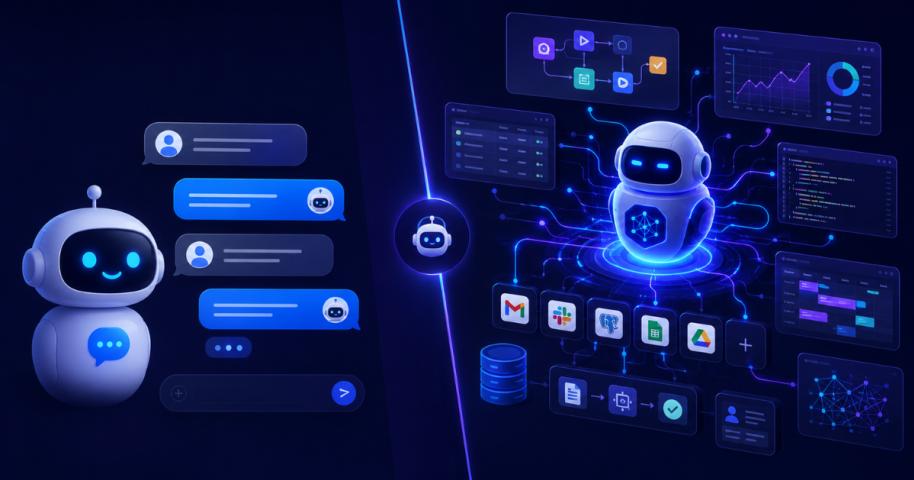
Modern businesses bleed efficiency through fragmented systems. Data lives everywhere and informs nothing. AI development companies address this by engineering centralized intelligence layers that observe, learn, and react continuously. These systems do not wait for quarterly reviews or manual dashboards.
AI-driven operations platforms ingest live inputs from CRM, ERP, analytics, and customer channels simultaneously. The result is real-time operational awareness. Inventory adjusts itself. Support queues rebalance dynamically. Fraud flags emerge before financial damage occurs. This is not an automation theater. It is operational control built on applied machine learning.
Decision Velocity Without Human Bottlenecks
Leadership teams often confuse data access with decision-making capability. They are not the same. AI development agencies focus on decision acceleration, not reporting.
By deploying predictive models, businesses move from reactive posture to probabilistic foresight. Revenue forecasting stops being a spreadsheet ritual. Pricing engines self-correct based on demand elasticity. Marketing spend reallocates automatically based on attribution signals, not gut instinct. Decisions compress from weeks into milliseconds. That compression becomes a competitive weapon.
Cost Structures That Bend Instead of Break
Hiring more people has diminishing returns. Software scales. AI scales asymmetrically.
AI development companies help businesses replace linear cost growth with algorithmic leverage. One model can replace dozens of repetitive roles without compromising accuracy or uptime. Customer support chatbots deflect high-volume, low-complexity tickets. Computer vision systems remove manual inspection costs from logistics and manufacturing. The payroll curve flattens while output increases.
This is not about workforce elimination. It is about reallocating human capital toward work that requires judgment, creativity, and accountability.
Product Differentiation That Competitors Cannot Copy Quickly
Features can be cloned. Intelligence cannot.
AI development agencies embed proprietary learning loops into products, making them evolve uniquely with each user interaction. Recommendation engines become sharper over time. Personalization models adapt to micro-behaviors competitors cannot observe. Predictive maintenance tools learn from proprietary failure data unavailable elsewhere.
The product stops being static software. It becomes a living system. That creates defensibility rooted in data gravity and model refinement, not branding slogans.
Security and Risk Management at Machine Speed
Threat landscapes move faster than human response cycles. Manual security reviews fail by design.
AI development companies deploy anomaly detection systems that monitor network traffic, financial transactions, and user behavior continuously. These systems do not rely on known signatures alone. They identify deviation. Risk surfaces early. Breaches shrink in scope. Compliance reporting becomes automated rather than forensic.
Risk management transitions from post-incident explanation to preemptive containment.
Scalability Without Architectural Rewrites
Traditional systems crack under growth. AI-first architectures anticipate it.
AI development agencies design modular, model-driven infrastructures that scale horizontally. New data sources plug in without rewrites. Models retrain without downtime. Cloud-native pipelines absorb traffic spikes without service degradation. Businesses grow without the recurring trauma of platform rebuilds.
This matters during hypergrowth phases where technical debt can kill momentum faster than market competition.
Customer Experience That Feels Intentional
Generic experiences repel modern users. Personalization is no longer optional.
Through natural language processing, behavioral modeling, and sentiment analysis, AI development companies enable businesses to understand customers beyond surface metrics. Messaging adapts tone. Interfaces adjust complexity. Support anticipates frustration before escalation. Customers feel understood, not processed.
Retention increases quietly. Churn drops without discounting. Loyalty forms without campaigns.
Strategic Focus Instead of Tactical Noise
AI absorbs operational noise. Leadership regains altitude.
By offloading monitoring, optimization, and routine decisioning to intelligent systems, executives focus on market positioning, partnerships, and long-term strategy. AI development agencies are not vendors in this context. They are infrastructure partners shaping how the business thinks and reacts.
AI development companies and AI development agencies now define how modern businesses compete, scale, and survive. Those delaying adoption are not cautious. They are structurally exposed.