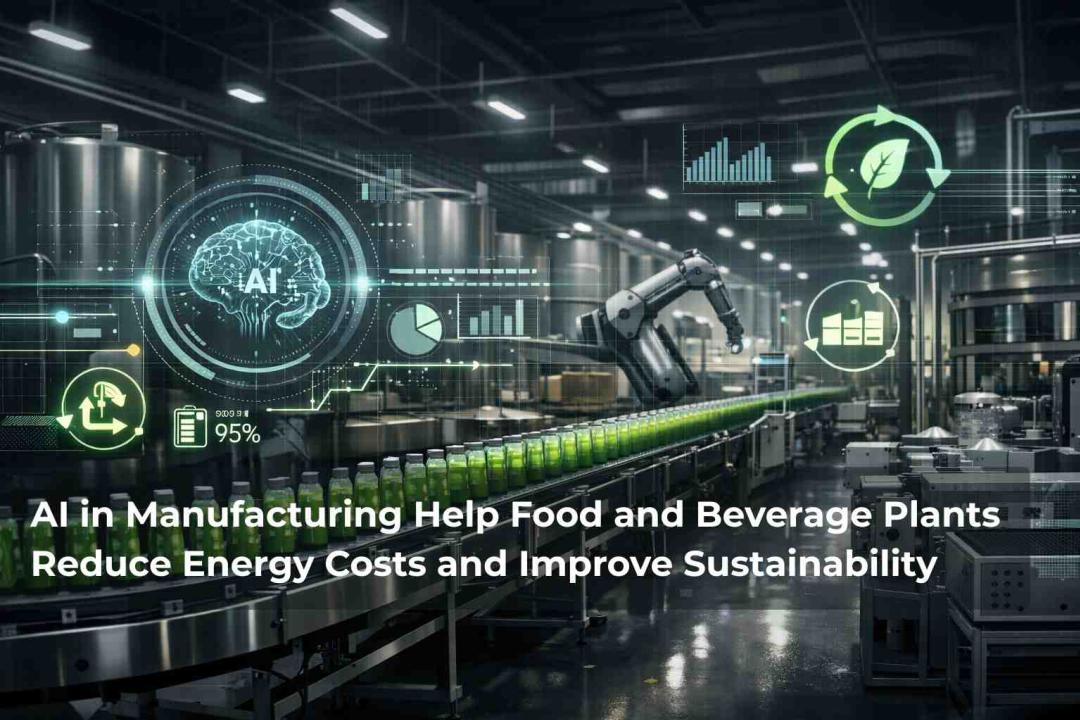
Food and
Beverage manufacturing is one of the most energy-intensive industries, where
even small inefficiencies can directly impact profitability, product quality,
and sustainability goals. From refrigeration and compressed air to boilers,
chillers, and production lines, managing energy and assets efficiently has
become a business necessity—not just a compliance requirement.
This is
where AI in manufacturing is
transforming how Food and Beverage plants operate.
The
Energy Challenge in Food and Beverage Manufacturing
F&B
plants operate under strict quality, hygiene, and temperature controls. Energy
usage is influenced by:
- Production volume and batch
variations
- Seasonal demand and ambient
conditions
- Asset health and operating
patterns
- Water usage and thermal processes
Traditional
energy management systems often provide dashboards and reports, but they fail
to explain why energy consumption changes or how to correct
inefficiencies in real time.
How
AI-Driven Energy Intelligence Changes the Game
AI-driven
energy intelligence
goes beyond monitoring. It connects production data, utilities, and asset
performance into one contextual intelligence layer, enabling smarter and faster
decisions.
Key value
areas include:
- Energy normalisation to compare performance across
different production loads and shifts
- Predictive insights to detect inefficiencies
before they cause losses
- Prescriptive recommendations that guide teams on what
actions to take next
Instead of
asking “How much energy did we consume?”, plants can now ask “How
much energy should we have consumed, and why?”
Improving
Asset Performance and Lifecycle
In Food
and Beverage manufacturing, asset reliability is critical. AI continuously
analyses equipment behaviour to identify:
- Underperforming refrigeration
systems
- Inefficient boilers or
chillers
- Excessive compressed air
losses
- Early signs of mechanical
degradation
This helps
plants reduce unplanned downtime, extend asset life, and lower maintenance
costs—while maintaining food safety and quality standards.
Driving
Carbon Footprint Reduction with Data
Sustainability
is no longer optional in the F&B sector. Customers, regulators, and global
supply chains demand measurable progress.
AI enables
carbon footprint reduction by:
- Calculating real-time
emissions per unit of production
- Linking energy usage directly
to CO₂ impact
- Supporting ESG and
sustainability reporting with accurate data
By
embedding sustainability into daily operations, plants can reduce emissions
without disrupting productivity.
Role of
Energy Management Systems with AI
A modern energy management system enhanced with
AI transforms static reporting into continuous optimisation.
With AI,
F&B plants gain:
- Real-time visibility across
energy, water, and utilities
- Automated anomaly detection
instead of manual audits
- Continuous learning models
that improve with usage
This is
especially valuable for multi-site operations where standardisation and
benchmarking are essential.
Industry
Proof: AI in Action
Large Food
and Beverage manufacturers have already demonstrated how AI-led energy
intelligence delivers measurable impact, reducing energy consumption, improving
sustainability performance, and enabling data-driven decision-making across
diverse facilities.
These
outcomes are achieved without replacing existing infrastructure, making AI
adoption practical and scalable.
Why
This Matters for the Food and Beverage Industry
AI
empowers Food and Beverage manufacturers to:
- Balance energy efficiency with
production quality
- Improve asset performance
across the lifecycle
- Achieve sustainability targets
with confidence
- Prepare operations for future
compliance and digital transformation
When data
turns into intelligence, operations move from reactive firefighting to
proactive optimisation.
For Food
and Beverage manufacturers, the path to sustainable growth lies in smarter use
of data, not more complexity. Greenovative & AI-driven energy intelligence
enables plants to improve efficiency, reduce emissions, and optimise assets
while maintaining strict production standards.