
If you’ve spent any time exploring new crypto exchanges, you’ve probably noticed something familiar. The layout feels the same. The trading screen looks similar. Even the features seem oddly predictable. That’s not a coincidence. Most new exchanges are, in some way, following the same blueprint Binance popularized.
So why does this keep happening? Is it laziness, or is there a smart business reason behind it? If you’re thinking about launching an exchange, this blog will help you understand why Binance’s model became the default choice and what that means for your own plans.
Binance Didn’t Just Grow Fast, It Solved Real Problems
When Binance launched, crypto trading was messy. Platforms were slow, confusing, and often unreliable during high traffic. Binance focused on speed, simplicity, and scale from day one to make executing trades really quick. The interface was clean enough for beginners but powerful enough for active traders.
That balance mattered. New users didn’t feel lost, and experienced traders didn’t feel limited. Over time, this approach proved itself in real-world conditions, especially during market surges when other exchanges went offline. For anyone building a new exchange today, copying a model that already survived those stress tests feels like a safer bet.
Trust Is Hard to Build, Proven Models Help
In crypto, trust is everything. Users are depositing real money into platforms they can’t physically see. Any bug, delay, or security issue raises instant red flags.
Binance earned trust by staying online, processing withdrawals, and constantly expanding features without breaking the core experience. New exchanges don’t have years to slowly build that reputation. By following a structure users already recognize, they lower the friction. Traders feel comfortable faster because they already know how things work.
This familiarity reduces one of the biggest challenges new exchanges face which is convincing users to stay.
The Feature Set Covers Almost Every Use Case
Binance’s model isn’t just about spot trading. It includes futures, staking, launchpads, wallets, and strong admin controls behind the scenes. For a new exchange, this is appealing because it answers multiple business needs at once.
Instead of guessing which features users might want, founders can start with a setup that already supports high-volume trading, multiple revenue streams, and future expansion. It’s not about copying blindly but starting with a structure that doesn’t limit growth early on.
Speed to Market Matters More Than Reinvention
Many new exchanges aren’t trying to reinvent trading. They want to enter the market quickly, capture a niche, or serve a regional audience. Building everything from scratch takes time, money, and risk.
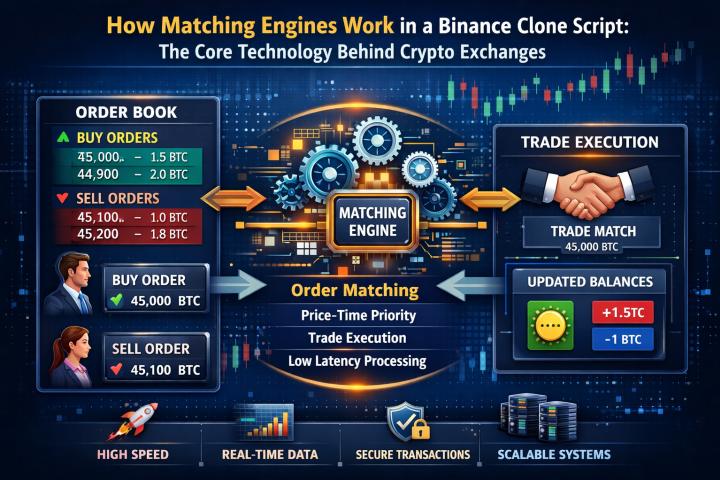
That’s why most businesses use a Binance clone script to launch with a tested foundation instead of spending months building core systems like order matching, wallets, and admin dashboards. The focus shifts from technical survival to marketing, compliance, and user growth.
Users Actually Prefer Familiar Experiences
This part is often overlooked. Traders don’t want to “learn” a new exchange every time they sign up. If they already know how Binance works, they can start trading immediately on a similar platform.
Familiar layouts and workouts reduce mistakes and build confidence. That’s good for both users and businesses. When people feel comfortable, they trade more, stay longer, and recommend the platform to others.
Innovation still matters, but it usually comes after the basics are solid.
Copying the Model Doesn’t Mean Copying the Brand
Here’s is a key point one has to keep in mind. Following Binance’s model doesn’t mean becoming Binance. Successful exchanges add their own value on top of that foundation. Some focus on better customer support. Others specialize in local markets, specific assets, or simpler onboarding. The model gives structure, but the differentiation gives identity.
How To Make Your Exchange Stand Out Beyond Binance?
But copying the model alone is never enough. A familiar interface may attract users initially, but long-term growth depends on what you build on top of it. That could be better localization, clearer compliance, stronger customer support, unique asset offerings, or a smoother onboarding experience for non-technical users. These are the areas where trust deepens and loyalty forms.
In today’s competitive market, the winners won’t be the exchanges that look like Binance. They’ll be the ones who understand why Binance works and then adapt that knowledge to serve a specific audience better.
The real challenge isn’t choosing the model. It’s deciding how you’ll improve the experience once users arrive. That’s where long-term success is built.