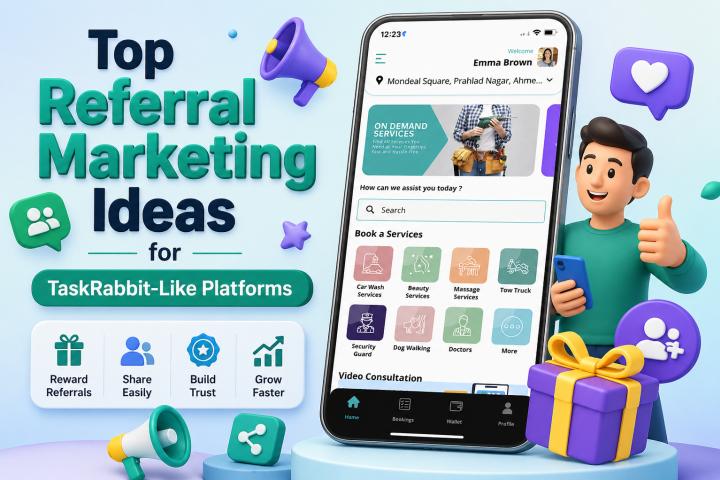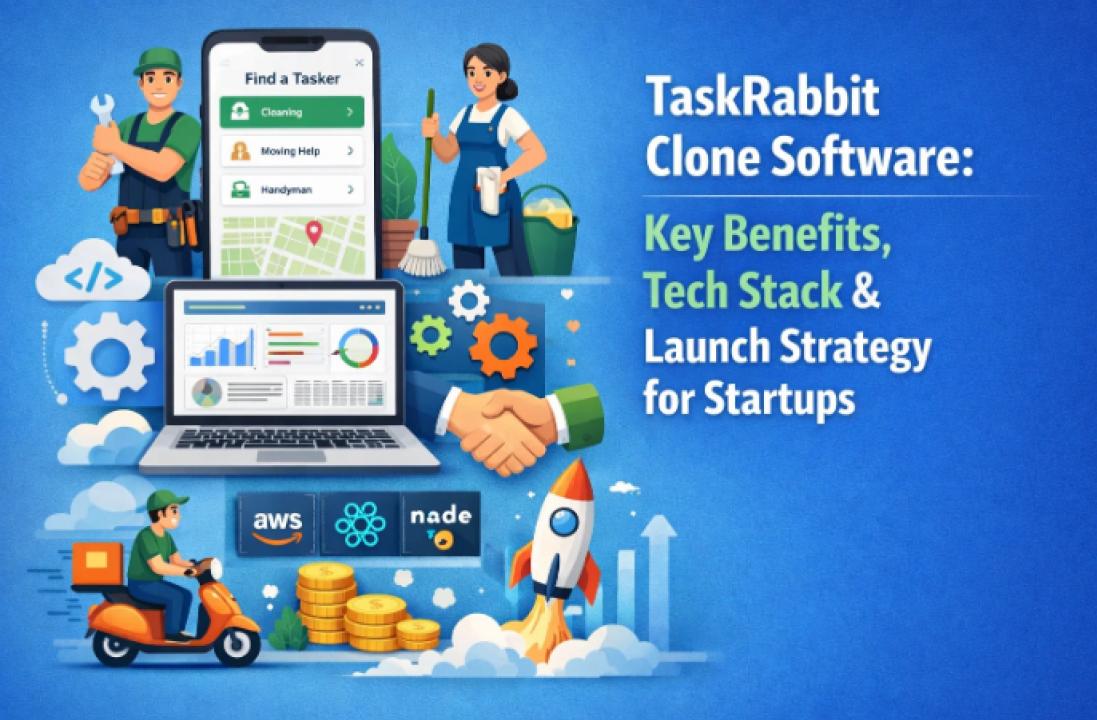
The gig economy has reshaped how consumers access local services. Platforms like TaskRabbit have demonstrated that structured digital marketplaces can efficiently connect service providers with customers in real time. For startups entering this domain, a TaskRabbit Clone offers a fast-track framework to build an on-demand service marketplace without starting from scratch.
This article explores the technical architecture, development stack, scalability considerations, and launch strategy behind building a robust TaskRabbit Clone platform. The focus is strictly technology-driven, vendor-neutral, and aligned with startup-level implementation realities.
Understanding the Technical Scope of a TaskRabbit Clone
A TaskRabbit Clone is not simply a copy of an existing product. It is a customizable on-demand marketplace framework designed to replicate the core functionality of service-matching platforms while allowing feature expansion, localization, and vertical specialization.
At its core, the system consists of three primary modules: the customer application, the service provider application, and the administrative dashboard. These components operate within a unified backend infrastructure that manages user data, payments, task allocation, notifications, and analytics.
A scalable Taskrabbit clone app must also support dynamic scheduling, geolocation tracking, secure transactions, and rating systems, all powered by cloud-based infrastructure.
Core Architecture of a Taskrabbit Clone App
The technical architecture of an On-Demand Handyman App Like TaskRabbit typically follows a layered structure:
Frontend Layer
The frontend consists of user-facing mobile applications and web panels. Most startups choose cross-platform frameworks such as React Native or Flutter for rapid deployment, while others opt for native development using Swift for iOS and Kotlin for Android.
Frontend responsibilities include:
- Real-time task browsing
- Booking and scheduling
- Secure payment interface
- Profile management
- Push notifications
A responsive UI is critical to reduce friction and increase task completion rates.
Backend Layer
The backend forms the operational engine of the TaskRabbit Clone. It manages authentication, service categorization, geospatial matching, transaction logs, and messaging systems.
Backend frameworks often include Node.js, Django, Ruby on Rails, or Spring Boot. RESTful APIs or GraphQL APIs facilitate communication between mobile apps and the server.
Microservices architecture is increasingly preferred over monolithic systems for scalability and fault isolation.
Database Layer
Structured and unstructured data storage must be optimized for speed and reliability. PostgreSQL and MySQL are commonly used for transactional data, while MongoDB is suitable for flexible schema models.
Redis or Memcached can be used for caching to reduce database load during peak traffic.
Cloud Infrastructure
Cloud platforms such as Amazon Web Services, Google Cloud Platform, and Microsoft Azure provide scalable hosting, load balancing, and auto-scaling capabilities. Startups typically deploy containerized environments using Docker and orchestrate them with Kubernetes.
This infrastructure ensures that the system can handle sudden spikes in bookings.
Key Benefits of Using TaskRabbit Clone Software
A TaskRabbit Clone offers several technical advantages for startups looking to reduce development complexity while maintaining flexibility.
Reduced Development Timeline
Building a marketplace from scratch involves designing APIs, testing workflows, integrating payment gateways, and implementing security measures. A Readymade Service App significantly shortens this timeline by providing a pre-structured codebase.
Developers can focus on customization and performance optimization instead of rebuilding core mechanics.
Proven System Architecture
Clone App Solutions often replicate validated business logic such as task bidding, commission structures, and review systems. These components have been tested in real-world use cases, reducing the likelihood of architectural flaws.
However, startups must audit the codebase thoroughly to ensure security compliance and scalability readiness.
Modular Customization
Modern Taskrabbit clone app frameworks use modular code design. This allows integration of additional services such as AI-based recommendations, subscription plans, or advanced analytics.
Modular systems also simplify maintenance and feature rollouts.
Lower Technical Risk
Developing an On-Demand Handyman App Like TaskRabbit requires integration with third-party APIs such as payment gateways and geolocation services. Clone-based development reduces integration errors by offering pre-configured connectors.
This lowers technical debt in early-stage development.
Essential Technical Features for a Competitive Platform
Technology determines marketplace efficiency. A TaskRabbit Clone must include features that enhance automation, reliability, and data-driven decision-making.
Real-Time Geolocation Matching
Location-based task assignment requires integration with mapping services such as Google Maps. Geofencing and distance-based filtering improve task accuracy.
WebSockets or Firebase can enable real-time updates for tracking service providers.
Secure Payment Gateway Integration
Payment processing must comply with PCI DSS standards. Integrations with platforms like Stripe or PayPal ensure secure and seamless transactions.
Tokenization and encryption are essential to protect financial data.
Multi-Role Access Control
Role-based authentication ensures secure access across customer, provider, and admin panels. OAuth 2.0 and JWT-based authentication frameworks are commonly implemented.
This prevents unauthorized data access.
Rating and Feedback Algorithms
Trust-building mechanisms rely on transparent review systems. Advanced algorithms can detect spam reviews and flag suspicious patterns.
Machine learning models may be applied to evaluate provider reliability scores.
Notification Systems
Push notifications, SMS alerts, and email triggers keep users informed about booking updates. Services like Firebase Cloud Messaging streamline notification management.
Event-driven architecture ensures instant updates.
Choosing Between Readymade Service App and Custom Development
From a technology standpoint, startups must decide between using a Readymade Service App framework or building from scratch with an on demand app development company.
A readymade system accelerates deployment but may limit deep architectural flexibility. Custom development offers full control but requires more time and capital investment.
Hybrid approaches are increasingly common, where startups begin with Clone App Solutions and gradually refactor modules into microservices as traffic grows.
The decision should be based on scalability requirements, funding stage, and long-term technology roadmap.
Security Considerations in TaskRabbit Clone Development
Security is non-negotiable in service marketplaces. A TaskRabbit Clone must implement:
End-to-end encryption for messaging, HTTPS protocols for data transmission, and regular penetration testing.
Data storage must comply with GDPR or regional privacy regulations. Implementing multi-factor authentication enhances account protection.
Automated monitoring tools should detect anomalies in login patterns or transaction flows.
Scalability Strategy for Startups
Scalability planning must begin at the architectural level. A monolithic backend may suffice during MVP stage, but as user traffic increases, microservices architecture becomes essential.
Load balancers distribute incoming traffic across multiple servers. Database sharding and replication improve performance under heavy usage.
Containerization using Docker ensures consistent deployment across environments. Kubernetes automates scaling processes based on resource demand.
Cloud-native architecture reduces infrastructure bottlenecks.
DevOps and CI/CD Implementation
Continuous Integration and Continuous Deployment pipelines are crucial for iterative improvement of a TaskRabbit Clone.
Tools such as Jenkins, GitHub Actions, or GitLab CI automate code testing and deployment. Automated unit and integration testing reduces production errors.
Version control systems like Git maintain codebase integrity. Infrastructure-as-Code using Terraform ensures reproducible environments.
DevOps practices significantly shorten release cycles.
Data Analytics and AI Integration
Data analytics enhances operational efficiency in a Taskrabbit clone app. Admin dashboards should provide real-time metrics such as:
- Task completion rate
- Provider performance
- Revenue analytics
- Customer retention trends
AI-based features may include dynamic pricing, predictive task demand modeling, and automated fraud detection.
Machine learning pipelines can analyze historical booking data to optimize task allocation.
Performance Optimization Techniques
High-performance applications retain users. Key optimization strategies include:
Lazy loading of images and assets to reduce load time.
API response caching using Redis.
Database indexing for faster query execution.
CDNs such as Cloudflare improve content delivery speed globally.
Regular performance audits identify bottlenecks before they impact user experience.
Launch Strategy for a TaskRabbit Clone Startup
Technology planning does not end with development. A structured launch strategy ensures smooth onboarding and system stability.
MVP Deployment
Begin with a Minimum Viable Product focusing on core booking and payment features. Avoid overloading the system with non-essential modules during initial release.
Early user feedback helps refine technical workflows.
Beta Testing Phase
Invite limited users to test the platform under real-world conditions. Monitor server performance, response times, and error logs.
Bug tracking tools such as Jira streamline issue resolution.
Infrastructure Stress Testing
Simulate high traffic scenarios using load testing tools like Apache JMeter. Identify scaling limitations before public launch.
This prevents system crashes during marketing campaigns.
Gradual Feature Rollout
Introduce advanced features such as AI recommendations or subscription models in phases. Feature flags allow controlled deployment.
This ensures minimal disruption to users.
Role of an On Demand App Development Company
Startups lacking in-house expertise often collaborate with an on demand app development company. From a technical perspective, such partnerships can accelerate architecture planning and deployment.
However, startups should retain control over source code ownership, documentation, and DevOps access. Transparency in technology stack selection is essential.
Independent code audits are recommended before production deployment.
API Ecosystem and Third-Party Integrations
A TaskRabbit Clone operates within an ecosystem of APIs. Common integrations include:
Payment APIs
Mapping and geolocation services
SMS gateways
Cloud storage systems
Well-documented REST or GraphQL APIs simplify integration with future services.
API rate limiting and monitoring prevent abuse.
Future-Proofing Your TaskRabbit Clone Platform
Technology evolves rapidly. To remain competitive, startups must design systems that support emerging innovations.
Serverless architecture can reduce operational overhead. AI-driven chatbots enhance customer support efficiency.
Blockchain-based identity verification may improve trust and transparency in high-value services.
Adopting modular architecture ensures adaptability.
Common Technical Mistakes to Avoid
Many startups underestimate infrastructure costs. Improper database indexing leads to slow response times.
Neglecting security audits increases vulnerability risks. Over-customizing early-stage platforms complicates scaling later.
Clear technical documentation and consistent code reviews prevent maintainability issues.
Conclusion
Building a scalable TaskRabbit Clone requires more than replicating a marketplace interface. It demands strategic architectural planning, secure integrations, scalable infrastructure, and a structured deployment roadmap.
By leveraging a modular tech stack, implementing DevOps best practices, and prioritizing security and performance optimization, startups can create a reliable on-demand marketplace platform.
Whether starting with a Readymade Service App or partnering with an on demand app development company, long-term success depends on continuous technical evolution and system resilience.
A well-architected TaskRabbit Clone positions startups to compete effectively in the growing on-demand services ecosystem, where efficiency, scalability, and reliability determine market leadership.