The food delivery industry has transformed the way customers order and experience meals. From local restaurants expanding their reach to startups building digital-first food brands, mobile applications have become the backbone of modern food service businesses. A well-planned food delivery app development guide helps entrepreneurs and enterprises understand how to build scalable platforms that deliver convenience, speed, and personalized experiences.
Whether you are a startup founder, restaurant owner, or enterprise decision-maker, understanding the latest features and emerging technologies is essential to stay competitive. This micro blog explores the must-have features, evolving technology trends, development benefits, and cost considerations involved in building a successful food delivery application.
Why Food Delivery Apps Continue to Grow
Consumer behavior has changed dramatically in recent years. Customers expect instant ordering, real-time tracking, multiple payment options, and personalized recommendations. Businesses that adopt digital ordering platforms gain access to a wider audience and stronger customer engagement.
Following a structured food delivery app development guide allows businesses to avoid common mistakes and build applications aligned with market expectations.
Food Delivery App Development Benefits for Businesses
Before exploring features and technologies, it is important to understand why companies invest in food delivery apps.
1. Expanded Customer Reach
Mobile apps allow restaurants and food startups to serve customers beyond physical locations. Customers can browse menus anytime and place orders with just a few taps.
2. Increased Revenue Opportunities
Businesses can introduce subscription plans, delivery charges, promotional campaigns, and loyalty programs to boost recurring revenue.
3. Improved Customer Retention
Push notifications, personalized offers, and reward systems encourage repeat orders and long-term engagement.
4. Operational Efficiency
Automation simplifies order management, kitchen coordination, and delivery logistics.
5. Data-Driven Decision Making
Analytics tools provide insights into customer preferences, peak hours, popular menu items, and delivery performance.
These food delivery app development benefits make digital transformation essential for restaurants competing in modern markets.
Core Types of Food Delivery Apps
Businesses usually choose one of these business models:Restaurant-owned delivery apps
- Aggregator platforms connecting multiple restaurants
- Cloud kitchen-based ordering apps
- Grocery or meal kit delivery platforms
Each model requires different features and technology stacks, impacting the overall food delivery app development cost.
Must-Have Features in Food Delivery App Development
A successful food delivery platform includes multiple user panels working together seamlessly.
Customer App Features
Easy Registration & Profile Management
Users should be able to sign up using email, phone number, or social login.
Advanced Search and Filters
Customers must easily search restaurants by cuisine, ratings, dietary preferences, or delivery time.
Real-Time Menu Updates
Restaurants can update availability and pricing instantly.
Smart Recommendations
AI-driven suggestions based on past orders improve engagement.
Order Tracking
Live tracking increases transparency and builds trust.
Multiple Payment Options
Credit cards, digital wallets, online banking, and contactless payments improve checkout experiences.
Ratings and Reviews
Customer feedback helps maintain quality standards.
Restaurant Panel Features
Restaurants need dedicated dashboards to manage operations.
- Menu management tools
- Order notifications
- Inventory tracking
- Revenue analytics
- Promotion and discount controls
These features streamline kitchen workflows and reduce manual errors.
Delivery Partner App Features
Efficient delivery operations require:
- Route optimization
- GPS navigation
- Earnings dashboard
- Delivery status updates
- Digital proof of delivery
Faster deliveries directly impact customer satisfaction.
Admin Panel Features
The admin dashboard controls the entire ecosystem.
Key capabilities include:
- Customer and vendor management
- Commission setup
- Payment tracking
- Performance analytics
- Fraud monitoring
Most businesses rely on an experienced food delivery app development company to build scalable admin systems that manage thousands of daily transactions efficiently.
Technology Trends Transforming Food Delivery Apps
Technology innovation is reshaping how food delivery platforms operate. Below are the major trends influencing development strategies.
1. Artificial Intelligence and Machine Learning
AI enhances user experiences through personalization and automation.
Applications include:
- Predictive food recommendations
- Demand forecasting
- Delivery time estimation
- Fraud detection
Machine learning models analyze ordering patterns to optimize restaurant operations.
2. Cloud Computing Infrastructure
Cloud technology allows apps to scale quickly during peak hours.
Benefits include:
- Reduced server downtime
- Faster deployment cycles
- Secure data storage
- Global accessibility
Cloud-based architecture also helps businesses control infrastructure expenses.
3. Real-Time GPS Tracking
Customers expect transparency after placing orders.
- GPS integration provides:
- Accurate delivery tracking
- Route optimization
- Driver performance monitoring
This improves operational efficiency and reduces delivery delays.
4. Contactless Delivery Technology
Safety and convenience have made contactless delivery a standard feature.
Customers can:
- Pay online
- Select doorstep delivery
- Receive digital confirmations
This reduces physical interaction while improving delivery speed.
5. Internet of Things (IoT) Integration
Some advanced platforms integrate IoT solutions.
Examples include:
- Smart kitchen monitoring
- Temperature tracking during delivery
- Automated inventory alerts
IoT helps restaurants maintain food quality and reduce waste.
6. Voice Search and Smart Assistants
Voice-enabled ordering is gaining popularity.
Users can place orders using voice commands, improving accessibility and user convenience.
7. Blockchain for Secure Payments
Blockchain technology enhances transparency and prevents payment fraud.
It can be used for:
- Secure transactions
- Vendor contracts
- Supply chain tracking
Although still emerging, blockchain adoption is increasing among enterprise platforms.
8. Progressive Web Apps (PWAs)
Many startups are choosing PWAs alongside mobile apps.
Advantages include:
- Lower development cost
- Faster loading speed
- Offline browsing support
PWAs help businesses reach customers without requiring downloads.
9. AI Chatbots for Customer Support
Chatbots handle customer queries instantly.
Common uses include:
- Order updates
- Refund requests
- Delivery issues
Automation reduces customer support workload significantly.
Understanding Food Delivery App Development Cost
One of the most common questions entrepreneurs ask is how much investment is required.
The food delivery app development cost varies depending on several factors.
Major Cost Influencers
App Complexity
Basic apps cost less compared to feature-rich platforms with AI integration.
Platform Choice
Developing for Android, iOS, or both increases cost.
UI/UX Design
Custom interfaces require additional investment.
Technology Stack
Advanced technologies like AI or blockchain increase development budgets.
Third-Party Integrations
Payment gateways, maps, and analytics tools add licensing expenses.
Development Location
Hiring experienced developers or outsourcing to a professional food delivery app development company impacts pricing.
Estimated Cost Range
Although exact numbers vary, typical development budgets include:
- Basic MVP: Lower investment with essential features.
- Mid-Level App: Includes tracking, payments, and analytics.
- Advanced Enterprise Platform: AI automation and cloud scalability.
Businesses should prioritize long-term scalability instead of choosing only the cheapest option.
Step-by-Step Development Process
A structured process ensures successful product delivery.
1. Market Research and Planning
Identify competitors, customer needs, and target audiences.
2. Choosing the Business Model
Aggregator or single-restaurant platforms require different architectures.
3. UI/UX Design
User-friendly navigation improves customer retention.
4. Development Phase
Frontend and backend systems are developed simultaneously.
5. API Integration
Payment gateways, GPS tracking, and notifications are integrated.
6. Testing and Quality Assurance
Performance testing ensures the app handles high traffic loads.
7. Deployment and Launch
Apps are released on marketplaces or web platforms.
8. Maintenance and Updates
Continuous improvement keeps apps competitive.
A reliable food delivery app development guide always emphasizes post-launch support, as technology trends change rapidly.
Startup Advice for Food Delivery App Success
Startups entering the delivery market must focus on differentiation.
Start Small with an MVP
Launching a minimum viable product helps validate ideas before heavy investment.
Focus on User Experience
Simple ordering flows increase conversions.
Partner with Local Restaurants
Strong vendor relationships ensure menu variety.
Invest in Marketing Automation
Push notifications and loyalty rewards drive retention.
Monitor Analytics
Customer data helps optimize pricing and delivery zones.
Collaborating with an experienced food delivery app development company can help startups avoid technical mistakes and accelerate launch timelines.
Common Challenges in Food Delivery App Development
Despite strong opportunities, businesses face several obstacles.
Logistics Management
Balancing delivery speed and operational costs requires optimization algorithms.
High Competition
Standing out requires innovation and branding.
Data Security Concerns
Payment and user data must be protected through encryption.
Scalability Issues
Rapid growth can crash poorly designed apps.
Customer Retention
Discount-heavy strategies may impact profits.
Planning ahead helps businesses overcome these challenges effectively.
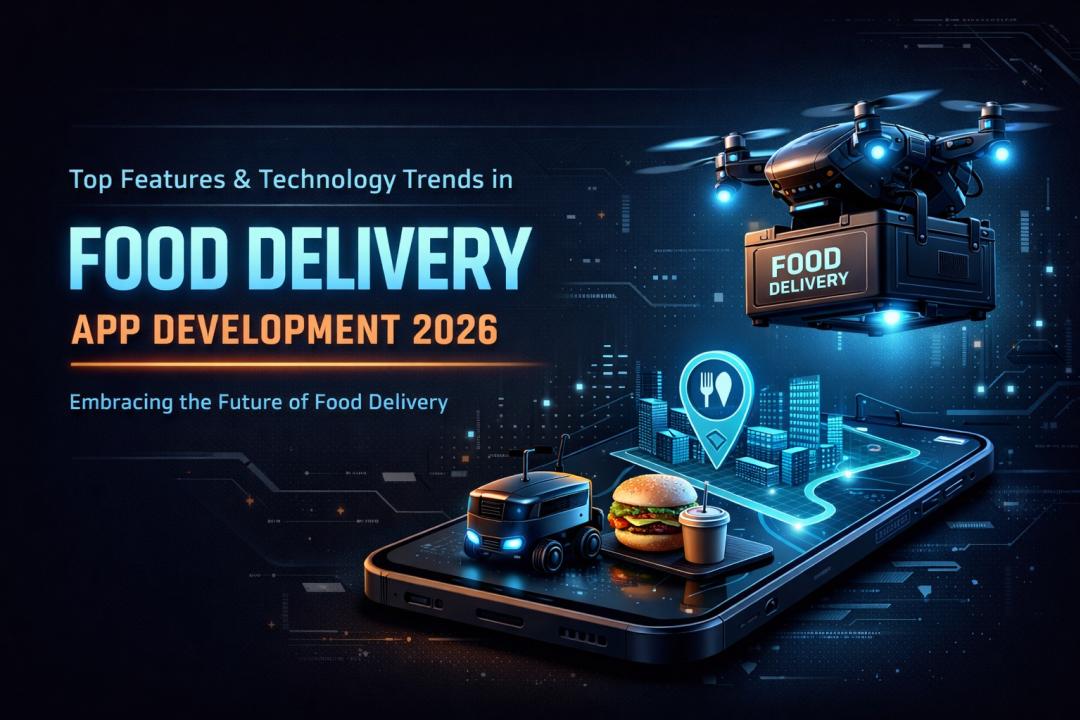
Future of Food Delivery App Technology
The future will likely include:
- Drone or autonomous deliveries
- Hyper-personalized AI ordering
- Smart kitchens powered by automation
- Subscription-based meal ecosystems
Technology will continue transforming how customers discover and consume food.
Conclusion
Food delivery apps are no longer optional for restaurants or food startups—they are essential digital platforms driving revenue growth and customer engagement. By understanding modern features and adopting emerging technologies, businesses can build applications that meet rising consumer expectations.
Following a structured food delivery app development guide ensures smoother planning, cost optimization, and long-term scalability. From recognizing the key food delivery app development benefits to managing the food delivery app development cost, every decision plays a critical role in success.
Partnering with an experienced food delivery app development company helps businesses implement advanced technologies while reducing development risks. With the right strategy, innovative features, and user-focused design, companies can create powerful food delivery solutions that thrive in an increasingly digital marketplace.