In today’s digital world, social media has become one of the most powerful tools for building a brand. Platforms like Instagram, Facebook, TikTok, LinkedIn, and YouTube allow brands to connect directly with their audience. However, successful brands do not post random content. Every post, story, video, and caption is carefully planned to align with their branding. This is what makes a brand recognizable, professional, and trustworthy.
Many businesses today also work with a digital marketing agency in Chennai to create professional and brand-aligned social media content that helps them grow faster and reach the right audience.
What Is Branding?
Branding is more than just a logo or a color. Branding is how people see, think, and feel about your business. It is the personality of your business. Branding includes your visual identity, tone of voice, values, message, and the experience you give to your audience.
For example, some brands are professional and corporate, while others are fun and friendly. Some brands focus on luxury and elegance, while others focus on affordability and convenience. Everything a brand posts on social media should match this brand personality. This is called brand alignment.
Why Brand Alignment Is Important
Brand alignment means your social media content matches your brand identity. When your content is aligned with your brand, people can easily recognize your posts even without seeing your logo. This helps build brand recognition and trust.
If a brand posts different >
But when a brand is consistent with colors, fonts, voice, and message, people remember the brand. Consistency builds trust, and trust helps businesses grow.
Brand alignment helps to:
- Build brand recognition
- Build customer trust
- Look professional
- Attract the right audience
- Increase engagement
- Improve sales
- Build a strong brand identity
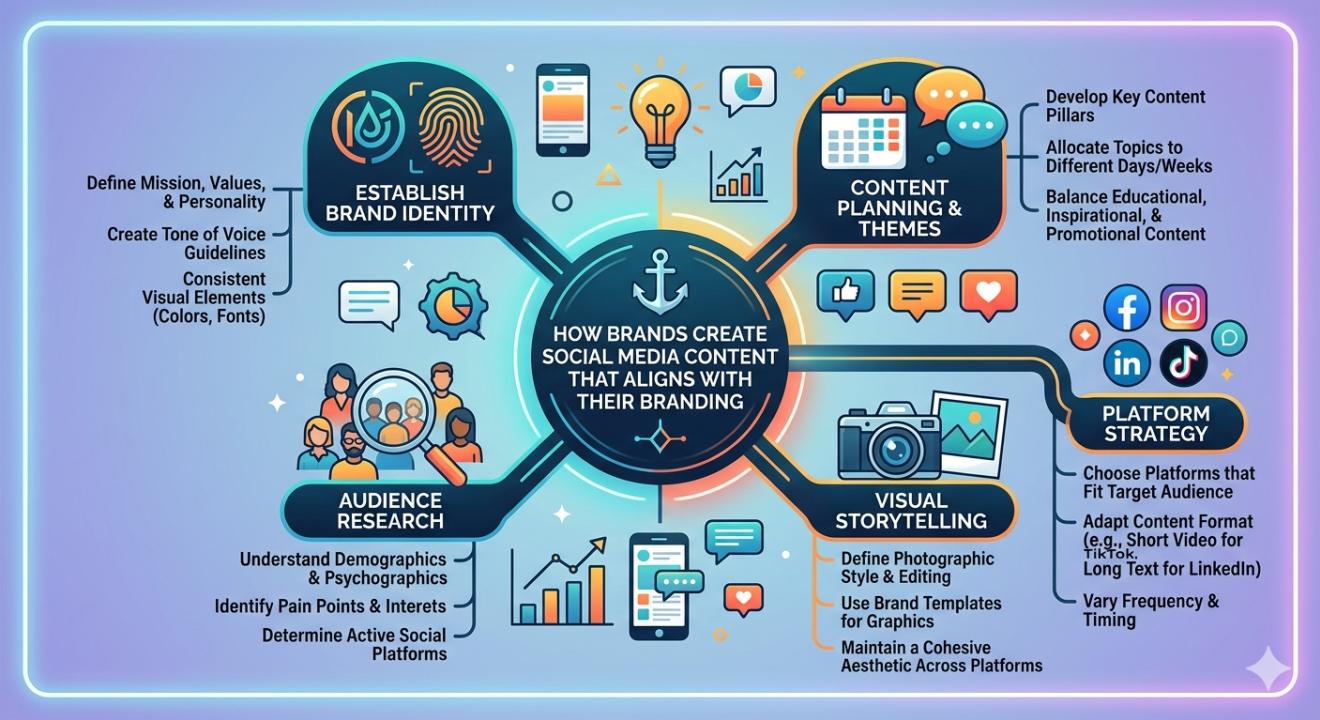
Step 1: Define Brand Identity
The first thing brands do before creating content is define their brand identity. Brand identity is how the brand looks and sounds.
Brand identity includes:
- Brand colors
- Logo
- Font >
- Tone of voice (friendly, professional, funny, inspirational)
- Brand values
- Target audience
- Brand mission
- Brand message
For example, a fitness brand may use bold colors, strong fonts, and motivational captions. A luxury brand may use simple colors like black, white, and gold, and use elegant and professional language.
When brands clearly define their identity, it becomes easier to create content that aligns with their branding.
Step 2: Create Brand Guidelines
After defining brand identity, brands create brand guidelines. Brand guidelines are a set of rules that explain how the brand should look and sound on social media and other marketing platforms.
Brand guidelines usually include:
- Primary and secondary colors
- Font >
- Logo usage
- Image >
- Tone of voice
- Caption >
- Hashtag >
- Design templates
- Photography >
Brand guidelines are very important because large brands usually have a team creating content. Brand guidelines ensure that every post looks like it comes from the same brand.
Step 3: Choose Content Pillars
Content pillars are the main topics that a brand posts about on social media. Content pillars help stay focused and consistent.
Most brands use 3 to 5 content pillars. Common content pillars include:
- Educational content – Teaching something useful
- Entertaining content – Fun or trending content
- Promotional content – Products and services
- Behind-the-scenes content – Showing the human side of the brand
- Customer testimonials – Sharing customer experiences
- Inspirational content – Motivational posts or success stories
For example, a skincare brand might use these content pillars:
- Skincare tips
- Product promotions
- Customer results
- Behind the scenes
- Educational content about skin health
Content pillars make sure that content always aligns with the brand message.
Step 4: Maintain Visual Consistency
Visual consistency is one of the most important parts of branding. When someone visits a brand’s Instagram page, the posts should look consistent and visually connected.
Brands maintain visual consistency by using:
- The same color palette
- The same filters
- The same font >
- The same design templates
- The same background >
- The same photography >
- The same layout >
This makes the brand look professional and easy to recognize. Many brands use templates so their posts always have the same >
Step 5: Use a Consistent Brand Voice
Brand voice is how a brand communicates with its audience. This includes captions, comments, replies, and video scripts.
A brand voice can be:
- Friendly and casual
- Professional and informative
- Funny and entertaining
- Inspirational and motivational
- Luxury and elegant
- Bold and confident
For example, a corporate brand uses professional language, while a youth brand uses casual and fun language. The important thing is consistency. The brand should always sound like the same person.
Step 6: Plan Content With a Content Calendar
Successful brands do not post randomly. They plan their content using a content calendar. A content calendar helps brands organize their content and make sure everything aligns with their branding and marketing goals.
A content calendar usually includes:
- Posting date
- Platform (Instagram, Facebook, etc.)
- Post type (image, reel, video, story)
- Caption
- Hashtags
- Content pillar
- Goal of the post (engagement, sales, awareness, education)
Planning content helps brands stay consistent and strategic.
Step 7: Focus on Providing Value
One of the biggest mistakes small brands make is posting only promotional content. Successful brands focus on providing value to their audience.
Valuable content includes:
- Tips
- Tutorials
- Educational content
- Entertaining videos
- Inspirational posts
- Problem-solving content
- Stories
- Experiences
- Behind-the-scenes content
People follow brands that help them, entertain them, or inspire them — not brands that only try to sell.
A good rule many brands use is the 80/20 rule:
- 80% valuable content
- 20% promotional content
Step 8: Review Content Before Posting
Before posting content, brands review their posts to make sure everything aligns with their branding.
They ask questions like:
- Does this match our brand colors?
- Does this match our brand voice?
- Does this match our brand message?
- Will our target audience like this?
- Does this content provide value?
- Does this post look professional?
If the answer is yes, the content is ready to post.
Step 9: Analyze Content Performance
After posting, brands check their analytics to see what content performs best. They analyze:
- Likes
- Comments
- Shares
- Saves
- Reach
- Engagement rate
- Website clicks
- Sales from social media
Then they create more content similar to what works best. This helps brands improve their content strategy over time.
Conclusion
Creating social media content that aligns with branding is very important for building a strong brand. Successful brands do not post randomly. They define their brand identity, create brand guidelines, choose content pillars, maintain visual consistency, use a consistent brand voice, plan content with a calendar, focus on providing value, review content before posting, and analyze performance.
Brand alignment helps businesses look professional, build trust, attract the right audience, and grow faster. In the future, the most successful brands on social media will not be the ones that post the most content, but the ones that post consistent, valuable, and brand-aligned content.
If you want your brand to succeed on social media, remember this simple idea: be consistent, be valuable, and be true to your brand.