Introduction
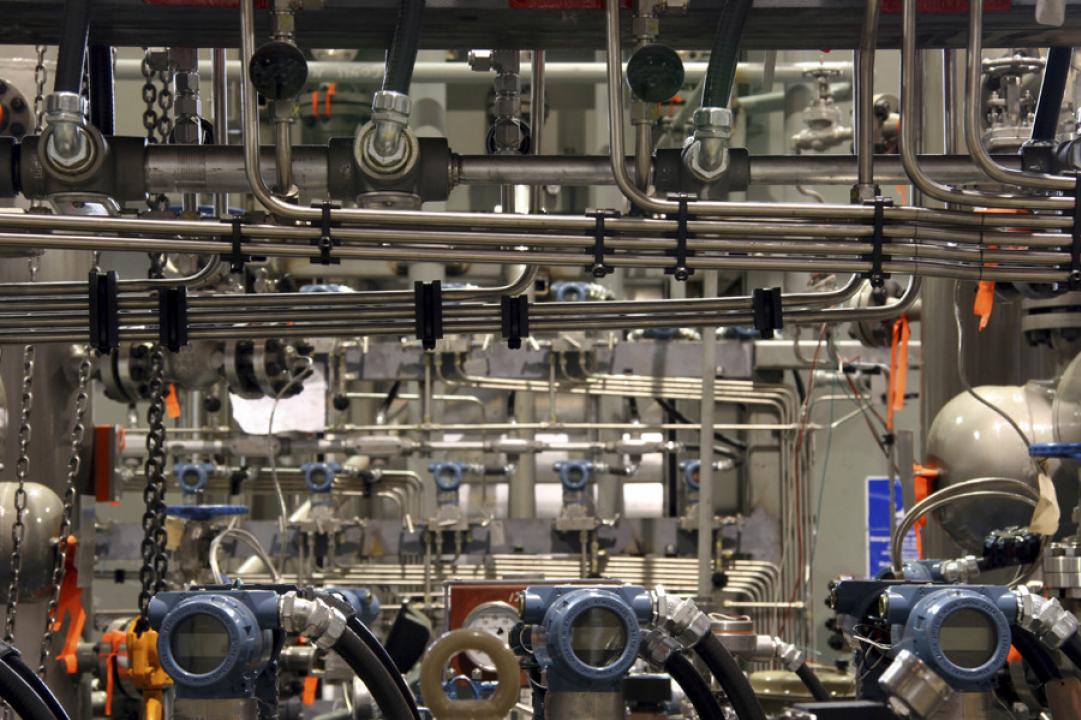
A Y type strainer usually gets installed quietly into a pipeline and then ignored. It does not rotate, does not regulate flow actively, and does not show visible performance unless something goes wrong. Because of that, it is often underestimated during system design.
Inside operating plants, that assumption does not last long.
Steam lines carry scale. Liquid lines carry rust, weld slag, gasket fragments, and debris from upstream handling. These particles do not stay harmless. They move with velocity, hit internal surfaces, settle in narrow passages, and gradually damage equipment that depends on clean flow.
That is where selection of a Y type strainer manufacturer becomes less about hardware and more about system protection. Because once contaminants pass through, downstream damage is not immediate but progressive, and usually expensive to correct.
Particle Load And Contamination Reality Inside Industrial Lines
No pipeline is completely clean after installation. Even newly commissioned systems carry internal contamination.
Typical particle ranges seen in industrial pipelines:
welding slag: 100 to 1000 microns
rust flakes: 50 to 500 microns
pipe scale: 200 to 1500 microns
In steam systems, oxidation accelerates scale formation. In liquid systems, corrosion and mechanical wear introduce debris continuously. These particles do not dissolve; they travel until something stops them.
A properly sized unit from a Y type strainer manufacturer is usually selected based on expected particle size relative to equipment tolerance. For example, control valves and pump seals often require filtration below 300 microns, while larger pipelines may tolerate coarser filtration around 500 microns.
If the strainer mesh is oversized, particles pass through. If undersized, clogging increases rapidly. That balance is not theoretical; it is calculated based on system contamination load.
Flow Path Geometry and Why Y Configuration Works
The Y-shaped body is not just a design variation. It exists for a reason.
Fluid enters the main line and a portion diverts into the angled leg where the screen sits. Because of this geometry, flow separation occurs, allowing particles to settle against the screen rather than continuing in the main stream.
Typical installation angles:
45° orientation for horizontal pipelines
vertical downward leg for steam applications
This angle helps in debris collection without creating excessive turbulence.
Compared to basket strainers, Y type units handle:
higher pressure lines
continuous flow systems
limited installation space
This is why industries working with high-pressure systems rely on designs provided by a capable Y type strainer manufacturer rather than using bulkier filtration options.
Pressure Drop Behavior Under Clean and Loaded Conditions
Every strainer introduces resistance to flow.
Clean condition pressure drop:
typically 0.05 to 0.2 bar depending on size and mesh
As debris accumulates:
pressure drop rises gradually
can reach 0.5 bar or more in clogged conditions
In steam systems, this becomes critical. A pressure drop increase of even 0.2–0.3 bar can affect:
steam flow rate
heat transfer efficiency
downstream pressure availability
In liquid systems, excessive drop leads to:
pump overloading
reduced discharge pressure
cavitation risk at suction side
That is why advanced systems integrate differential pressure gauges across units sourced from a Y type strainer manufacturer, allowing operators to track clogging in real time.
Steam Application: Scale And Condensate Impact
Steam carries fine particles generated from internal pipe oxidation. These are not always visible but accumulate over time.
Typical issues without filtration:
valve seat erosion
trap malfunction
turbine blade wear (in high-end systems)
Particle sizes in steam lines are often smaller but more aggressive due to velocity. Steam velocity can range between 20 to 40 m/s, which increases impact force.
A properly designed unit from a Y type strainer manufacturer uses:
stainless steel screens for temperature resistance
reinforced mesh to handle velocity impact
blowdown connections for quick cleaning
Without these features, strainers themselves fail before protecting equipment.
Liquid Application: Pump And Valve Protection
Liquid systems operate at lower velocities compared to steam, typically 1.5 to 3 m/s, but carry larger and heavier particles.
Damage mechanisms include:
impeller erosion
seal wear
blockage in narrow passages
For pumps, even particles above 200–300 microns can initiate wear. Once wear starts, efficiency drops gradually, often unnoticed until performance declines.
Installing properly specified units from a Y type strainer manufacturer upstream ensures that these particles are intercepted before reaching sensitive components.
The benefit is not immediate visibility, but extended equipment life.
Screen Construction and Mechanical Strength
The screen inside a Y type strainer is where actual filtration happens, but it is also the weakest point if not designed correctly.
Typical construction:
perforated support layer (3–6 mm holes)
fine mesh layer (based on required filtration)
Without structural support, mesh collapses under pressure differential.
Pressure conditions in industrial systems can range from:
PN10 (10 bar) to PN40+ (40 bar and above)
ANSI Class 150 to 600 depending on application
A reliable Y type strainer manufacturer designs screens to withstand:
differential pressure during clogging
thermal expansion in steam lines
mechanical stress during cleaning
Screen failure is dangerous because it allows sudden debris passage into downstream equipment.
Blowdown and Maintenance Behavior
Unlike basket strainers, Y type units are not always removed for cleaning. Many are equipped with blowdown valves.
Blowdown process:
valve is opened briefly
pressure forces debris out
system continues operating
This is especially useful in steam lines where shutdown is not preferred.
Cleaning frequency depends on contamination load:
low contamination: once in 2–3 weeks
moderate systems: weekly
high-load lines: daily blowdown
This operational flexibility is one reason industries prefer designs from an experienced Y type strainer manufacturer for continuous processes.
Material Selection Based on Application Conditions
Material choice depends on:
temperature
pressure
fluid chemistry
Common materials:
carbon steel for general use
stainless steel (SS304 / SS316) for corrosion resistance
alloy steels for high-temperature steam
Steam systems often operate at:
150°C to 400°C or higher
At these temperatures, material expansion and strength retention become critical.
Liquid chemical systems may require corrosion resistance instead.
So selection from a Y type strainer manufacturer is not just about size, but about matching metallurgy with operating conditions.
Installation Position and Operational Impact
Incorrect installation reduces effectiveness significantly.
Key installation rules:
flow direction must match arrow marking
screen leg must face downward in horizontal pipelines
sufficient clearance for maintenance
If installed incorrectly:
debris does not collect properly
pressure drop increases unevenly
cleaning becomes ineffective
Even a well-designed unit from a Y type strainer manufacturer fails if installation logic is ignored.
Performance Over Time and Lifecycle Impact
Initial performance of most strainers appears similar.
Differences appear over time.
Poor quality units show:
faster clogging
screen deformation
leakage at joints
High-quality units maintain:
stable pressure drop
structural integrity
consistent filtration
Over a year of operation, impact becomes visible in:
reduced pump maintenance
fewer valve replacements
stable process conditions
This is where selection of a reliable Y type strainer manufacturer becomes a long-term decision rather than a one-time purchase.
Industrial Reference Point
Yogiraj Engineering Company operate in this space where strainers are engineered as protective components rather than standard fittings. In such systems, emphasis is placed on pressure handling, material durability, and consistent filtration behavior under operating conditions.
Final Observation
A Y type strainer does not improve process performance directly. It prevents performance from degrading.
That difference is important.
Because in industrial systems, most failures are not sudden. They build up slowly — through wear, clogging, and contamination.
By the time the issue becomes visible, damage is already done.
That is why industries working with a Y type strainer manufacturer focus on prevention rather than correction. Proper filtration at the right point in the system protects pumps, valves, and heat exchangers long before problems appear.
And once installed correctly, the component does its job quietly.
Until the day it is not there — and then everything downstream starts to show why it was needed.