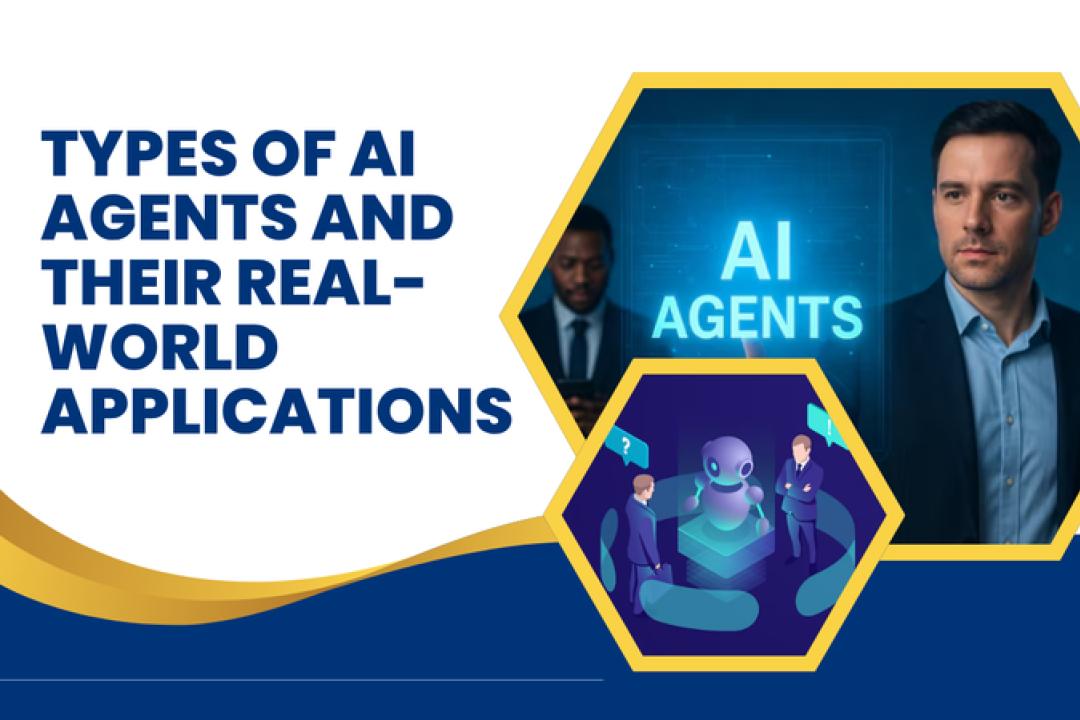
Artificial intelligence has quietly moved from being a futuristic concept to a daily operational backbone for modern businesses. Yet, many organizations still struggle to answer a fundamental question: what kind of AI should we actually use? The problem isn’t access to technology anymore, it’s understanding the different types of AI agents and how each one fits into real-world scenarios.
That confusion often leads to wasted investments, underperforming systems, or overly complex solutions where simple automation would have sufficed. At the same time, companies that do understand AI agents are unlocking faster decision-making, smarter customer interactions, and scalable automation that adapts in real time.
This blog breaks down the types of AI agents in a practical, no-nonsense way, connecting each type to real-world applications you can actually relate to. By the end, you’ll not only understand how these agents work, but also how to choose the right one based on your business needs and growth strategy.
Understanding AI Agents: The Foundation of Intelligent Systems
Before diving into types, it’s important to clarify what an AI agent actually is. In simple terms, an AI agent is a system that perceives its environment, processes information, and takes actions to achieve a specific goal. Unlike static software, these agents are designed to adapt, learn, and improve over time.
Think of AI agents as decision-makers rather than tools. A chatbot that answers FAQs is not just following scripts, it’s interpreting queries, selecting responses, and refining its behavior based on interactions. Similarly, recommendation engines on e-commerce platforms continuously adjust based on user behavior, making them dynamic rather than fixed systems.
What makes AI agents particularly valuable today is their ability to operate autonomously. Businesses are no longer limited to rule-based automation; they can deploy systems that learn patterns, predict outcomes, and optimize decisions without constant human input. This shift is why AI agent development has become a critical focus area for companies aiming to scale efficiently.
As industries evolve, the distinction between simple automation and intelligent agents is becoming more pronounced. Understanding this foundation sets the stage for exploring the different types of agents and their unique capabilities.
Types of AI Agents Explained
AI agents can be categorized based on how they process information and make decisions. While the underlying technology can be complex, the core differences are surprisingly intuitive when broken down.
Simple Reflex Agents
These are the most basic types of AI agents. They operate on predefined rules and respond directly to specific inputs. There’s no memory or learning involved, just condition-action mapping.
For example, a thermostat that turns on cooling when the temperature exceeds a certain threshold is a classic reflex agent. In business, simple chatbots that respond to keywords or trigger-based email automation systems fall into this category.
While limited in intelligence, reflex agents are highly efficient for repetitive, predictable tasks. They’re often the first step for organizations beginning their automation journey.
Model-Based Agents
Model-based agents go a step further by maintaining an internal representation of the environment. This allows them to make more informed decisions, even when they don’t have complete data.
Consider fraud detection systems in banking. They don’t just react to a single transaction; they analyze patterns over time, building a model of “normal” behavior and flagging anomalies. This added layer of awareness makes them far more reliable than simple rule-based systems.
These agents are particularly useful in dynamic environments where conditions change frequently and decisions require context.
Goal-Based Agents
Goal-based agents introduce a layer of planning. Instead of simply reacting or modeling, they evaluate different possible actions and choose the one that helps achieve a defined goal.
Navigation apps are a perfect example. They don’t just respond to traffic, they calculate the best route based on your destination, factoring in real-time data. Similarly, in business operations, supply chain optimization systems use goal-based logic to minimize costs and delivery time.
This type of agent is ideal when outcomes matter more than immediate reactions, and when multiple paths can lead to a desired result.
Utility-Based Agents
Utility-based agents take decision-making even further by evaluating the quality of outcomes. Instead of just achieving a goal, they aim to maximize a specific utility such as profit, efficiency, or customer satisfaction.
For instance, pricing algorithms in e-commerce platforms don’t just set a price, they continuously adjust it to maximize revenue while remaining competitive. These agents weigh multiple variables and choose the most beneficial outcome based on defined metrics.
Utility-based agents are particularly valuable in competitive environments where optimization is key.
Learning Agents
Learning agents represent the most advanced category. They continuously improve by analyzing past actions and outcomes. These systems incorporate machine learning to refine their decision-making over time.
Streaming platforms like Netflix or Spotify rely heavily on learning agents. They observe user behavior, update recommendations, and adapt to changing preferences. In enterprise settings, predictive maintenance systems learn from equipment data to prevent failures before they occur.
Learning agents are at the core of modern AI innovation, and many organizations rely on AI agent development services to build and deploy such adaptive systems effectively.
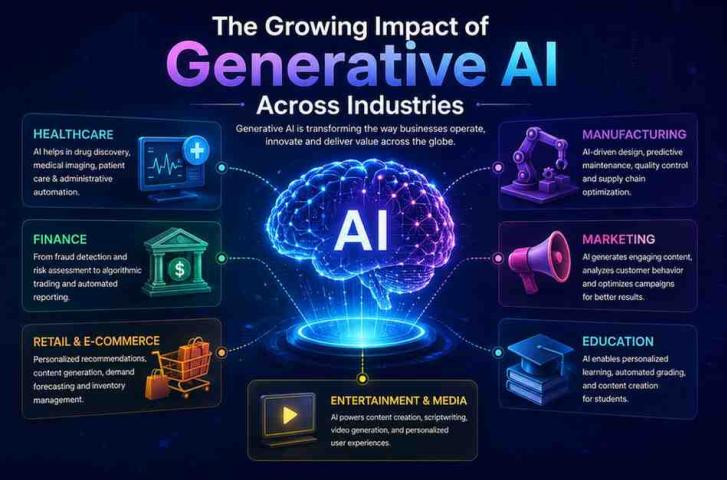
Real-World Applications of AI Agents Across Industries
Understanding types is only half the story. The real value comes from how these agents are applied in real-world scenarios.
Customer Experience and Support
AI agents are transforming how businesses interact with customers. Advanced chatbots and virtual assistants can handle complex queries, personalize responses, and even predict customer needs before they’re explicitly stated.
For example, in e-commerce, AI agents guide users through product selection, offer personalized recommendations, and resolve issues instantly. This not only improves customer satisfaction but also reduces operational costs.
Healthcare and Diagnostics
In healthcare, AI agents are being used to assist in diagnosis, patient monitoring, and treatment recommendations. Model-based and learning agents analyze vast datasets from medical histories to real-time health metrics to provide actionable insights.
These systems don’t replace doctors but augment their capabilities, enabling faster and more accurate decision-making. From early disease detection to personalized treatment plans, AI agents are redefining patient care.
Finance and Risk Management
Financial institutions rely heavily on AI agents for fraud detection, risk assessment, and algorithmic trading. Utility-based agents evaluate multiple variables in real time, helping organizations make data-driven decisions with minimal delay.
For instance, credit scoring systems use AI agents to assess borrower risk more accurately, while trading algorithms execute transactions based on market conditions and predictive analytics.
Operations and Workflow Automation
Businesses are increasingly using AI agents to streamline internal processes. From automating repetitive tasks to optimizing workflows, these systems improve efficiency across departments.
A growing number of organizations partner with an experienced AI development company to design tailored solutions that align with their operational goals. Whether it’s automating HR processes or managing inventory, AI agents play a crucial role in modern business infrastructure.
Choosing the Right AI Agent for Your Business
Selecting the right type of AI agent isn’t about choosing the most advanced option, it’s about aligning capabilities with your specific needs. A mismatch can lead to unnecessary complexity and limited ROI.
Start by identifying the nature of your problem. If your processes are repetitive and predictable, simple reflex agents might be sufficient. For dynamic environments where context matters, model-based agents offer better performance. If your goal involves optimization or long-term outcomes, utility-based or learning agents are more appropriate.
Another critical factor is scalability. As your business grows, your AI systems should evolve with it. This is where strategic planning and expert implementation become essential. Investing in the right architecture early on can save significant time and resources down the line.
Finally, consider integration. AI agents rarely operate in isolation, they need to work seamlessly with your existing systems, data pipelines, and workflows. A well-integrated solution ensures maximum efficiency and long-term sustainability.
The Future of AI Agents and What It Means for Businesses
AI agents are rapidly evolving from task-specific tools to autonomous systems capable of handling complex, multi-step processes. The next wave of innovation will focus on collaboration, where multiple agents work together to achieve broader objectives.
We’re already seeing early signs of this in areas like autonomous vehicles, smart cities, and advanced enterprise automation. These systems rely on interconnected agents that communicate, adapt, and optimize collectively.
For businesses, this shift presents both opportunities and challenges. On one hand, the potential for efficiency and innovation is immense. On the other, it requires a deeper understanding of AI strategy, governance, and ethical considerations.
Organizations that take a proactive approach, investing in the right technologies and building internal expertise, will be better positioned to lead in this evolving landscape.
Conclusion
AI agents are no longer optional, they’re becoming a fundamental component of how modern businesses operate and compete. From simple reflex systems to advanced learning agents, each type serves a distinct purpose and offers unique advantages.
The key lies in understanding these differences and applying them strategically. When implemented correctly, AI agents can transform operations, enhance customer experiences, and unlock new growth opportunities. But success doesn’t come from adopting AI blindly, it comes from choosing the right approach for your specific goals.
As the technology continues to evolve, businesses that embrace AI agents thoughtfully and strategically will not only keep up, they’ll set the pace.