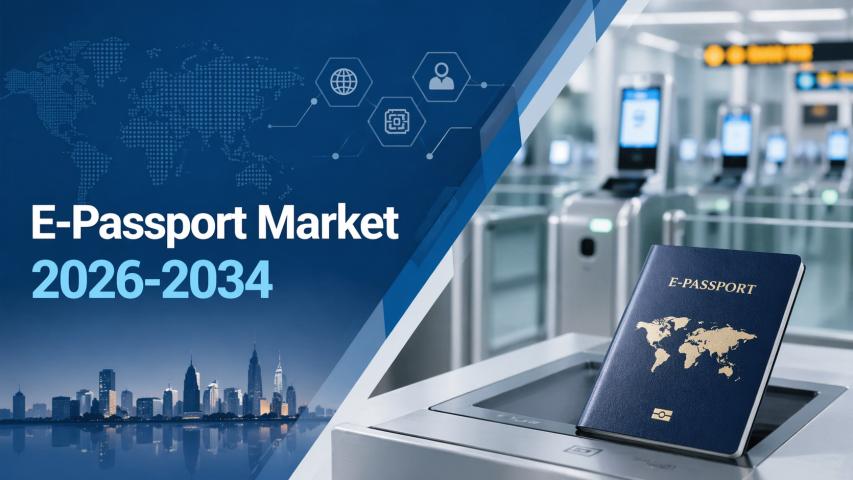
Market Overview:
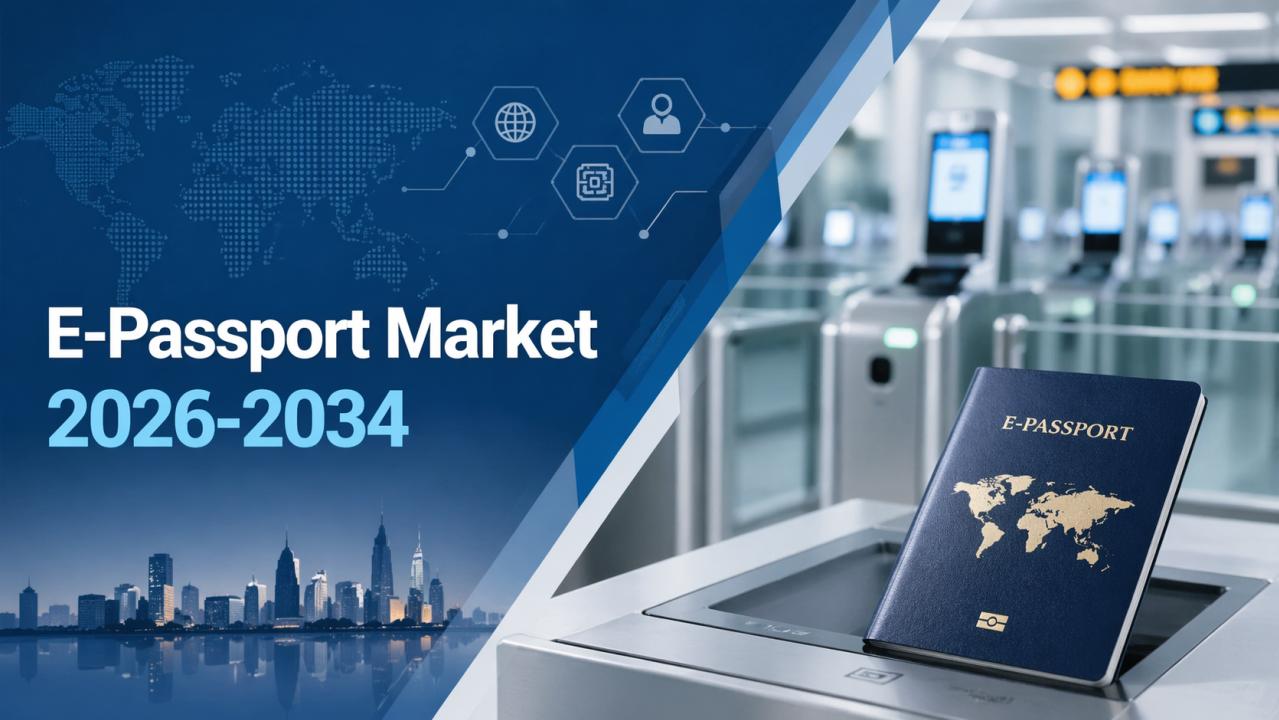
According to IMARC Group's latest research publication, "E-Passport Market: Global Industry Trends, Share, Size, Growth, Opportunity and Forecast 2026-2034", the global e-passport market size reached USD 36.4 Billion currently. Looking forward, IMARC Group expects the market to reach USD 93.9 Billion in the coming years, exhibiting steady and robust expansion. Europe currently dominates the market, accounting for the largest e-passport market share. Europe's prominence is underscored by its early and extensive adoption of this technology, proactive integration of advanced security features, and the cohesive standardization efforts undertaken through the European Union's directives, ensuring consistent technical specifications, security standards, and data-sharing protocols across member states.
This detailed analysis primarily encompasses industry size, business trends, market share, key growth factors, and regional forecasts. The report offers a comprehensive overview and integrates research findings, market assessments, and data from different sources. It also includes pivotal market dynamics like drivers and challenges, while also highlighting growth opportunities, financial insights, technological improvements, emerging trends, and innovations. Besides this, the report provides regional market evaluation, along with a competitive landscape analysis. The Electronic Passport Market is witnessing significant growth driven by increasing demand for secure and efficient international travel documentation.
How AI is Reshaping the Future of the E-Passport Market
- AI-powered facial recognition and biometric authentication systems are transforming e-passport verification at border checkpoints, enabling real-time identity matching against encrypted microchip data with a significantly lower margin of error than manual inspection.
- Government programs such as India's Passport Seva Programme (PSP) V2.0 and DigiYatra initiative are integrating AI-driven biometric pipelines into e-passport issuance and immigration processing, with India processing over 13 million passport applications annually and rolling out chip-embedded e-passports nationwide in June 2025 in collaboration with Tata Consultancy Services.
- In September 2024, Burkina Faso issued its new e-passport featuring AI-powered biometric enrollment, developed in collaboration with EMPTECH, marking a first for West Africa and incorporating ICAO-compliant technology with enhanced anti-fraud security features.
- AI-based anomaly detection tools embedded within border control infrastructure are enabling immigration authorities to flag document tampering, forged biometrics, and mismatched identity data in real time, significantly improving the integrity of passport verification workflows.
- As of mid-2025, over 150 countries have either adopted or are actively implementing e-passports, with AI increasingly becoming the backbone of automated e-gate systems, self-service kiosks, and electronic border control frameworks driving seamless traveler throughput.
Grab a sample PDF of this report: https://www.imarcgroup.com/e-passport-market/requestsample
Key Trends in the E-Passport Market
- Enhanced Security and Anti-Fraud Measures: The escalating threat of counterfeiting and illicit identity manipulation has fueled the demand for e-passports as a robust solution for securing travel documents. E-passports address these vulnerabilities by incorporating cutting-edge biometric technologies within an embedded microchip that securely stores an individual's unique biometric features, such as fingerprints, facial scans, or iris patterns. These identifiers are virtually impossible to replicate, forming an exceptionally strong barrier against identity theft. Moreover, the data stored within the microchip is encrypted, adding an additional layer of protection against tampering and unauthorized access. Ghana launched its national e-passport scheme in April 2025, incorporating more than 100 sophisticated security features including nanotechnology and polycarbonate pages, in full compliance with ICAO requirements.
- Streamlined Border Control and Enhanced Passenger Experience: Traditional manual passport checks often lead to time-consuming queues, frustrating travelers and straining border control resources. E-passports introduce automation and efficiency to immigration processes through self-service kiosks that authenticate embedded data and biometric information, expediting identity verification without extensive human involvement. This not only accelerates border crossings but also minimizes the potential for human error, contributing to more accurate identity verification and higher traveler satisfaction levels. The adoption of e-passports aligns with the broader global push towards seamless travel experiences.
- Global Standardization and Interoperability: Travelers today frequently cross international borders multiple times, necessitating travel documents that are universally recognized and accepted. E-passports are designed in accordance with international standards that govern critical aspects such as data format, encryption methods, and biometric technologies, ensuring a consistent and harmonized approach across nations. This adherence to a shared framework allows e-passports to seamlessly integrate with existing border control systems and facilitates information exchange between countries, promoting a cohesive global travel ecosystem.
- Rising Adoption of RFID Technology: Radio Frequency Identification (RFID) technology holds the largest share in the e-passport market, offering a seamless and efficient means of identity verification through rapid and contactless data transmission between the embedded microchip and the reader. RFID's ability to securely store and transmit biometric data, including facial scans and fingerprints, aligns with the global push for enhanced security measures. Governments and travel authorities worldwide can implement RFID-based e-passports without the need for extensive modifications to existing border control setups, reinforcing interoperability across international checkpoints.
- Government-Led Digitization and Modernization Programs: Governments across both developed and emerging economies are actively transitioning from traditional machine-readable passports to biometric e-passports as part of broader identity modernization and border security programs. India's successful pilot of chip-embedded biometric e-passports on April 1, 2024, followed by a nationwide rollout under the Passport Seva Programme V2.0 in June 2025 and the Global Passport Seva Programme (GPSP) V2.0 across all embassies and consulates in October 2025, exemplifies the scale of government commitment to digital identity infrastructure worldwide.
Growth Factors in the E-Passport Market
- Growing Airport Infrastructure and International Travel Volumes: The growing airport infrastructure, especially in developing regions, is driving the global e-passport market. The increasing volume of international travel has contributed significantly to this growth, as e-passports facilitate smoother and faster immigration processes at airports, reducing queues and wait times for travelers. As the world becomes increasingly interconnected in terms of travel and trade, the need for secure and efficient identification processes has become more critical than ever.
- Continual Advancements in Biometric Technology: Continual advancements in biometric technology are improving the accuracy and reliability of identity verification. Developments in facial recognition, fingerprint scanning, and iris detection have substantially enhanced the effectiveness of e-passport authentication systems. As technology has evolved, the cost of producing e-passports has also decreased, making them more accessible for governments across income levels to implement at scale.
- Shift Toward Digital Government Services: The broader shift toward digital solutions in various sectors, including government services, has encouraged the adoption of e-passports as part of the wider trend of digitizing official documents and administrative processes. E-passports are now seen as a crucial component of modernizing and streamlining border control systems, with 98% of European manufacturers actively investigating AI applications within their operational frameworks, signaling a sustained commitment to digitally integrated government infrastructure.
- Leisure Travel as a Dominant Application: Leisure travel accounts for the largest application share in the e-passport market. Leisure travelers benefit directly from the efficiency and convenience that e-passports bring to immigration checkpoints. Automated processes, including self-service kiosks equipped with RFID readers and biometric authentication, reduce time spent at border control, ensuring travelers can swiftly navigate entry and exit procedures. The advanced security features of e-passports also instill confidence among leisure travelers by safeguarding personal information against identity theft and unauthorized access.
- Password Authenticated Connection Establishment (PACE) as a Leading Security Mechanism: Password Authenticated Connection Establishment (PACE) holds a significant role as a leading security segment in the e-passport market. PACE is designed to support the authentication and confidentiality of data exchanges between the e-passport's microchip and authorized readers. This security mechanism involves the establishment of a secure session by mutually authenticating both the e-passport and the reader through cryptographic keys and passwords, reinforcing data integrity at every verification checkpoint.
Leading Companies Operating in the Global E-Passport Industry:
- Thales Group
- IDEMIA
- HID Global Corporation
- Giesecke+Devrient GmbH
- Veridos GmbH
- Entrust Corporation
- Mühlbauer Group
- De La Rue plc
- IN Groupe
- Hid Global (Assa Abloy AB)
E-Passport Market Report Segmentation:
Breakup By Technology:
- Radio Frequency Identification (RFID)
- Biometric
Radio Frequency Identification (RFID) accounts for the majority of shares on account of its ability to enable seamless, contactless data transmission, rapid identity verification, and compatibility with existing border control infrastructure across global checkpoints.
Breakup By Security:
- Basic Access Control
- Password Authenticated Connection Establishment
- Supplemental Access Control
- Extended Access Control
Password Authenticated Connection Establishment (PACE) dominates the security segment due to its robust support for authenticated and confidential data exchanges between the e-passport microchip and authorized readers through advanced cryptographic key mechanisms.
Breakup By Application:
- Leisure Travel
- Business Travel
Leisure travel holds the leading position owing to the high volume of international tourists who benefit directly from the faster processing times, automated verification systems, and enhanced personal data security offered by e-passport technology.
Breakup By Region:
- North America (United States, Canada)
- Asia Pacific (China, Japan, India, South Korea, Australia, Indonesia, Others)
- Europe (Germany, France, United Kingdom, Italy, Spain, Russia, Others)
- Latin America (Brazil, Mexico, Others)
- Middle East and Africa
Europe enjoys the leading position owing to its early adoption of e-passport technology, strong regulatory frameworks under the European Union, high international travel volumes, and cohesive technical standardization across member states.
Recent News and Developments in the E-Passport Market
- April 2024: India successfully piloted chip-embedded biometric e-passports across 12 cities including Jaipur, Hyderabad, Chennai, Nagpur, and Bhopal under the Passport Seva Programme, marking a critical step in the country's transition to a fully digital travel document system capable of handling over 13 million passport applications annually.
- September 2024: Burkina Faso issued its new e-passport featuring a polycarbonate data page and AI-powered biometric enrollment, developed with EMPTECH, marking a first in West Africa. The upgraded passports incorporate ICAO-compliant technology and enhanced security measures to strengthen national identity authentication.
- April 2025: Ghana launched its national e-passport scheme incorporating more than 100 sophisticated security features, including nanotechnology and polycarbonate pages, aligned with ICAO requirements, and accompanied by extended services such as 24-hour operations, electronic tracking, and home delivery to enhance accessibility across all 16 regions.
- June 2025: India completed the nationwide rollout of chip-embedded biometric e-passports under the Passport Seva Programme (PSP) V2.0 in collaboration with Tata Consultancy Services, followed by the launch of the Global Passport Seva Programme (GPSP) V2.0 across all embassies and consulates in October 2025, extending e-passport services to Indian nationals overseas.
Note: If you require specific details, data, or insights that are not currently included in the scope of this report, we are happy to accommodate your request. As part of our customization service, we will gather and provide the additional information you need, tailored to your specific requirements. Please let us know your exact needs, and we will ensure the report is updated accordingly to meet your expectations.
About Us:
IMARC Group is a global management consulting firm that helps the world's most ambitious changemakers to create a lasting impact. The company provides a comprehensive suite of market entry and expansion services. IMARC offerings include thorough market assessment, feasibility studies, company incorporation assistance, factory setup support, regulatory approvals and licensing navigation, branding, marketing and sales strategies, competitive landscape and benchmarking analyses, pricing and cost research, and procurement research.
Contact Us:
IMARC Group
134 N 4th St. Brooklyn, NY 11249, USA
Email: sales@imarcgroup.com
Tel No: (D) +91 120 433 0800
United States: +1-201-971-6302