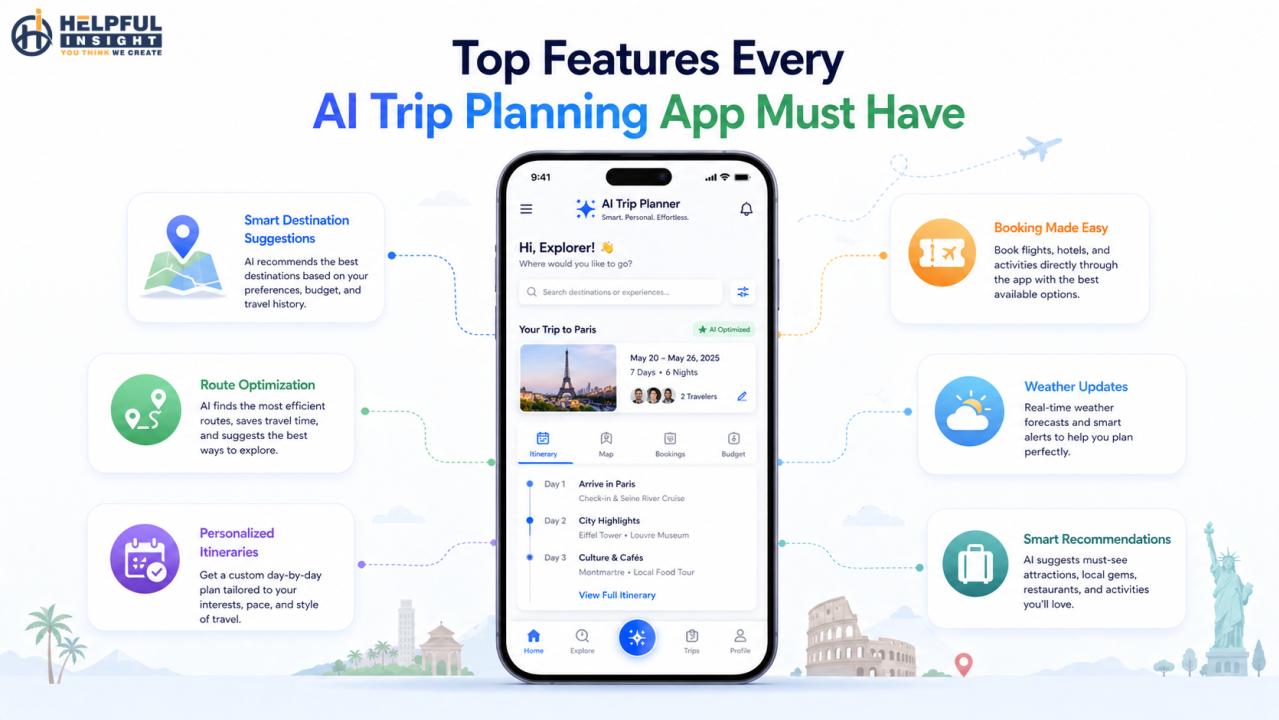
The travel industry is undergoing a major transformation, driven by the integration of artificial intelligence into digital platforms. Modern travelers expect convenience, personalization, and real-time insights, all of which can be delivered through intelligent trip planning applications. Businesses investing in AI development services are gaining a competitive edge by building smarter, more intuitive travel solutions. But what exactly makes an AI trip planning app successful? Let’s explore the essential features every such app must include.
1. Personalized Travel Recommendations
Most smart travel apps today shape themselves around you. When they study what places you look at, click on, or skip, patterns begin to show up. These habits guide better picks for where to stay, go, or explore—fitting your tastes without guessing. Hidden behind the scenes, clever math models learn from the choices people make across thousands of trips. What comes out feels less like a list, more like something built just now, just for one person. Results feel sharper because the system adjusts quietly each time someone uses it. This level of personalization is often powered by AI development services that refine recommendation engines continuously.
2. Intelligent Itinerary Planning
Starting strong, a good travel app builds smart plans using what you tell it—budget, dates, hobbies, and how long you’re going. Sometimes rain shows up; the tool checks forecasts so your day stays on track. Local festivals pop up too—that gets folded into the flow of things. Each move fits around flight rules, visa needs, or health alerts without asking twice. When something shifts, the system reshapes your plan like water finding its path. No buttons to press, just quiet updates that keep everything moving. Built with learning software, it learns patterns quietly over time. Smooth days come from tiny fixes happening behind the curtain. Your choices shape the route, nothing more, nothing less. It works because it listens first, acts second. Many businesses rely on Custom AI development services to build such adaptive itinerary systems.
3. Live Updates and Alerts
When trips shift because of holdups or sudden surprises, staying updated matters. Instead of guessing, travelers get live notifications about flights, rooms, road jams, or storms. With smart tech behind the scenes, these updates flow without lag. Sudden detours? No problem—clarity arrives fast. Trust builds when people know what comes next. Systems that adapt on the fly keep plans steady, often backed by AI development services designed for real-time data processing.
4. Voice and Chat Help
Out there in today’s apps, conversation-driven tech isn’t just fancy—it’s expected. Talking to an interface now feels normal, thanks to voice helpers that respond like humans. Booking a trip or looking up spots? The system gets it without stiff commands. Behind smooth chats, smart processing breaks down speech into actions. Strong language understanding comes alive when skilled developers shape how machines listen and reply, typically through Artificial Intelligence development services.
5. Smart Budget Management
Spending wisely matters most when trips come up. When smart tools watch your costs, they spot cheaper choices while guessing future needs. These programs learn how you spend by using clever coding behind the scenes. Instead of guesswork, travelers get alerts about value picks that fit their plans just right. This capability is commonly driven by AI development solutions that analyze historical and real-time pricing trends.
6. Seamless Booking Integration
One way to handle travel plans? Link flight, hotel, car, and activity bookings inside a single app. Jumping from site to site becomes unnecessary when everything lives together. Smarter connections happen by using AI tools built for these tasks. Booking flows better once the pieces work as one, typically enabled by AI development services that integrate multiple APIs into a unified platform.
7. Predictive Analytics Improve Decision Making
Most folks find it handy when planning trips. Sometimes a pattern shows up after looking at old flight prices. One tool spots these patterns using smart software built by tech experts. That insight points toward cheaper dates or less crowded places to go. It might suggest waiting a week—or leaving sooner. Hidden price swings become clear through repeated number crunching. Travelers end up keeping more cash without extra effort. Timing shifts based on what actually happened before, not guesses. These insights are often delivered through Artificial Intelligence development solutions that focus on predictive modeling.
8. Offline Accessibility
Most people get stuck without internet, particularly out where signals fade. When away from cities, having plans saved on the phone matters. Instead of relying on a constant connection, smart apps keep data ready ahead of time. Even overseas, navigation keeps working through quiet zones. Without live access, guests still see reservations, routes, and every piece. Features like these hold together trips when networks drop. Usability stays steady because preparation runs deep.
9. Supports Multiple Languages and Localization
Most people around the world speak different languages, so AI travel apps need to adjust accordingly. Because they include region-specific habits, navigating feels natural for locals. When currency displays match what users know, confusion drops sharply. Suggestions based on nearby spots often lead to better experiences. Cultural notes slip in quietly, helping travelers avoid missteps. Companies building these systems often hire dedicated developers to ensure localization is handled with precision. Each market gets its own rhythm without feeling forced. These small changes add up—users stay longer, click less randomly. One size never fits all, yet flexibility pulls it off.
10. Advanced Safety and Security Features
Travelers care most about staying safe. When apps use artificial intelligence, they can send warnings if something risky happens nearby—while also holding onto key phone numbers you might need. Knowing where someone is during a trip becomes simpler, too. Built-in tools like these often come from an experienced AI Development Company focused on secure and scalable systems. Feeling ready comes easier when support rides along quietly.
11. Social Sharing and Community Insights
People today check what others say before planning trips. Because of this, artificial intelligence tools might let folks swap stories about where they went. Sometimes, looking at lots of user info helps spot places getting popular fast. One way or another, group insights guide better suggestions through smart systems powered by AI development services.
12. Keep Learning and Getting Better
Over time, AI gets better because it learns how people use it. Each interaction sharpens its performance, slowly raising both speed and precision. Companies aiming to grow their tech usually hire dedicated developers or even hire dedicated developer teams to continuously improve performance. Ongoing improvements are typically supported by robust Artificial Intelligence development solutions that evolve with user behavior.
Conclusion
Nowadays, artificial intelligence in trip planners isn’t just nice to have—it’s essential. Personalized suggestions work alongside live changes and smart forecasting, shaping what makes a current travel app actually useful. Firms using expert AI builders often make tools centered around users, changing the way trips get organized. With advanced systems powered by AI development services and strategic implementation of modern technologies, companies can deliver seamless experiences. Leveraging Artificial Intelligence development services ensures scalability, while choosing the right AI Development Company helps maintain long-term innovation. Ultimately, investing in AI development solutions enables businesses to create travel apps that are not only functional but also intelligent, adaptive, and user-focused.