
Introduction
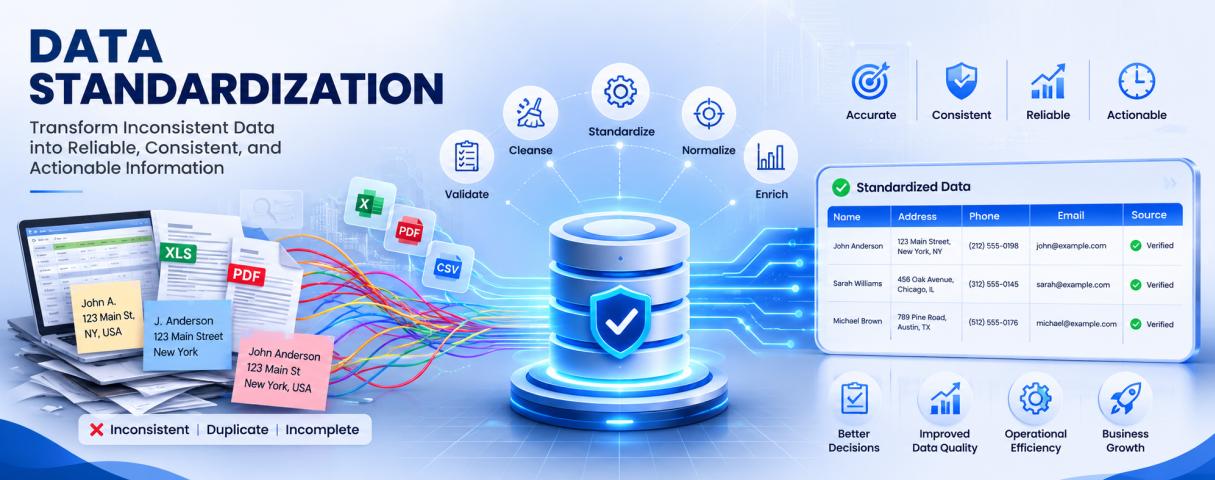
Every business wants to become data-driven. Organizations invest in analytics platforms, business intelligence tools, customer relationship management systems, and cloud infrastructure to gain better visibility into their operations. Yet despite these investments, many companies face a common challenge: the majority of their valuable information remains trapped inside documents.
Invoices sit in accounting folders. Contracts are stored in legal repositories. Customer information is scattered across emails and support tickets. Compliance records exist in thousands of PDFs. While this information contains valuable business insights, extracting it manually is expensive, slow, and prone to errors.
This growing challenge has made AI data extraction platform development a strategic priority for enterprises seeking to improve efficiency and unlock the full value of their data assets. Organizations are realizing that before they can analyze data, they must first make it accessible.
As a result, AI-powered extraction platforms are emerging as a critical foundation for digital transformation initiatives across industries.
The Hidden Cost of Manual Data Processing
Many organizations underestimate how much time their teams spend searching for, reviewing, and transferring information.
Consider a finance department processing hundreds of invoices daily. Employees often review documents manually, enter details into accounting systems, verify information, and resolve inconsistencies. While each task may take only a few minutes, the cumulative impact across thousands of documents can be enormous.
The same challenge exists in healthcare, legal services, logistics, insurance, and retail operations.
Manual processes often create:
- Delayed decision-making
- Higher operational costs
- Increased error rates
- Employee productivity challenges
- Poor customer experiences
As businesses scale, these inefficiencies become increasingly difficult to manage.
Why Traditional Extraction Tools Are Reaching Their Limits
For years, organizations relied on optical character recognition and rule-based automation systems to process documents.
While these technologies improved efficiency, they were designed for relatively predictable environments. Most require predefined templates and structured formats to operate effectively.
Today's enterprise data landscape is far more complex.
Documents arrive from multiple sources, in different layouts, languages, and formats. Customer communications often contain unstructured text. Contracts vary significantly between vendors. Regulatory forms frequently change.
Traditional systems struggle to adapt to these variations without constant reconfiguration.
This is where AI introduces a significant advantage. Instead of depending solely on predefined rules, AI systems can learn patterns, understand context, and improve performance over time.
How AI Data Extraction Changes the Equation
The primary goal of AI data extraction platform development is not simply extracting text from documents. The objective is to create intelligent systems capable of understanding information.
Modern AI models can identify entities, classify content, interpret relationships between data points, and organize information into structured formats.
For example, an AI-powered platform reviewing an invoice can automatically identify:
- Vendor information
- Invoice numbers
- Payment dates
- Tax details
- Purchase amounts
More importantly, it can understand where this information belongs regardless of document layout.
This contextual understanding allows businesses to automate processes that previously required significant human involvement.
From Data Collection to Business Intelligence
One of the most significant advantages of AI-powered extraction platforms is their ability to support the entire data lifecycle.
The process begins with collecting information from multiple sources. Once data enters the platform, AI models analyze, classify, and structure it. The extracted information can then flow directly into enterprise systems where it becomes available for reporting, analytics, and automation.
This creates a seamless connection between raw data and business intelligence.
Organizations no longer need to wait days or weeks for information to be manually processed. Instead, insights become available almost immediately.
The result is faster decision-making and improved operational visibility.
Industry-Wide Demand for AI Data Extraction Platform Development
The adoption of AI-powered extraction technologies is expanding rapidly because virtually every industry deals with information-intensive processes.
Financial Services
Banks and financial institutions process large volumes of loan applications, statements, invoices, and compliance documents. AI extraction platforms accelerate review processes while improving accuracy.
Healthcare
Healthcare organizations rely on extraction systems to digitize patient records, process insurance claims, and manage administrative workflows more efficiently.
Insurance
Insurers use AI to extract information from claims documents, policy forms, and customer communications, helping reduce processing times and improve customer service.
Logistics
Supply chain companies automate the extraction of shipment records, customs forms, and delivery documentation to improve operational efficiency.
Legal Services
Legal professionals use AI-powered systems to review contracts, identify critical clauses, and organize large document collections.
The common theme across all industries is the need to transform information into actionable data faster than ever before.
Measuring the ROI of AI Data Extraction Platforms
Organizations often evaluate technology investments based on direct cost savings. While AI extraction platforms certainly reduce manual labor expenses, their value extends much further.
The return on investment typically comes from several areas.
First, organizations process information faster, allowing employees to focus on higher-value activities.
Second, improved accuracy reduces costly errors and compliance risks.
Third, businesses gain access to data that was previously difficult to analyze.
Fourth, customer experiences improve because requests, applications, and transactions move through workflows more quickly.
When combined, these benefits create measurable operational and financial improvements.
Key Components of Successful AI Data Extraction Platform Development
Building an enterprise-grade platform requires more than implementing machine learning models.
Successful projects typically focus on several key areas.
Data quality must be prioritized from the beginning. High-quality training data is essential for accurate extraction.
Scalable infrastructure is equally important. The platform should support increasing document volumes without sacrificing performance.
Security and compliance cannot be overlooked. Many organizations handle sensitive financial, healthcare, and customer information that requires strict protection.
Finally, integration capabilities determine how effectively extracted data can support business processes. The platform should connect seamlessly with existing enterprise systems.
The Next Evolution of Intelligent Data Processing
The future of AI data extraction extends beyond simple information retrieval.
Generative AI is enabling systems to interpret documents with greater context and sophistication. Instead of merely extracting information, future platforms will summarize reports, identify business risks, recommend actions, and support decision-making processes.
Organizations will increasingly adopt platforms capable of processing multiple data types simultaneously, including text, images, audio, and video.
As these capabilities mature, AI extraction platforms will become intelligent business assistants rather than simple automation tools.
Conclusion
The modern enterprise runs on information, yet much of that information remains trapped within unstructured documents and disconnected systems. Organizations that fail to address this challenge risk slower operations, higher costs, and missed opportunities.
This is why AI data extraction platform development is rapidly moving from a technology initiative to a business necessity. By transforming unstructured content into actionable intelligence, these platforms enable organizations to improve productivity, enhance decision-making, and create more efficient workflows.
As data volumes continue to grow, enterprises that invest in intelligent extraction capabilities today will be better prepared to compete in an increasingly data-driven future.