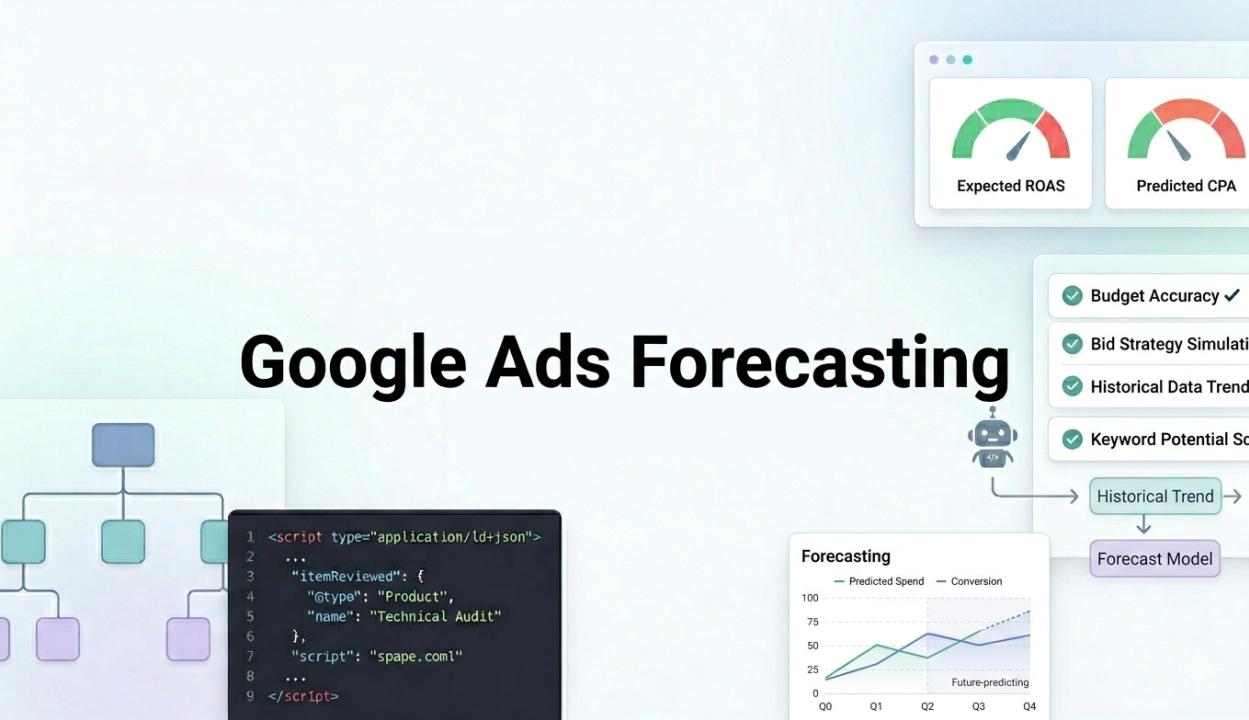
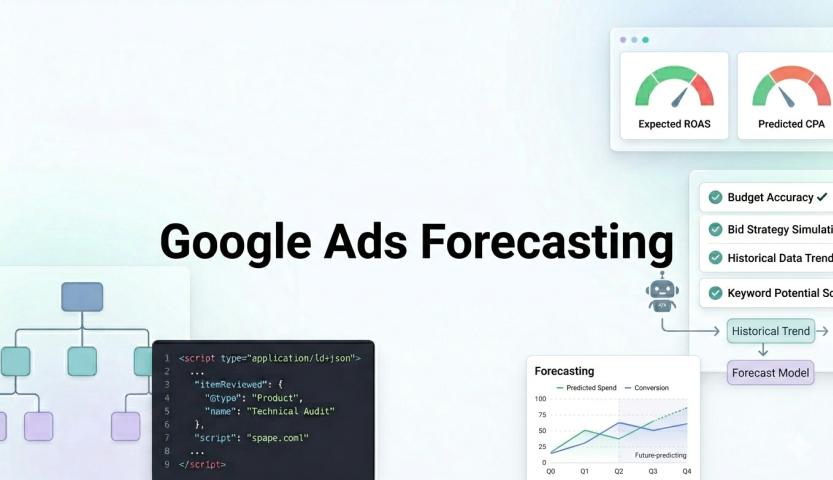
Paid traffic can drain budgets fast. Clicks arrive, spend climbs, and results stay uncertain. Smart advertisers refuse that gamble. They model outcomes in advance. That is where a Google Ads Forecasting tool shifts the equation from guesswork to calculated intent.
Forecasting does not promise certainty. It narrows risk. It sketches a range where performance will likely fall. Think of it as a wind tunnel for campaigns. You test direction, pressure, and lift before takeoff.
What Google Ads Forecasting Really Means
At its core, forecasting uses historical data, keyword trends, and auction signals to simulate campaign behavior. Impressions, clicks, cost, and conversions get projected across different bid levels and budgets.
A strong Google Ads Forecasting tool reads three layers at once.
Search demand patterns.
Competitive intensity.
Account level signals such as Quality Score and past CTR.
When these signals align, the model becomes more than a rough estimate. It starts to resemble a financial projection for paid media.
Why Forecasting Changes PPC Strategy
Many campaigns fail before they begin. Not from poor execution, but from flawed expectations. Forecasting corrects that early.
A marketer can test scenarios such as:
• Increasing budget by twenty percent
• Switching bid strategies
• Expanding keyword sets
• Entering a new geographic market
Each scenario produces a different curve. Some show steep growth with rising costs. Others flatten quickly, signaling saturation.
This clarity shapes smarter decisions. Budget flows toward efficient segments. Weak ideas get filtered out before they burn spend.
Key Metrics That Matter
Forecasting tools generate many numbers. Only a few deserve close attention.
Click through rate reveals ad appeal under projected conditions.
Average CPC signals auction pressure.
Impressions estimate reach potential.
Conversions tie everything to business outcomes.
These metrics form a chain. Break one link and projections lose meaning. A high impression forecast means little if conversion rate collapses.
Experienced PPC teams treat these numbers like interconnected gears, not isolated figures.
Limits You Should Respect
Forecasting models rely on assumptions. Markets shift. Competitors adjust bids. Consumer behavior drifts.
Seasonality introduces volatility. A keyword that performs well in one quarter may stall in another. External events can distort search demand overnight.
No Google Ads Forecasting tool can fully predict these shocks. It offers a probability range, not a guarantee.
That is why skilled teams revisit forecasts often. They compare projections with live data and recalibrate.
How Agencies Use Forecasting in Practice
Top tier PPC Services rarely launch campaigns without a forecast layer. It acts as a planning framework.
Take SEO Ninja as an example. Their approach blends forecasting with real time testing. Initial projections define budget allocation. Early campaign data refines the model. Over time, accuracy improves.
This iterative loop creates control. Spend aligns with performance rather than hope.
Agencies that skip this step often rely on reactive adjustments. That leads to wasted budget and delayed results.
Building a Reliable Forecast
Accuracy improves when inputs stay clean and structured.
Start with tightly grouped keywords. Broad clusters distort projections.
Use realistic conversion rates. Inflated numbers create false confidence.
Segment campaigns by intent. High intent queries behave differently from exploratory searches.
A disciplined setup feeds better data into the forecasting engine. The output becomes sharper.
Think of it like engineering. Precision at the foundation supports stability above.
Forecasting as a Competitive Edge
In crowded auctions, insight becomes leverage. Advertisers who forecast effectively spot inefficiencies others miss.
They identify keywords where competition overbids.
They uncover budget thresholds where returns diminish.
They scale campaigns with fewer surprises.
This edge compounds over time. Small gains in efficiency translate into significant profit margins at scale.
Closing Thoughts
Forecasting transforms paid advertising from reactive spending into structured planning. It frames expectations, reduces uncertainty, and guides investment with intent.
A well used Google Ads Forecasting tool does not replace strategy. It sharpens it. When paired with disciplined execution and continuous refinement, it becomes one of the most powerful instruments in modern PPC.