Global export logistics face one persistent challenge regardless of product category: moisture damage. Whether shipping pharmaceuticals, electronics, food products, textiles, automotive parts, or industrial machinery, excess humidity inside containers can lead to mold growth, corrosion, packaging failure, product degradation, and costly returns.
To reduce these risks, exporters rely on desiccants — moisture-absorbing materials designed to control humidity during storage and transportation. However, many businesses still struggle to choose between standard desiccants and customized desiccant solutions for export cargo protection.
While standard desiccants work for basic packaging requirements, customized desiccants are increasingly becoming the preferred solution for businesses dealing with international shipping, high-value cargo, long transit durations, and challenging climate conditions.
This article explains the differences between customized and standard desiccants, their advantages, limitations, and which option is better for export cargo protection.
What Are Desiccants?
Desiccants are moisture-absorbing substances used to maintain low humidity levels inside packaging, storage spaces, and shipping containers.
They help prevent:
- condensation
- mold growth
- corrosion
- cargo spoilage
- odor formation
- packaging damage
Desiccants are widely used across industries including:
- pharmaceuticals
- electronics
- food packaging
- logistics
- automotive
- chemicals
- textiles
Common desiccant materials include:
- silica gel
- calcium chloride
- bentonite clay
- molecular sieves
- activated alumina
What Are Standard Desiccants?
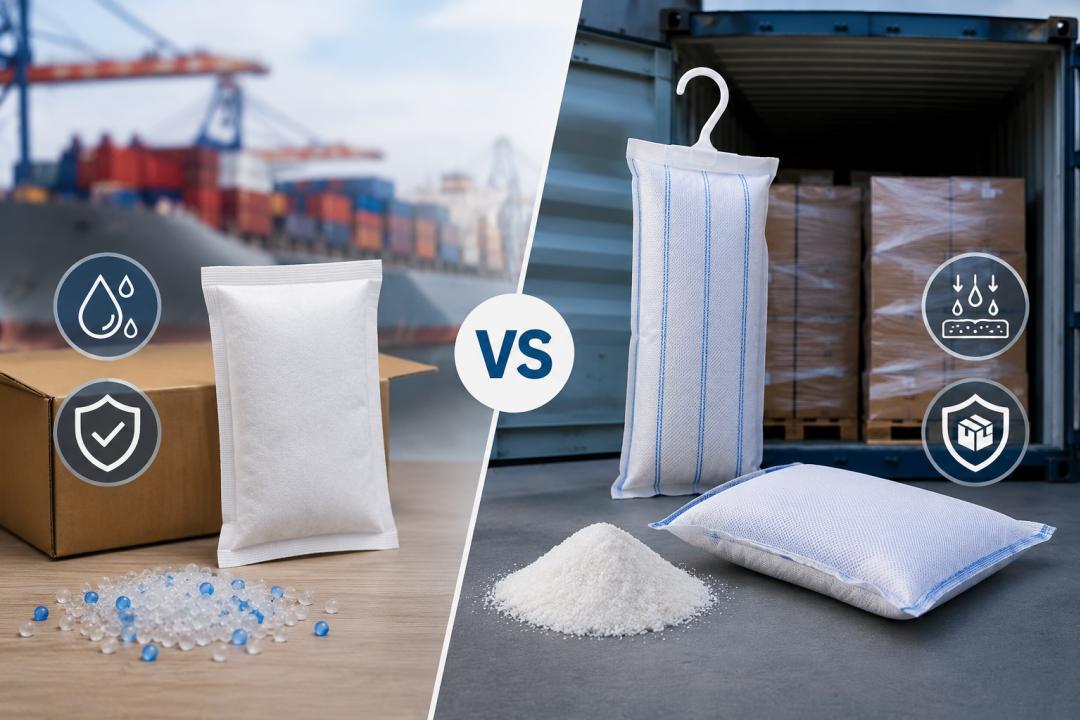
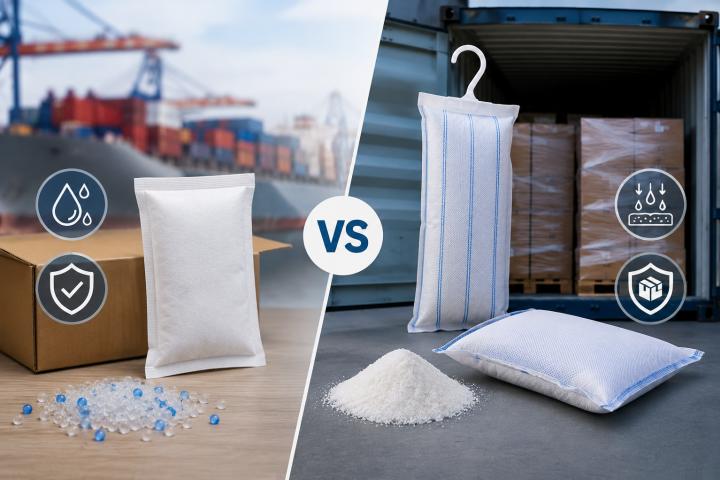
Standard desiccants are pre-manufactured moisture absorbers designed for general-purpose humidity control.
These products are typically:
- available in fixed sizes
- mass-produced
- designed for common packaging conditions
- used across multiple industries without customization
Examples include:
- silica gel sachets
- clay desiccant packets
- standard container desiccant strips
They are commonly used for:
- consumer products
- retail packaging
- electronics boxes
- medicine bottles
- shoe packaging
Advantages of Standard Desiccants
1. Cost-Effective
Standard desiccants are usually cheaper because they are mass-produced.
For businesses with:
- low-risk cargo
- short shipping durations
- controlled storage environments
they may provide sufficient moisture protection.
2. Easy Availability
These desiccants are widely available in standard sizes and packaging formats.
This makes procurement simpler for:
- small businesses
- retail packaging
- low-volume exporters
3. Suitable for Basic Applications
Standard desiccants work effectively in:
- dry environments
- low-humidity regions
- short domestic shipments
They provide basic humidity control for common packaging needs.
Limitations of Standard Desiccants
Despite their convenience, standard desiccants often struggle in demanding export environments.
1. Limited Moisture Absorption Capacity
Export containers experience:
- fluctuating temperatures
- high humidity
- long ocean transit times
Standard desiccants may not absorb enough moisture for these conditions.
2. One-Size-Fits-All Design
Every cargo type behaves differently during shipping.
For example:
- pharmaceuticals require strict humidity control
- metal parts risk corrosion
- food products face spoilage risks
Standard desiccants are not tailored for these specific conditions.
3. Poor Performance in High Humidity
In tropical shipping routes or ocean freight containers, moisture levels can become extremely high.
This often leads to:
- container rain
- condensation
- water droplets on cargo
Standard desiccants may become saturated too quickly.
4. Increased Risk of Cargo Damage
Insufficient moisture protection can result in:
- mold contamination
- damaged labels
- product clumping
- rust formation
- packaging failure
This can increase:
- returns
- insurance claims
- financial losses
What Are Customized Desiccants?
Customized desiccants are moisture-control solutions specifically designed according to:
- cargo type
- shipping duration
- container size
- humidity conditions
- industry requirements
- packaging configuration
Instead of using generic moisture absorbers, customized solutions are engineered for specific export challenges.
These may include:
- tailored absorption capacity
- custom sizes
- industry-grade packaging
- specialized materials
- container-specific designs
Advantages of Customized Desiccants for Export Cargo
1. Higher Moisture Absorption Performance
Customized desiccants are developed based on actual shipping conditions.
For export cargo, they can provide:
- longer protection duration
- higher absorption rates
- better humidity control
This is especially important for:
- ocean freight
- cross-border logistics
- humid climates
2. Protection Against Container Rain
One major export issue is “container rain.”
This happens when:
- warm air inside containers cools rapidly
- moisture condenses into water droplets
- cargo becomes wet
Customized container desiccants help minimize condensation risks during long shipments.
3. Industry-Specific Moisture Protection
Different industries require different moisture-control strategies.
Examples:
- pharmaceuticals need strict humidity stability
- electronics need anti-corrosion protection
- food packaging requires freshness preservation
- textiles require mold prevention
Customized desiccants are designed according to these industry needs.
4. Better Cargo Safety During Long Transit
Export shipments may remain in transit for:
- weeks
- months
- multiple climate zones
Customized desiccants provide more reliable long-term protection compared to standard solutions.
5. Reduced Product Losses
Proper moisture management helps businesses reduce:
- cargo rejection
- returns
- damaged inventory
- insurance claims
- customer complaints
This improves overall supply chain reliability.
Standard Desiccants vs Customized Desiccants
| Feature | Standard Desiccants | Customized Desiccants |
|---|---|---|
| Moisture Protection | Basic | Advanced |
| Export Cargo Suitability | Moderate | High |
| Absorption Capacity | Standard | Tailored |
| High Humidity Performance | Limited | Excellent |
| Container Rain Protection | Limited | Strong |
| Industry Customization | No | Yes |
| Long Transit Support | Moderate | Excellent |
| Cost | Lower Initial Cost | Higher Initial Investment |
| Cargo Safety | Moderate | High |
Which Industries Benefit Most from Customized Desiccants?
Pharmaceuticals
Medicines and healthcare products are highly sensitive to humidity fluctuations.
Customized desiccants help maintain:
- product stability
- shelf life
- regulatory compliance
Electronics
Moisture can damage:
- circuit boards
- semiconductors
- sensors
- electrical components
Customized anti-moisture solutions reduce corrosion risks.
Food Packaging
Food exporters use customized desiccants to:
- prevent spoilage
- maintain freshness
- reduce clumping
- control mold growth
Automotive & Metal Components
Metal products are vulnerable to:
- rust
- oxidation
- corrosion
Customized desiccants help protect machinery and spare parts during ocean shipments.
Textile & Leather Industry
Humidity can lead to:
- mildew
- odor
- discoloration
Customized desiccant solutions improve product protection during export.
Are Customized Desiccants More Expensive?
Yes, customized desiccants generally cost more upfront compared to standard products.
However, businesses should evaluate:
- cargo value
- shipping distance
- product sensitivity
- replacement costs
- damage risks
For high-value export cargo, customized moisture protection often saves money by reducing product damage and shipment losses.
How to Choose the Right Desiccant Solution
Businesses should evaluate:
1. Shipping Conditions
Consider:
- ocean freight
- storage duration
- climate zones
- humidity levels
2. Cargo Sensitivity
Products with high moisture sensitivity require stronger humidity protection.
3. Packaging Environment
Container size, airflow, and packaging type influence desiccant performance.
4. Transit Duration
Longer shipping times require higher moisture absorption capacity.
5. Regulatory Requirements
Industries like pharmaceuticals may require specific moisture-control standards.
Why Exporters Are Moving Toward Customized Moisture Control
Global supply chains are becoming more complex.
Modern exporters now face:
- longer transit durations
- changing climate conditions
- stricter product quality standards
- rising cargo claims
As a result, many businesses are moving from generic moisture absorbers to customized desiccant solutions designed for specific logistics environments.
This helps improve:
- cargo safety
- product quality
- operational reliability
- customer satisfaction
Conclusion
Both standard and customized desiccants play an important role in moisture control, but they serve different purposes.
Standard desiccants are suitable for:
- basic packaging
- low-risk cargo
- short transportation durations
Customized desiccants are better suited for:
- export cargo
- high-humidity shipping
- long transit periods
- sensitive products
- enterprise logistics operations
For businesses involved in international trade, customized desiccant solutions often provide stronger protection against moisture damage, condensation, corrosion, and cargo loss.
As export logistics continue to evolve, tailored moisture-control strategies are becoming essential for maintaining product quality and reducing supply chain risks.
Frequently Asked Questions
1. What is the difference between standard and customized desiccants?
Standard desiccants are general-purpose moisture absorbers, while customized desiccants are designed specifically for certain cargo types, shipping conditions, and humidity levels.
2. Why are customized desiccants better for export cargo?
Customized desiccants provide stronger moisture protection, higher absorption capacity, and better performance during long international shipments and high-humidity conditions.
3. Which industries use customized desiccants most frequently?
Industries such as pharmaceuticals, electronics, food packaging, automotive, textiles, and logistics commonly use customized desiccant solutions.
4. Can customized desiccants prevent container rain?
Yes. Customized container desiccants help reduce condensation and moisture buildup that cause container rain during shipping.
5. Are customized desiccants expensive?
They may cost more initially, but they can reduce cargo damage, returns, and financial losses during export operations.
6. What desiccant is commonly used for shipping containers?
Calcium chloride-based container desiccants are widely used because of their high moisture absorption capacity.
7. How do businesses choose the right desiccant solution?
The right solution depends on cargo type, humidity conditions, transit duration, packaging environment, and export route.