Modern enterprise networks are evolving rapidly due to cloud computing, distributed applications, and increasing demands for scalability and flexibility. Traditional physical networking models are no longer sufficient to support dynamic business requirements, which has led to widespread adoption of network virtualization technologies.
Many networking professionals begin their learning journey with structured CCNP Enterprise Infrastructure preparation, which helps them understand how virtualization plays a key role in modern enterprise network design.
Understanding Network Virtualization
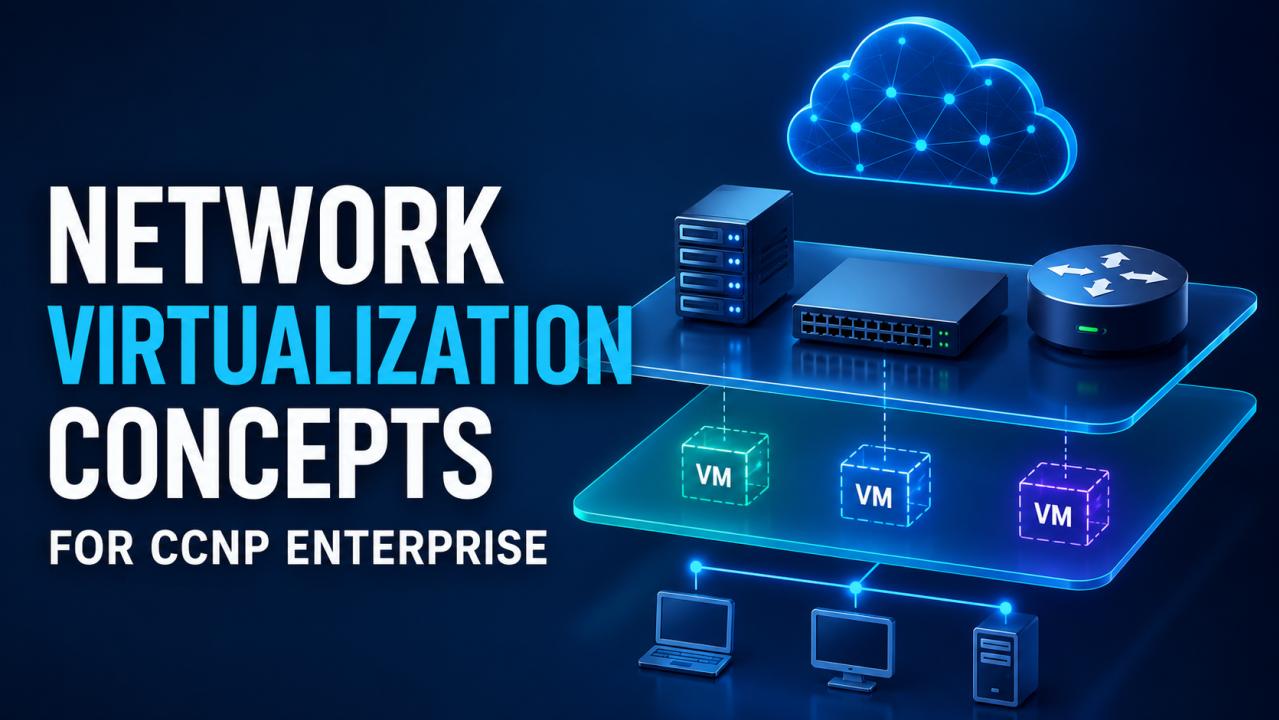
Network virtualization is the process of creating virtual network resources that operate independently of physical hardware. It enables multiple virtual networks to run on the same physical infrastructure while maintaining isolation and flexibility.
Why Network Virtualization Matters in Modern Networks
Enterprises use virtualization to:
Improve scalability and flexibility
Reduce hardware dependency
Simplify network management
Enable faster service deployment
Support cloud and hybrid environments
Core Concepts of Network Virtualization
To understand network virtualization, it is important to break it down into its key building blocks.
Virtual Networks
Virtual networks are logically created networks that behave like physical networks but are implemented in software.
Network Abstraction
Abstraction hides the complexity of physical infrastructure and allows administrators to manage networks at a logical level.
Overlay and Underlay Networks
Underlay network: Physical infrastructure that provides connectivity
Overlay network: Virtual network built on top of the underlay
Encapsulation Technologies
Encapsulation techniques allow virtual networks to transmit data securely over physical networks.
Types of Network Virtualization
Network virtualization can be implemented in several ways depending on enterprise requirements.
Server-Based Virtualization
In this model, virtual networks are created within servers using hypervisors.
Key Features
Multiple virtual machine instances hosted on one physical system
Isolated network environments
Efficient resource utilization
Network Device Virtualization
Physical network devices are abstracted into virtual instances.
Examples Include
Virtual routers
Virtual switches
Virtual firewalls
Storage and Network Convergence
Modern environments integrate storage and networking for improved efficiency and performance.
Key Technologies Used in Network Virtualization
Several technologies support network virtualization in enterprise environments.
VLANs (Virtual LANs)
VLANs divide a physical network into multiple logical networks.
VXLAN (Virtual Extensible LAN)
VXLAN extends Layer 2 networks over Layer 3 infrastructure, enabling large-scale virtualization.
SDN (Software-Defined Networking)
SDN architecture splits control and data functions, making centralized network management possible.
NFV (Network Function Virtualization)
NFV replaces physical network appliances with virtualized network functions.
Role of SDN in Network Virtualization
Software-Defined Networking plays a major role in modern virtualization strategies.
Centralized Control
SDN enables centralized control of network policies and traffic management.
Programmability
Networks can be programmed to adapt dynamically to changing requirements.
Automation Support
SDN facilitates the automation of network configuration and management processes.
Benefits of Network Virtualization
Network virtualization provides multiple advantages for enterprises.
Improved Scalability
Organizations can easily scale network resources without physical expansion.
Better Resource Utilization
Physical infrastructure is used more efficiently through virtualization.
Enhanced Flexibility
Virtual networks can be created, modified, or removed quickly.
Reduced Operational Costs
Fewer physical devices reduce maintenance and hardware expenses.
Faster Deployment
New network services can be deployed in minutes instead of days.
Network Virtualization in Cloud Environments
Cloud computing relies heavily on virtualization technologies.
Multi-Tenant Architecture
Multiple users share the same physical infrastructure securely through isolation.
Virtual Private Clouds
Organizations can build isolated cloud networks using virtualization.
Hybrid Cloud Connectivity
Virtualization enables seamless communication between on-premises and cloud environments.
Security Aspects of Network Virtualization
Security is a critical consideration in virtual network environments.
Network Segmentation
Virtual networks help isolate sensitive data and systems.
Access Control Policies
Strict policies ensure only authorized users can access specific virtual networks.
Encryption Techniques
Data transmitted across virtual networks is often encrypted for protection.
Challenges in Network Virtualization
Network virtualization provides benefits, but it also comes with some challenges.
Complexity in Management
Managing multiple virtual networks can be complex without proper tools.
Security Misconfigurations
Incorrect configurations can lead to vulnerabilities.
Performance Overhead
Virtualization layers may introduce slight performance delays.
Integration with Legacy Systems
Older infrastructure may not support modern virtualization technologies easily.
Network Virtualization in Enterprise Design
Network virtualization is a key part of modern enterprise architecture.
Supporting Distributed Workloads
Virtual networks support remote offices and distributed applications.
Enabling Agile Infrastructure
Organizations can quickly adapt network resources to business needs.
Improving Disaster Recovery
Virtual networks can be restored or replicated quickly during failures.
Best Practices for Network Virtualization
Implementing virtualization effectively requires proper planning.
Define Clear Network Segments
Separate workloads based on security and performance needs.
Use Standardized Protocols
Ensure compatibility across virtual and physical networks.
Monitor Network Performance
Continuous monitoring helps identify bottlenecks and issues.
Implement Strong Security Policies
Security should be enforced at both virtual and physical layers.
Future of Network Virtualization
Network virtualization continues to evolve with emerging technologies.
AI-Driven Networking
Artificial intelligence is being used to optimize virtual networks.
Increased Automation
Automation will reduce manual configuration tasks.
Integration with Cloud-Native Systems
Virtualization will become deeply integrated with cloud-native architectures.
Enhanced Security Models
Future systems will focus on stronger isolation and Zero Trust principles.
Role of Network Expertise in Virtualized Infrastructure
Understanding virtualization is essential for modern networking professionals.
Skills Required
Engineers should focus on:
Routing and switching fundamentals
SDN and NFV concepts
Cloud networking
Security principles
Automation tools
Career Relevance
Network virtualization skills are increasingly in demand across enterprise IT roles.
Conclusion
Network virtualization is a foundational technology that enables modern enterprises to build scalable, flexible, and efficient network infrastructures. It plays a crucial role in cloud computing, SDN, and enterprise architecture design.
As organizations increasingly adopt virtualized environments, professionals skilled in CCNP Enterprise Infrastructure are better prepared to design and manage next-generation networks aligned with evolving business needs.