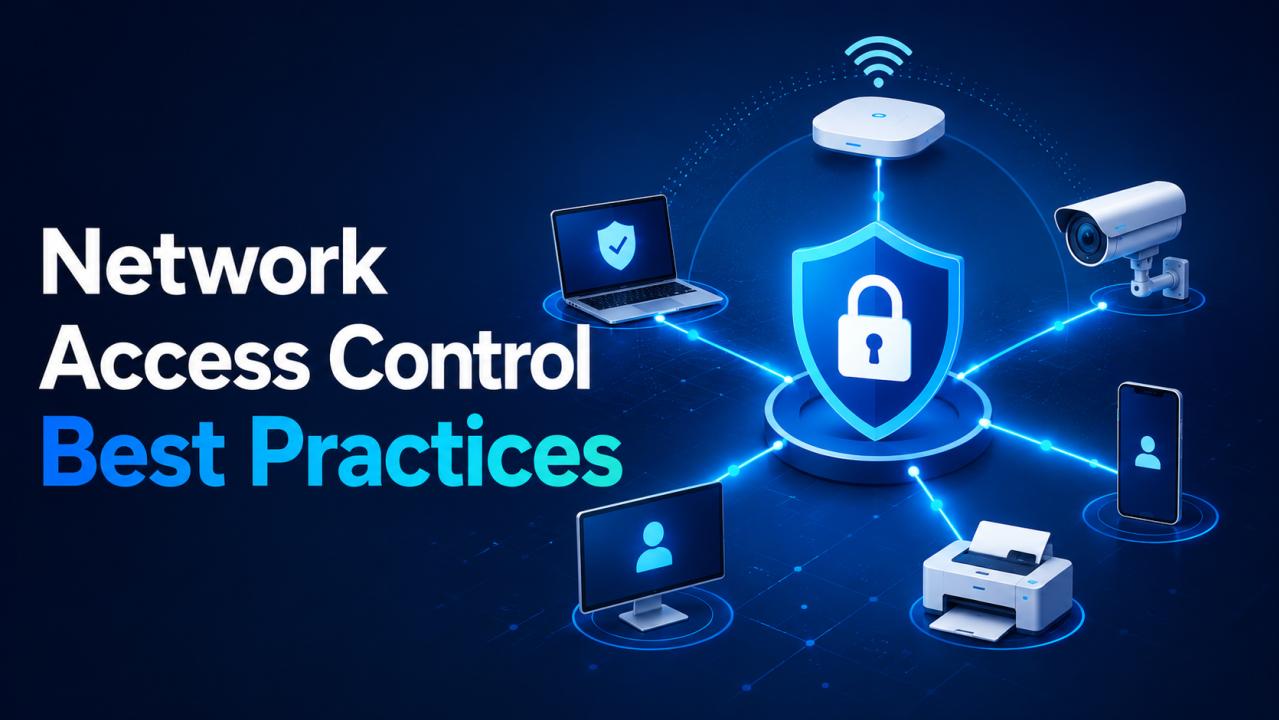
Network Access Control (NAC) has become a fundamental component of modern enterprise cybersecurity strategies. As organizations expand their digital infrastructure across cloud, remote, and hybrid environments, controlling who and what can access the network is more important than ever. NAC helps organizations enforce security policies, reduce unauthorized access, and improve overall network visibility.
This article explores key Network Access Control best practices that help enterprises build a secure, scalable, and efficient access management framework.
What Is Network Access Control (NAC)?
Network Access Control is a security approach that regulates which users, devices, and systems are allowed to connect to a network. It ensures that only trusted and compliant endpoints can access organizational resources.
Why Network Access Control Is Essential in Modern Networks
Enterprises rely on NAC to:
Prevent unauthorized access
Enforce security policies consistently
Improve visibility of connected devices
Strengthen compliance with regulations
Reduce security risks from unmanaged devices
Core Components of NAC Systems
Understanding the building blocks of NAC helps in designing effective access control strategies.
Authentication Systems
Authentication ensures the identity of users and devices is validated before access is provided.
Authorization Policies
These policies define what resources a user or device can access after authentication.
Endpoint Compliance Checks
Devices are evaluated for compliance with security policies before network access is granted.
Network Visibility Tools
These tools provide real-time insight into all devices connected to the network.
Network Access Control Best Practices
Implementing NAC effectively requires a combination of policies, technologies, and continuous monitoring.
Implement the Principle of Least Privilege
Limiting access rights is one of the most effective NAC strategies.
Why Least Privilege Matters
Limiting access to the least required level lowers the risk of:
Insider threats
Lateral movement attacks
Data breaches
Unauthorized privilege escalation
How to Apply It
Organizations should:
Define role-based access controls
Restrict sensitive resource access
Regularly review user permissions
Use Strong Authentication Mechanisms
Authentication is the first layer of NAC security.
Multi-Factor Authentication (MFA)
MFA adds an extra layer of security by requiring multiple verification methods.
Certificate-Based Authentication
Digital certificates provide secure identity verification for devices and users.
Identity Integration
Integrating NAC with identity providers ensures centralized access control.
Enforce Device Compliance Checks
Before granting access, devices should meet security standards.
Key Compliance Checks Include
Updated antivirus software
Operating system patches
Firewall enabled status
Encryption settings
Benefits of Compliance Enforcement
Reduces malware risk
Prevents compromised device access
Strengthens endpoint security
Segment the Network for Better Control
Network segmentation improves control over access and traffic flow.
Role of Segmentation in NAC
Segmentation limits user and device access to specific network areas.
Types of Segmentation
VLAN-based segmentation
Role-based segmentation
Microsegmentation
Continuously Monitor Network Activity
Ongoing monitoring is essential for detecting abnormal behavior.
What to Monitor
User login patterns
Device behavior changes
Traffic anomalies
Unauthorized access attempts
Benefits of Monitoring
Early threat detection
Faster incident response
Improved visibility
Automate Policy Enforcement
Automation improves consistency and reduces manual errors.
How Automation Helps NAC
Automatically applies security policies
Detects non-compliant devices
Responds to threats in real time
Tools Used for Automation
Security orchestration platforms
Policy management systems
AI-based analytics tools
Regularly Update NAC Policies
Security policies must evolve with changing threats.
Why Updates Are Important
Outdated policies can lead to:
Security gaps
Misconfigurations
Increased attack surface
Best Practices for Policy Updates
Conduct periodic audits
Review access logs
Align policies with compliance requirements
Integrate NAC with Other Security Systems
NAC is most effective when integrated with broader security infrastructure.
Key Integrations
Firewalls
Intrusion Detection Systems (IDS)
SIEM platforms
Endpoint protection tools
Benefits of Integration
Unified security visibility
Faster threat detection
Coordinated incident response
Secure Guest and BYOD Access
Guest users and personal devices introduce additional risks.
Guest Network Controls
Isolated network access
Time-limited credentials
Restricted resource access
BYOD Security Measures
Device registration requirements
Compliance validation
Restricted access policies
Implement Zero Trust Principles
Zero Trust strengthens NAC by assuming no implicit trust.
Core Zero Trust Concepts
Verify every access request
Continuously validate users and devices
Limit lateral movement
NAC Alignment with Zero Trust
NAC acts as an enforcement layer for Zero Trust policies.
Log and Audit All Access Activities
Logging plays a crucial role in ensuring accountability and supporting forensic analysis.
What Should Be Logged
Login attempts
Device connections
Policy violations
Access denials
Importance of Auditing
Supports compliance requirements
Helps in incident investigation
Identifies security gaps
Common Challenges in NAC Implementation
Despite its benefits, NAC implementation can be complex.
Deployment Complexity
Large networks require careful planning and configuration.
Legacy System Integration
Older systems may not support modern NAC solutions.
User Experience Issues
Strict policies can sometimes impact usability.
Scalability Concerns
Expanding NAC across large enterprises requires robust infrastructure.
Future of Network Access Control
NAC continues to evolve with modern technologies.
AI-Driven Access Control
AI enhances both threat identification and enforcement of security policies.
Cloud-Based NAC Solutions
Cloud-native NAC platforms offer scalability and flexibility.
Integration with SASE
Secure Access Service Edge combines NAC with networking and security services.
Adaptive Access Policies
Future systems will dynamically adjust access based on risk levels.
Role of Network Access Control Skills in Cybersecurity Careers
Understanding NAC is important for networking and security professionals.
Key Skills Required
Identity and access management
Network segmentation
Security policy design
Threat monitoring
Career Opportunities
NAC expertise is valuable for roles such as:
Network Security Engineer
SOC Analyst
Security Architect
IT Security Administrator
Conclusion
Network Access Control is a critical element of modern enterprise security architecture. It ensures that only authorized users and compliant devices can access network resources, reducing risks and improving visibility across complex environments.
By implementing strong authentication, continuous monitoring, segmentation, and automation, organizations can significantly enhance their security posture. As enterprises adopt advanced security models, professionals with expertise in CCNP Enterprise Infrastructure are well-positioned to design and manage secure, scalable NAC solutions in evolving digital landscapes.