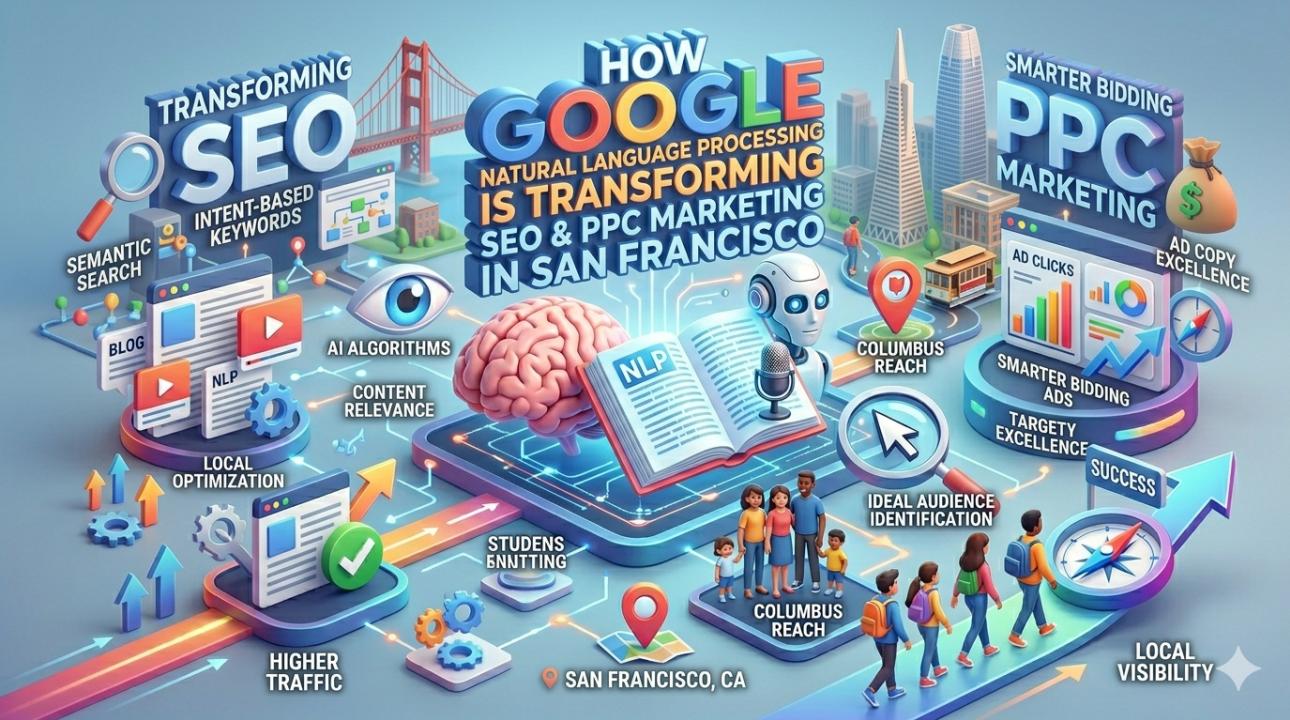
Search engines have come a long way from simply matching keywords. Today, Google focuses on understanding what people actually mean when they type a search query. This shift is largely driven by Google Natural Language Processing (NLP), a technology that helps Google interpret language much like a human would. For businesses in San Francisco, this has changed the way digital marketing works, influencing both SEO and paid advertising strategies.
Whether you're working with an SEO company San Francisco businesses trust or exploring services from PPC marketing agencies in San Francisco, understanding how Google's language processing technology works can help you reach the right audience more effectively.
Search Engines Now Focus on Meaning, Not Just Keywords
In the past, marketers often tried to rank pages by repeating the same keywords throughout a webpage. While keywords still matter, Google has become much better at understanding context. It can now recognize related terms, user intent, and the overall topic of a page.
For example, someone searching for "best marketing agency for a startup" may not use the exact same wording as another user searching for "digital marketing help for new businesses." Google understands that both searches have a similar purpose and can display relevant results accordingly.
This means businesses need to create content that answers real questions instead of focusing solely on keyword placement.
Why SEO Strategies Have Evolved
Modern SEO is centered on providing useful information. A professional SEO company San Francisco will typically focus on creating content that addresses customer concerns, explains services clearly, and demonstrates industry expertise.
For example, instead of publishing a page filled with repeated keywords, businesses are seeing better results by creating content such as:
- Detailed service guides
- Industry insights
- Frequently asked questions
- Case studies
- Helpful blog articles
This type of content not only improves search visibility but also helps build trust with potential customers.
Better Understanding of Customer Intent
One of the biggest advantages of Google Natural Language Processing is its ability to understand why someone is searching. Some users are gathering information, while others are comparing options or looking to make a purchase.
Understanding this intent allows businesses to create content for every stage of the customer journey. Someone researching a topic may need educational information, while someone ready to buy may be looking for pricing, reviews, or contact details.
When content matches user intent, visitors are more likely to stay on the website and take action.
How NLP Is Improving PPC Campaigns
The impact of NLP isn't limited to SEO. It also affects paid advertising campaigns. Search platforms now use advanced language analysis to better match ads with relevant searches.
Many PPC marketing agencies in San Francisco use these insights to improve campaign performance. Instead of targeting only exact-match keywords, advertisers can focus on audience interests, search behavior, and intent signals.
This approach often leads to:
- More relevant ad placements
- Higher click-through rates
- Better-quality leads
- Improved conversion rates
- More efficient ad spending
When ads align closely with what users are searching for, businesses typically see stronger results from their campaigns.
Content Quality Matters More Than Ever
As Google's understanding of language continues to improve, content quality has become a major ranking factor. Businesses that publish accurate, helpful, and well-organized information are more likely to earn visibility in search results.
This is why many organizations partner with an experienced SEO company San Francisco to develop content strategies that focus on expertise, relevance, and user value. Strong content helps businesses rank for a wider range of searches while establishing credibility within their industry.
Looking Ahead
Search behavior continues to evolve as voice search, AI-powered search tools, and conversational queries become more common. Technologies based on Google Natural Language Processing are making search engines smarter and more capable of understanding human communication.
For businesses in competitive markets like San Francisco, adapting to these changes is essential. Companies that invest in quality content, user-focused SEO, and data-driven advertising strategies will be better positioned to attract customers and stay ahead of competitors.
By combining modern SEO practices with effective paid advertising, businesses can take full advantage of the opportunities created by today's AI-driven search environment.