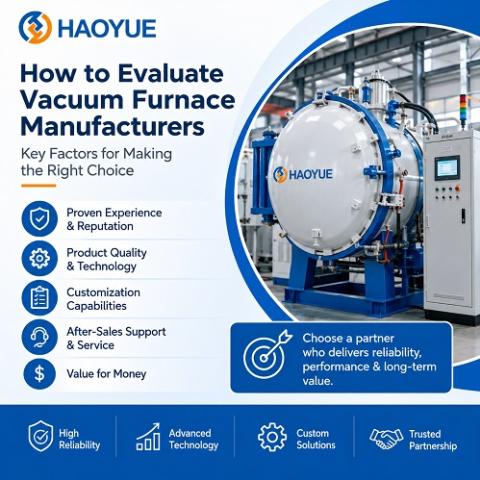
How to Evaluate Vacuum Furnace Manufacturers?
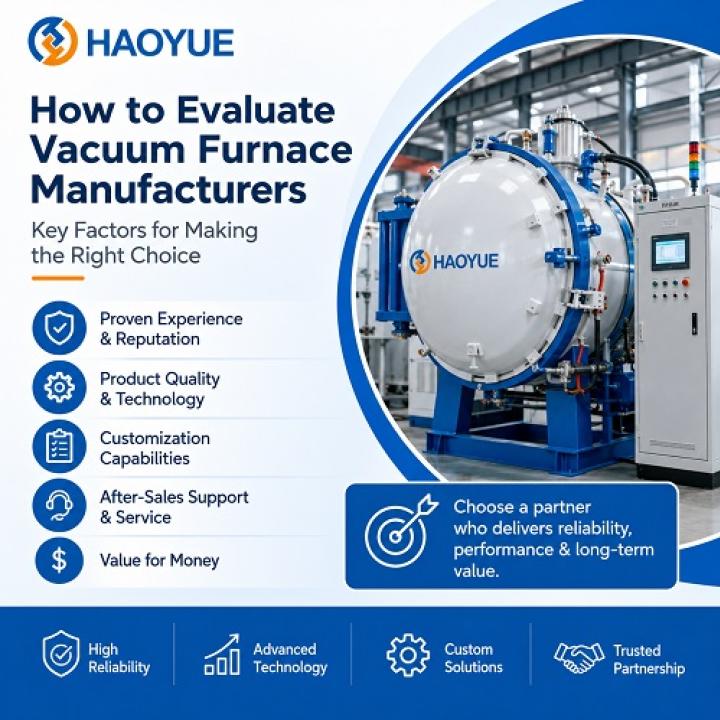
Choosing the right vacuum furnace manufacturer is one of the most critical decisions you will make for your industrial operation. A wrong choice does not just cost money. It can delay production, compromise quality, and damage your reputation with clients. The global market for industrial vacuum furnaces is growing fast. More suppliers are entering the space. That makes evaluating the right partner harder than ever. This guide walks you through the key factors you need to assess before signing any contract. Whether you need a vacuum brazing furnace, a vacuum sintering furnace, or a high-temperature vacuum furnace - these criteria apply across the board.
Why the Right Vacuum Furnace Manufacturer Matters More Than the Price Tag
Many procurement teams start with price. That is understandable. However, the vacuum heat treatment industry is a different case, as a low-cost furnace from a less reliable provider is almost always more expensive in the long run. Think about it this way. If a furnace breaks down during a critical production cycle, what is the cost of that downtime? What is the cost of rejected parts? What about your customers' delivery timelines? A good vacuum furnace supplier is not a one-time sale but a long-term working relationship.
Key Factors to Evaluate a Vacuum Furnace Manufacturer
1. Industry Experience and Sector Knowledge
The first thing you should check is the manufacturer's experience and, more specifically, in what industries. A supplier who has 15 years of experience in aerospace vacuum heat treatment is worth a lot more than a supplier who has 20 years of experience in a different industry. Request case studies. Ask for referrals from customers in your industry! Check for repeat business, as it's one of the best signs of reliability.
2. Certifications and Quality Standards
Any serious B2B buyer cannot deal without certifications. These are not merely documents! In reality they act as proof the manufacturer is following sound quality and safety standards, these are usually reviewed by independent organizations.
Some of the important certifications to check for:
- ISO 9001 - basically shows the company uses international quality management practices
- CE Marking - needed for putting products on European markets
- ASME and PED compliance - these matter a lot for pressure vessel safety requirements
- Industry-specific approvals - AMS and NADCAP, mainly in aerospace
If a vacuum furnace manufacturer can’t hand over recent certification documents, then it should be taken as a warning sign.
3. Customization and Engineering Capability
Standard industrial furnaces are not designed to meet all the requirements. Each production environment will have specific requirements: temperature range, atmosphere, load capacity, cycle time.
A capable vacuum furnace manufacturer should offer:
- Custom hot zone design tailored to your process
- Flexible chamber sizes and configurations
- Programmable multi-step process controls
- Integration with your existing production line
Inquire about their experience with customization issues for past clients. The answers will give you a lot of information about their engineering depth.
4. After-Sales Support and Service Network
This is where many buyers make their biggest mistake. They only see the initial sales and forget about after-sales service.
A good service commitment is:
- 24/7 technical support availability
- Quick response time for on-site service calls.
- Guaranteed spare parts availability for at least 10 years
- Remote diagnostics and predictive maintenance programs
A good vacuum furnace supplier will provide you with a service agreement in writing, not just verbal promises.
5. Technology Investment and R&D Focus
Vacuum furnace technology is evolving. Investing in R&D ensures manufacturers remain one step ahead of process needs, energy efficiency regulations and automation advancements. For proof of innovation, check for proprietary control systems, energy-efficient designs, innovative insulation materials, or digital integration features. A manufacturer who stands still on technology is a manufacturer whose equipment will become obsolete faster than it should.
6. Financial Stability and Production Capacity
It is not a risk to enter into a long-term equipment relationship with a financially unstable supplier. If they go under after the sale, your support lifeline disappears. Look into their business track record. Inquire about the amount they produce every year. Ask for lead times and if they can deliver on time.
Warning Signs to Look Out for
Not all suppliers will show themselves to be sincere. Unless you know what to look for, these are the warning signs you shouldn't overlook:
- Difficulty providing certificates or quality audit results.
- General or verbal service commitments that are not written down in detail.
- No real client references in your specific niche or niche market.
- Very low prices, without an obvious reason
- Limited or no in-house engineering team
If you spot two or more of these during your assessment, skip the test and proceed to the next one. There are better vacuum furnace manufacturers available.
Questions to Ask During Supplier Evaluation
These are questions you should ask during your initial conversations and RFQ process:
- How many furnaces have you delivered to clients in our industry in the last three years?
- What does your standard warranty cover, and for how long?
- What do you do with out-of-production spare parts?
- Can we visit your production facility and quality lab?
- What is your typical lead time for a custom order?
If manufacturers are not able to answer these questions confidently and clearly, then approach the manufacturer with caution.
Conclusion
It will take time to evaluate a vacuum furnace manufacturer. However, it's a worthwhile time investment. The right supplier turns into a real production partner, a partner to support your operation for years and not until the contract expires. Focus on experience, certifications, customization ability, service commitments, and technology depth. These are the attributes that distinguish top suppliers from average suppliers. These are the attributes that distinguish top suppliers from average suppliers. When it comes to finding a vacuum furnace manufacturer that meets all these criteria, Haoyue has established a reputation in the field of thermal processing equipment. Make sure your vacuum furnace manufacturer of choice has the credentials, the capacity, and the commitment to back up everything they promise.
FAQs
How do I know if a vacuum furnace supplier is reliable?
Request real client references within your industry, ask to visit the facility and read their warranty and terms of service in print. A reliable supplier will be transparent and confident in providing all of this.
What certifications should a vacuum furnace manufacturer have?
At least, check for the ISO 9001 standard. Depending on your industry, CE marking, ASME compliance, and NADCAP approval (for aerospace) may also be required to meet your regulatory standards.
How important is after-sales service when buying a vacuum furnace?
Extremely important. Your furnace uptime and lifetime costs are directly impacted by after-sales service, such as spare parts availability, response time to technical support calls and maintenance programs.