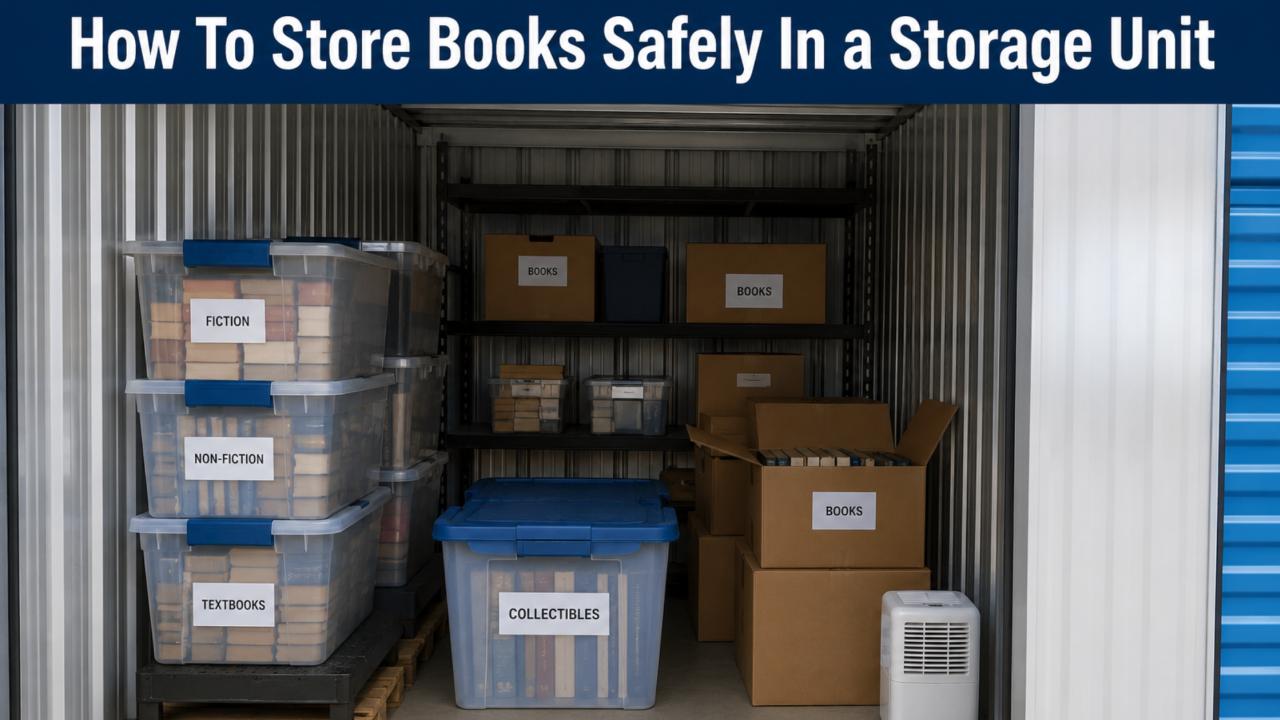
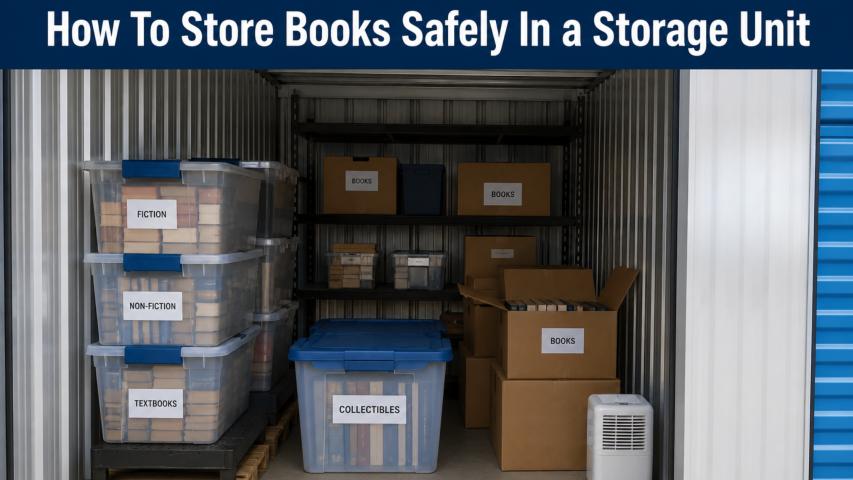
Moving, renovating, and a general shortage of shelf space can cause the need for book storage. Books in storage need protection as they do during packing. Poor packing, heat, moisture, and pests can lead to permanent damage in a matter of weeks.
Books carry information, priceless collections, memories, and valuable data. Keeping your books in an inappropriate environment may cause them irreparable harm.
An improper storage environment can cause heat, moisture, pests, or improper packaging to spoil your collection within days. If you need book storage, choosing the right storage rental units and following basic book storage practices will help protect your collection from damage.
Improper environmental conditions and high humidity are among the main causes of the decay of books and other paper materials, according to the American Library Association. This blog explains how to store books, helping you keep them neat, organized, and in good condition, whether for short- or long-term storage.
Why Book Storage Is Important?
Books are made from paper, glue, ink, cloth, and sometimes leather.
These materials react to changes in temperature and humidity.
Inappropriate storage may cause yellowing of pages, cover warping, loosening of the book spine, and mold growth. Taking a little time to prepare your books before storage helps preserve their condition.
Whether you have a private library or a complete collection of rare and valuable books, preserving them is always worth the effort.
Clean Books Before Packing
Preparing books before packing is one of the most important book storage tips. Dust can trap moisture, promoting mold growth. Also, the dirt will leave stains on the pages and covers if it is left unnoticed for several months.
Before storing:
Inspect for pests and mold.
Make sure your books are dry.
Remove dust from the page edges using the soft brush.
Clean book covers with a clean microfiber cloth.
Do not use cleaning sprays at home, as they may damage the paper and binding of the books.
Select Appropriate Packing Boxes
Not every box is convenient for storing books. We frequently see boxes fail because homeowners pack 40–50 pounds of books into oversized moving cartons. Smaller boxes are much safer and easier to carry.
While choosing boxes:
Do not use damaged boxes.
Reinforce the bottom of the boxes with quality packing tape.
Use clean and dry boxes.
Each box should not be too heavy.
Plastic boxes with tight lids provide additional protection against dust and moisture, especially for long-term preservation. Boxes weighing more than about 35 pounds are much more likely to split during a move. Plastic totes are excellent for long-term storage, but they should be completely dry before sealing.
How To Pack Books Properly?
The manner of packing books will play an important part in keeping them in good condition. Most hardcore books should be packed standing upright, as they do on your bookshelf. Books with similar dimensions should be placed together to reduce pressure on their bindings.
Big coffee table books may be packed lying down, but avoid stacking many of them as they put excessive pressure on the books below. Fill the box with chemical-free, acid-free packing paper or bubble wrap packaging to prevent shifting during transport. Follow self-storage etiquette best practices before storing books or other items for long periods.
Do not overpack your boxes, as excessive pressure may bend covers and damage book spines. These easy book storage ideas will help you preserve your ordinary books and valuable collections.
Protect Books From Moisture
Moisture is the main threat to books while in storage. Even low levels of humidity can cause mold growth, unpleasant odors, and warping. To avoid moisture-related damage to books:
Keep the storage containers closed.
Use the moisture absorbers if necessary.
Leave some distance between the walls and the boxes.
Do not place boxes on the floor.
Choose a dry and clean storage facility.
Climate-controlled storage will provide an additional layer of protection for valuable collections, family heirlooms, and rare books.
Organize Books Before Storage
Good book organization will save you time if you want to take a specific book from storage later. Instead of packing the books randomly, you should sort your books before boxing.
You may organize your books according to such factors as:
Seasonal reading.
Children's books.
Author.
Genre.
School or work reference.
Family keepsakes.
Mark every box with clear labels on all sides. Also, many people make a simple inventory list listing the names of the books stored in each box. It will simplify organizing books for storage over the next few months and years.
Storage of Books In The Proper Position
Books should be stable during storage. It is recommended to store the books standing upright, as it is the safest position for most paperbacks and hardcovers. If you plan to store the books lying down, stack only the smaller books.
Never store books with the spines pointing upward, as it puts pressure on the bookbinding and may spoil the book. Do not lean the books at a sharp angle, as this may bend the covers. Simply keeping books upright with proper support prevents unnecessary stress on their bindings and is one easy way to extend their lifespan.
Store Books Away From Heat And Sunlight
Direct sunlight can fade covers and weaken paper over time. Excessive heat weakens the paper and makes adhesives in the book bindings weaker. Inside your storage unit:
Do not place the boxes near heat sources.
Do not put the books close to windows if applicable.
Keep the stable indoor temperature if possible.
A climate-controlled environment will be useful for storing photo albums, collectible editions, and antique books.
Example Of Storing a Family Book Collection During A Move
Imagine a family moving to a new house that will be ready in three months. The family owns more than 300 books, including children's storybooks, textbooks, cookbooks, and several family photo albums.
Instead of packing the books into random moving boxes, they clean each book, sort them by type, pack them into small, sturdy boxes, mark each container, and store them on shelves in a climate-controlled storage unit.
The moisture absorbers are added as additional protection, and the inventory list is created. When they move to a new home, every book is dry, clean, well-organized, and ready to be returned to the shelves without any damage.
Avoid Common Mistakes While Storing Books
Most spoiled books become so due to avoidable mistakes during storage. Some of them include:
Failing to mark the storage boxes.
Packing the wet books.
Using oversized boxes that become too heavy.
Place the books directly on the concrete floor.
Storing the books in sheds or hot garages.
Overloading the stacks with excessive weight.
Avoiding these mistakes will remarkably increase the success of self-storage for books.
Inspection Of Your Books
Even if your books are stored properly, occasional inspection is a good habit. Visit your storage unit once in a few months to inspect for:
Mold signs.
Damaged boxes.
Pests.
Water leakage.
Moisture accumulation.
Early detection of the problem allows you to prevent damage to your entire collection. Regular inspection is one of the easiest book storage tips that is often forgotten.
Selecting the Right Storage Unit
Not every storage facility provides the same level of protection. While choosing a storage unit, consider the following criteria:
Pest prevention measures.
Secure and clean environment.
Climate-controlled option.
Easy access when necessary.
Security measures.
Good ventilation.
Pest prevention measures.
The right storage environment will protect your books and give you peace of mind.
Achieve Maximum Protection of Your Books With Proper Book Storage Rental Units
Whether you're protecting a childhood book collection or first-edition novels, proper storage helps preserve both sentimental and financial value.
With proper packing, careful cleaning, moisture control, appropriate containers, and organization, your collections will remain in pristine condition for many years to come.
If you are looking for temporary or long-term storage for books, renting high-quality or cheap storage units in Corpus Christi and applying the following book storage tips will ensure the safety of every book.