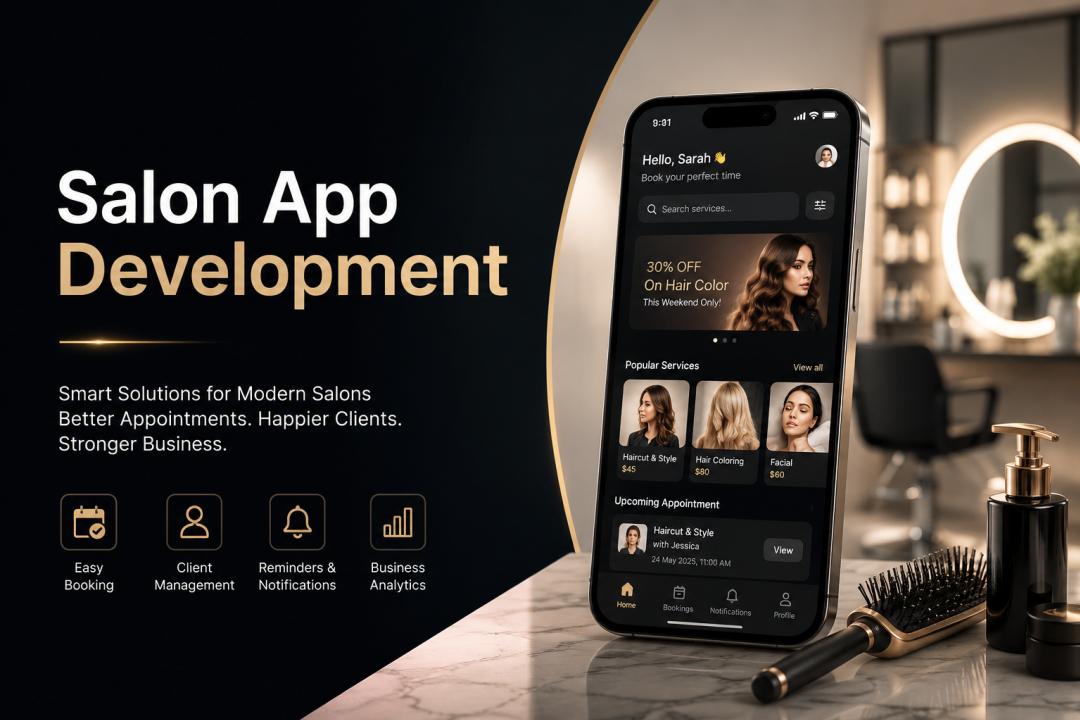
The beauty industry has become one of the fastest-growing digital markets, with customers expecting personalized services, instant bookings, online consultations, loyalty rewards and seamless shopping experiences. Traditional beauty businesses are no longer competing only on service quality; they are also competing on digital convenience. A well-designed mobile platform helps salons, spas, beauty brands and cosmetic retailers deliver a better customer journey while increasing operational efficiency.
Modern beauty app development enables businesses to manage appointments, engage customers, streamline staff operations and introduce new revenue channels from a single digital platform. Beyond improving convenience, these applications provide valuable customer insights that support smarter business decisions and long-term growth.
Customer Expectations Are Driving Digital Beauty Experiences
Consumers now prefer brands that simplify every interaction. They want quick appointment scheduling, digital payments, personalized recommendations, beauty consultations, product purchases and instant communication without switching between multiple platforms.
A beauty application brings these services together in one place, making the overall experience faster and more enjoyable. Customers spend less time waiting, while businesses reduce manual work that often slows daily operations.
Businesses offering digital convenience generally experience:
- Higher appointment completion rates
- Better customer retention
- Faster communication with clients
- Improved customer satisfaction
- More repeat purchases through personalized engagement
As digital behavior continues evolving, businesses without mobile solutions risk losing customers to competitors offering a smoother experience.
Revenue Opportunities Extend Beyond Appointment Booking
Many businesses initially consider mobile applications only as booking tools. Their actual value extends much further by supporting multiple income streams throughout the customer lifecycle.
An application can generate revenue through premium memberships, product recommendations, subscription plans, online consultations, virtual beauty sessions, exclusive offers, referral programs and loyalty rewards. These features encourage customers to interact more frequently while increasing average spending.
Integrated analytics also reveal purchasing behavior, helping businesses identify popular services, seasonal trends and customer preferences. Rather than relying on assumptions, owners make informed decisions backed by real usage data.
The result is stronger customer relationships supported by measurable business intelligence.
Personalization Creates Stronger Customer Loyalty
Beauty services are highly personal. Every customer has different preferences regarding skincare, hair>
Instead of offering identical promotions to everyone, businesses can recommend treatments based on previous appointments, preferred products, spending habits or seasonal requirements.
Personalized experiences may include
- Custom beauty recommendations
- Birthday rewards and exclusive discounts
- Personalized skincare reminders
- Product suggestions after completed services
- Loyalty points based on purchase history
Personalized communication feels more relevant to customers, increasing engagement while reducing marketing costs associated with broad campaigns.
Artificial Intelligence Is Improving Beauty Services
Artificial intelligence has introduced smarter customer experiences across the beauty industry. Machine learning algorithms analyze user preferences, recommend products, predict customer behavior and automate routine business operations.
Virtual consultations powered by AI can recommend skincare routines, beauty treatments and cosmetic products using customer inputs or uploaded images. Appointment scheduling also becomes more efficient through automated availability management and intelligent reminders.
Businesses expanding employee education are also introducing AI salon training software to standardize learning, monitor skill development and improve service consistency across multiple locations. Internal training supported by AI reduces onboarding time while maintaining quality standards throughout the organization.
These technologies help beauty brands deliver faster, more accurate services without increasing operational complexity.
Operational Efficiency Supports Sustainable Growth
Business growth becomes difficult when daily operations depend heavily on manual processes. Administrative work often consumes valuable time that could otherwise improve customer service.
Digital platforms simplify routine management by automating scheduling, payment processing, inventory updates, employee management, promotional campaigns and customer notifications.
Operational improvements include
- Automated appointment confirmations
- Staff schedule management
- Real-time inventory monitoring
- Secure payment processing
- Customer feedback collection
Automation minimizes scheduling conflicts, reduces administrative errors and allows staff to focus more on delivering quality services instead of handling repetitive tasks.
Virtual Beauty Experiences Continue Expanding
Customers increasingly prefer trying products digitally before making purchasing decisions. Virtual experiences reduce uncertainty while increasing buying confidence.
Advanced applications now integrate augmented reality alongside facial recognition technologies to simulate makeup, hair colors, skincare effects and cosmetic products in real time.
An AI hair>
Virtual previews also reduce consultation time and improve customer satisfaction because expectations become clearer from the beginning.
Beauty Apps Strengthen Brand Recognition
Strong branding depends on consistent customer interaction. Mobile applications create a direct communication channel that keeps businesses connected with customers beyond occasional appointments.
Push notifications, personalized offers, educational beauty content, seasonal campaigns and product launches maintain regular engagement throughout the year. Customers become familiar with the brand's identity through repeated positive experiences rather than isolated service visits.
A professionally designed application also communicates credibility. Smooth navigation, attractive design, secure transactions and responsive performance contribute to a positive perception that strengthens customer trust.
Over time, this trust translates into stronger customer loyalty and improved brand advocacy through referrals and positive online reviews.
Long-Term Value Makes Digital Investment Practical
The financial return from a beauty application extends well beyond immediate bookings. Customer retention, recurring revenue, operational efficiency, marketing optimization and valuable business insights continue generating benefits long after deployment.
Business owners often compare digital investment with salon app development cost, focusing primarily on initial expenses. Long-term value depends more on customer lifetime revenue, automation savings, improved productivity and higher engagement than the upfront development budget alone.
Scalable architecture also allows future feature expansion as customer expectations evolve. Businesses can gradually introduce advanced capabilities without rebuilding the entire platform, protecting their technology investment over time.
Choosing experienced professionals ensures that security, scalability, user experience and future integration requirements remain part of the development strategy from the beginning.
Selecting the Right Development Strategy
Technology alone does not guarantee success. Every beauty business serves different customer segments and operational models, making customization an essential part of the development process.
A successful application aligns with business goals while remaining intuitive for customers and employees alike. Careful planning during design and development helps avoid unnecessary complexity, ensuring that every feature serves a practical purpose.
Experienced development teams typically focus on performance optimization, data security, seamless integrations and scalable infrastructure. These technical foundations support future expansion while maintaining a reliable user experience across different devices.
Businesses that prioritize usability alongside innovation are better positioned to adapt to changing customer expectations without frequent redesigns or expensive system replacements.
Frequently Asked Questions
How long does beauty app development usually take?
Project timelines depend on application complexity, required integrations, design customization, testing and platform selection. A feature-rich solution generally requires several months to complete, while simpler applications can be delivered more quickly with clearly defined requirements.
Which features provide the highest return for beauty businesses?
Appointment scheduling, secure payments, customer profiles, loyalty programs, personalized recommendations, inventory management and automated notifications typically deliver the strongest business value by improving both customer experience and operational efficiency.
Can a beauty application support multiple business locations?
Yes. Multi-location management allows centralized control over appointments, staff schedules, inventory, promotions, customer data and reporting while giving each branch flexibility to manage its own daily operations.
Is beauty app development suitable for independent salons?
Absolutely. Independent salons benefit from digital appointment management, automated customer communication, online payments, loyalty programs and marketing tools that help them compete with larger beauty chains while improving overall customer retention.