"Wholesale" covers an enormous range of businesses, distributors, importers, exporters, and bulk merchandise providers, moving everything from industrial supplies to consumer packaged goods. That range is exactly why generic contact lists underperform here: a business classified as "wholesale" tells you almost nothing about who inside it actually owns a purchasing decision.
A purchasing manager sourcing raw materials and a warehouse supervisor managing inventory both work at the same distribution company, but one has budget authority and the other doesn't. A vendor selling ERP software needs an IT director or operations manager, not a sales rep who happens to share a building with the actual buyer. Lists built around company type instead of job function tend to scatter outreach across people who simply can't say yes.
Vertical matters just as much as function. A food and beverage distributor and an industrial supplies wholesaler are both technically "wholesale," but they're sourcing entirely different categories of product and responding to entirely different sales pitches. Treating them as one audience means writing a message vague enough to apply to neither.
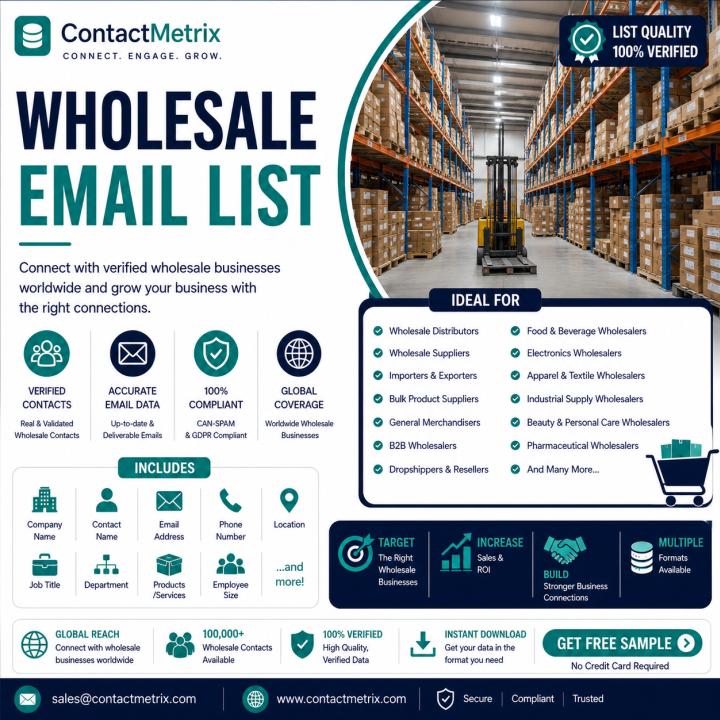
[ContactMetrix]'s Wholesale Email List handles this by segmenting contacts across operational role (procurement, supply chain, sales, finance, warehouse), industry vertical, and business size, so a pitch for freight and logistics software reaches a supply chain director instead of a finance manager, and a packaging materials pitch reaches a purchasing manager instead of a warehouse supervisor who has no say in vendor selection.
Multi-channel access matters here too. Wholesale buyers split their time between warehouses, loading docks, and offices, and don't always respond fastest to email. Direct phone numbers and mailing addresses give sales teams a real way to reach purchasing managers and business owners who might otherwise never see a cold email land.
None of this replaces a genuinely useful product, but it does mean outreach reaches whoever actually controls that part of the budget, whether that's a CFO evaluating a new distribution platform or a sourcing manager comparing suppliers. ContactMetrix keeps the data usable past a single campaign by refreshing records every 30 to 45 days and replacing anything that bounces at no cost, which matters in a sector where ownership changes and staff turnover are constant enough to make a static list stale within a few months.