Selling into the food and beverage world is a numbers game, but not in the way most people think. It's not about sending more emails. It's about sending them to the right person. This industry is enormous and scattered across restaurants, hotels, manufacturers, bottlers, and distributors, and the people who actually approve a purchase, like a plant manager or a procurement lead, rarely show up in a basic online search. If your product is ingredients, packaging, kitchen equipment, or food safety software, you already know how much time gets wasted chasing the wrong contact.
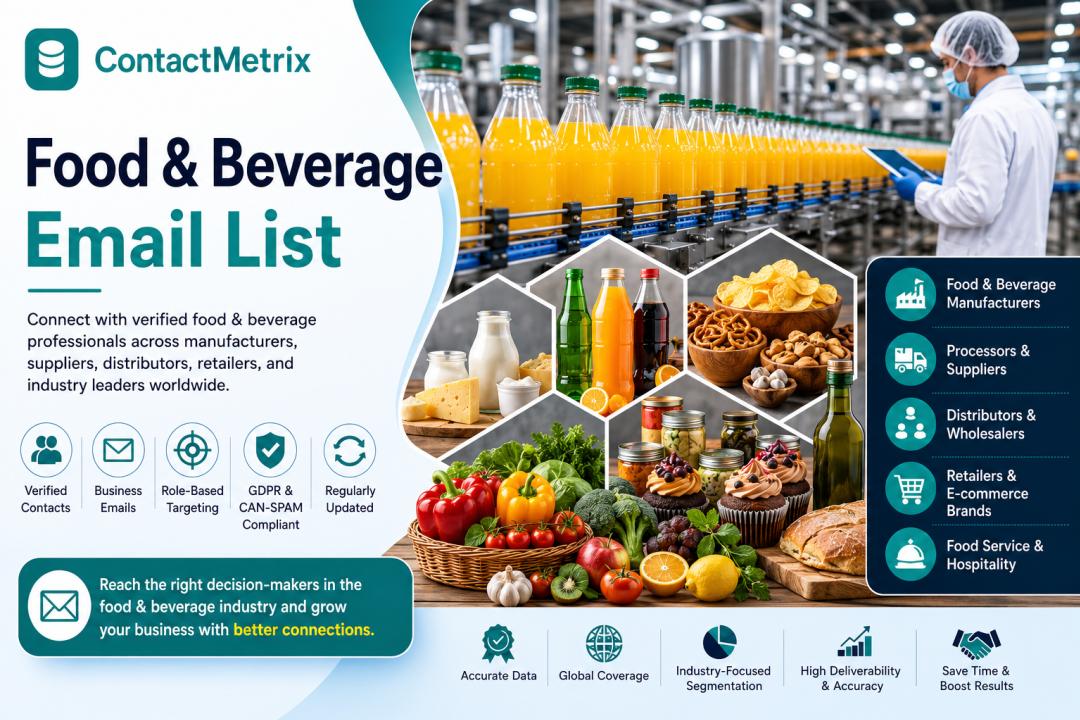
That's the problem a food and beverage industry email list is built to solve. It's a database put together specifically for this sector, with verified contact information for the people who make buying decisions: restaurant owners, executive chefs, plant managers, and procurement heads. Providers like ContactMetrix build these lists so you're reaching a real decision-maker instead of a general inbox that nobody checks. You're talking to someone whose job is to evaluate exactly what you're selling.
What's Actually in One of These Lists
A useful food and beverage contact list goes well past a name and an email address. A solid one includes 20 or more data fields, and each one helps you narrow down who's worth contacting. Expect things like:
- Full name and job title
- Business email and direct phone number
- Company name, website, and industry classification (including NAICS codes)
- Location by country, state, and city
- Revenue range and employee size
- Business type, whether that's a restaurant, manufacturer, or distributor
- Annual food volume or production capacity, where it's available
That last group of fields is what separates a targeted list from a generic one. Knowing a company processes a certain volume of product each month, or runs as a regional chain versus a single independent location, tells you far more about fit than a name on a spreadsheet ever could.
Who Gets the Most Out of This Data
Not every business needs this kind of list, but if your customers sit somewhere in the food and beverage supply chain, it can cut down a lot of wasted outreach. A few examples:
Food and ingredient suppliers can reach restaurant owners and corporate chefs who are actively sourcing produce, meat, seafood, or specialty ingredients, instead of hoping someone stumbles across a catalog.
Commercial kitchen equipment manufacturers can go straight to facility managers evaluating ovens, fryers, or refrigeration units, rather than waiting for a trade show to happen once a year.
Food processing and packaging companies can connect with plant managers and production heads who are actually shopping for equipment or packaging partners, not just anyone with "food" in their job title.
Beverage distributors and suppliers can reach bar managers and beverage directors responsible for sourcing wine, beer, spirits, or coffee, which is a far more useful audience than a general hospitality list.
Restaurant technology providers can target owners and operators who are evaluating POS systems, online ordering platforms, or inventory software, right when they're likely to be comparing options.
The industry also breaks down into clear sub-sectors: food manufacturing, beverage manufacturing, restaurants and quick service, and food processing. Each one has its own decision-makers, from a Plant Manager in food manufacturing to a Brewmaster on the beverage side, and a well-built list should let you filter down to that exact role instead of buying a broad, unsorted batch of contacts.
Why Data Quality Matters More Than Data Quantity
It's easy to assume a bigger list means better results, but a database of hundreds of thousands of contacts isn't worth much if a large chunk of them bounce or belong to someone who left the company two years ago. What actually matters is accuracy and how often the list gets refreshed. People change roles constantly in this industry, restaurants open and close, and a list that sits untouched for a year starts losing value fast.
Before buying any food and beverage contact database, whether it's from ContactMetrix or another provider, it's worth asking a few questions:
- How often is the data verified and refreshed?
- Are the contacts opt-in, meaning people who've agreed to be reached for business purposes?
- What happens with a hard bounce? Some providers replace bad contacts at no extra cost, which is worth confirming up front.
- Can the list be filtered by things that actually matter to your business, like business type, revenue, or production capacity, instead of just a broad industry label?
A provider that refreshes its data every month or so and offers replacements for bad contacts is a safer investment than a static file someone put together once and never updated.
Getting Started Without Wasting Budget
The smartest way to test any contact list is to request a sample before committing to anything. A handful of real (even if partially masked) records will show you how the data is structured and whether the companies listed actually match your target customer. If you sell to beverage distributors, for instance, you want to see beverage directors and purchasing leads in that sample, not just a mix of unrelated hospitality contacts.
From there, most providers, ContactMetrix included, let you build a custom list based on your ideal customer profile: company size, revenue, region, job titles, even SIC and NAICS codes if you need that kind of precision. That's a far better use of a marketing budget than sending a mass email to a generic list and hoping something lands.
Food and beverage buyers get pitched constantly, so getting in front of the right person matters more than getting in front of a lot of people. A well-built, regularly updated contact list won't do the selling for you, but it does mean your first message reaches someone who's actually in a position to say yes.