Installing home security cameras in a condominium requires more thought than in a landed property. You're working within shared spaces, management rules, and unit-specific constraints. The right camera placement strategy — combined with the correct equipment — can significantly improve your personal security without conflicting with building policies or neighbouring units.
This guide walks condo owners and tenants through how to plan, place, and select cameras that actually work in a high-rise residential environment.
Why Condominiums Need a Different Security Approach
Most security advice is written for landed homes with full property access. Condominiums are different. You share corridors, lobbies, lifts, and carparks with dozens or hundreds of other residents. Your unit's "perimeter" starts at your front door — not a gate or fence.
This means your camera placement priorities shift entirely. You're not monitoring a driveway. You're monitoring a front door corridor, an internal unit layout, and possibly a balcony or private enclosed area. Each zone has its own rules and technical requirements.
What Zones Should Home Security Cameras Cover in a Condo?
Before buying anything, map out the zones you actually control and the zones that fall under building management jurisdiction.
Zone 1 — The Front Door and Immediate Corridor
The front entrance to your unit is the highest-priority zone. A wide-angle camera positioned just inside or above your door frame can capture anyone approaching, lingering, or tampering with your lock. In Singapore, many condo residents use video doorbell cameras or compact IP cameras mounted just inside the door — angled outward through the peephole or above the door frame.
Important: Cameras placed in common corridors must comply with your condominium's by-laws and the Personal Data Protection Act (PDPA). Pointing a camera directly at a neighbour's unit entrance or capturing shared corridor footage without consent or management approval may be a violation.
Zone 2 — Interior Living Spaces
Interior cameras serve two purposes: monitoring for intrusion after a break-in attempt, and keeping an eye on the unit when you're travelling. Common placements include:
Living room — wide-angle view of the main entry point
Near valuables or home safes
Kitchen or utility areas if you have domestic helpers
Children's rooms (with appropriate privacy considerations)
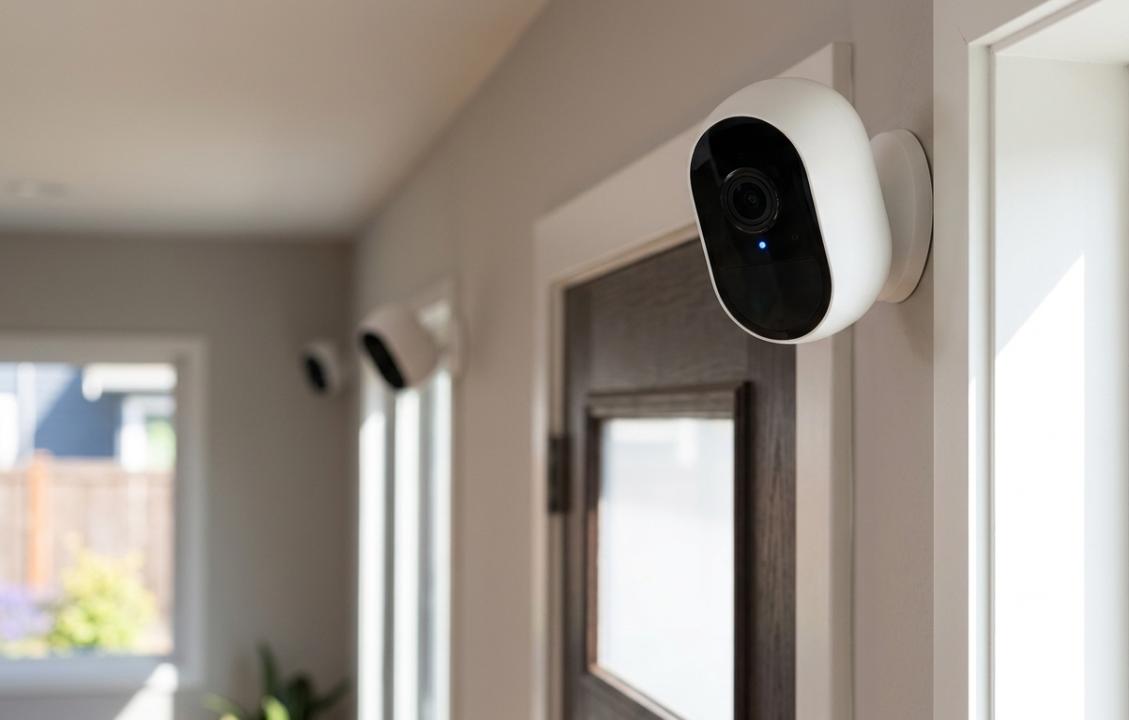
For interior use, smaller form-factor cameras — such as compact dome or cube cameras — blend better with residential interiors. They should support remote viewing via mobile app so you can monitor your unit while away.
Zone 3 — Balcony and Windows
High-floor units often overlook the balcony as a security risk, but break-ins via balcony access do occur — particularly in units on lower floors or those near common facilities. An outdoor-rated camera pointed at balcony access points provides a useful secondary line of visibility.
Ensure the camera you choose is rated IP65 or higher for outdoor or semi-outdoor use in Singapore's humid climate. Without proper weatherproofing, cameras will deteriorate quickly in exposed balcony environments.
Choosing the Right Camera Type for Condo Use
Not all cameras suit condominium living. Here's a quick comparison of common types used in apartment CCTV setups:
Camera Type | Best For | Key Consideration
|
|---|---|---|
IP Dome Camera | Ceilings, interior spaces | Discreet, wide-angle coverage |
Video Doorbell Camera | Front door monitoring | Motion alerts, two-way audio |
PTZ Camera | Balcony or open areas | Remote pan/tilt control |
Bullet Camera | Focused directional zones | More visible, acts as deterrent |
Mini Cube Camera | Discreet indoor placement | Compact, easy to reposition |
For most condo owners in Singapore, a combination of a video doorbell at the entrance and one or two interior IP cameras provides practical, comprehensive coverage without over-installing.
Key Features to Look For in Residential Surveillance Cameras
When evaluating cctv camera for home singapore options, focus on these specifications:
Resolution: 2MP (1080p) is the practical minimum. 4MP or higher gives clearer facial identification.
Night vision: Look for infrared (IR) or colour night vision for low-light corridor and interior use.
Motion detection with alerts: Push notifications to your phone reduce the need to review footage constantly.
Two-way audio: Useful for video doorbells and front-door cameras to communicate without opening the door.
Cloud or local storage: Cloud storage offers off-site backup; local NVR/SD card storage avoids subscription fees.
Mobile app access: Essential for remote monitoring when you're travelling or at work.
Understanding Condo Management Rules Before You Install
This is the step most residents skip — and it leads to cameras being removed after installation. In Singapore, condo security cameras installed in common areas require approval from your Management Corporation Strata Title (MCST). Even cameras that face outward from inside your unit may be subject to review if they capture shared corridor space.
Before installation, check the following:
Review your condo's house rules or by-laws regarding camera installation
Submit a written request to your MCST if installing anything outside your unit boundary
Ensure your setup does not capture neighbouring units' entrances or common bathrooms
Comply with PDPA guidelines on the collection of personal data through surveillance equipment
The Personal Data Protection Commission (PDPC) of Singapore has published advisory guidelines on the use of CCTV in residential settings. Reviewing these guidelines before installation is strongly recommended.
How Many Cameras Does a Condo Unit Actually Need?
For a standard two- to three-bedroom condo unit, a practical starting setup looks like this:
1 camera — Front door or video doorbell
1 camera — Living room (main interior zone)
1 camera — Balcony or service entrance (if applicable)
That's three cameras to cover the essential zones. Larger units or those with multiple access points may need four to five. Adding more cameras beyond this without a clear purpose increases cost and storage requirements without meaningful security improvement.
Wired vs. Wireless: What Works Better in a Condo?
Wireless IP cameras are the go-to choice for condo security cameras because running cables through walls typically requires MCST approval and may conflict with unit renovation rules. Wireless cameras connect over your home Wi-Fi network, are easier to install without drilling, and can be repositioned as needed.
The trade-off is Wi-Fi dependency. Ensure your router provides strong signal coverage across all planned camera locations before purchasing. Dead zones in corridors or balconies will result in dropped connections and missed footage.
Practical Installation Tips for Condo Residents
Mount cameras at 2.1–2.4 metres height for optimal coverage and tamper resistance
Angle door cameras slightly downward to capture faces, not just the tops of heads
Test night vision performance in your specific corridor or room lighting before finalising placement
Use cable management clips or concealed runs to keep wired power cables neat and compliant with building aesthetics
Register camera access credentials and store backup footage in a secondary location
For residents who are unsure about self-installation, engaging a certified installer ensures proper placement, clean cabling, and correct camera configuration — reducing the risk of blind spots or setup errors.
Whether you're just starting to plan your setup or upgrading an existing system, Kirin CCTV offers a range of residential surveillance solutions suited to Singapore condominiums — from compact IP cameras to complete NVR systems designed for apartment living.
Frequently Asked Questions
Can I install security cameras in my condo corridor in Singapore?
You can install cameras within your own unit, but placing them in common corridors requires MCST approval. Cameras must also comply with Singapore's PDPA guidelines to avoid capturing neighbouring units or shared spaces without authorisation.
What is the best type of home security camera for a condominium unit?
For most condo units, a video doorbell camera at the entrance combined with one or two indoor IP dome cameras provides practical coverage. Wireless models are preferred as they avoid the need for cable runs through walls, which may require MCST approval.
How many CCTV cameras do I need for a 3-bedroom condo?
A three-camera setup covering the front door, main living area, and balcony is sufficient for most three-bedroom condos. Larger layouts or units with multiple access points may benefit from four to five cameras for complete coverage.
Do condo security cameras need to be weatherproof?
Yes, any camera placed on a balcony or near an exterior-facing window should carry an IP65 or higher rating. Singapore's humidity and occasional rain exposure will degrade non-weatherproof cameras quickly, affecting image quality and lifespan.
Are wireless CCTV cameras reliable enough for home use in Singapore?
Wireless cameras are reliable when connected to a strong, stable Wi-Fi network. Ensure your router covers all camera locations without dead zones. For critical areas like the front door, a wired power connection with wireless data transmission offers greater reliability.
What should I check before buying a CCTV camera for home use in Singapore?
Key factors include resolution (1080p minimum), night vision capability, motion alert features, storage options (cloud or local NVR), and mobile app compatibility. Also verify the camera suits your specific placement — indoor, outdoor-rated, or doorbell->