Global PVC Resin Price Trends & Outlook – Q2 2026
PVC Resin Price Analysis indicates a moderate downward trend of approximately 6–8% quarter-on-quarter, driven by soft downstream demand and stable feedstock availability. PVC Resin Price Forecast expectations remained cautious across most regions as construction and infrastructure activities slowed in key markets, particularly in Asia and North America.
Throughout Q2 2026, price movements reflected a combination of easing energy costs, balanced supply conditions, and subdued export demand. While some regions showed temporary stabilization in late May, overall sentiment remained bearish. Procurement teams responded by adopting short-term buying strategies, minimizing inventory risk amid uncertain demand signals. The quarter highlights a transitional phase in the global PVC market, with cost-side relief failing to fully offset weak consumption patterns.
PVC Resin Prices Q2 2026: Regional Market Snapshot
- USA: USD 644/MT
- Japan: USD 609/MT
- Germany: USD 946/MT
- India: USD 834/MT
- Brazil: USD 455/MT
The global price spread during Q2 2026 highlights significant regional disparities. Europe (Germany) maintained the highest pricing due to elevated production costs and energy dependency, while Brazil recorded the lowest levels, reflecting oversupply and weaker domestic demand. Asia remained relatively balanced, while North America experienced moderate declines linked to inventory corrections.
Across all regions, pricing trends suggest a market transitioning from tightness in late 2025 to a more supply-driven environment. Demand-side weakness, particularly in construction and infrastructure sectors, remained the primary limiting factor despite improved feedstock cost conditions.
PVC Resin Price Analysis: Regional Breakdown And Insights Q2 2026
North America (USA)
In North America, the USA recorded PVC resin prices at USD 644/MT in Q2 2026. The market experienced a downward trend, primarily influenced by declining construction activity and inventory destocking among distributors. Ethylene feedstock prices remained relatively stable, but weak export demand further pressured domestic pricing.
Supply levels were adequate, with no major production disruptions reported. Producers maintained operating rates, but competitive pricing strategies were adopted to clear excess inventories. The overall market sentiment remained cautious, with buyers delaying purchases in anticipation of further price corrections.
Asia-Pacific (Japan, India, China)
Asia-Pacific markets showed mixed pricing trends. Japan recorded USD 609/MT, while India stood at USD 834/MT. China, although not listed in the dataset, influenced regional pricing through export dynamics and production volumes.
Japan experienced a slight decline, driven by reduced domestic demand and stable supply conditions. India, however, maintained relatively higher pricing due to steady infrastructure demand and import dependency, although slight corrections were observed toward the end of the quarter.
China’s production levels continued to impact regional supply, with exports putting pressure on neighboring markets. Overall, Asia-Pacific remained relatively balanced but leaned toward a softening trend due to moderate demand recovery.
South America (Brazil)
Brazil recorded the lowest pricing globally at USD 455/MT, reflecting a strong bearish trend. The decline was driven by oversupply conditions and weak construction sector demand.
Local producers faced pressure from both domestic and international suppliers, leading to aggressive price adjustments. Import competition and currency fluctuations further contributed to pricing volatility. Demand remained subdued throughout the quarter, limiting any upward price momentum.
Request Your PVC Resin Price Report Sample Today: https://www.imarcgroup.com/pvc-resin-price-trend/requestsample
Supply and Demand Overview – Q2 2026
Global supply conditions remained stable during Q2 2026, supported by consistent operating rates across major production hubs. No major plant shutdowns or disruptions were reported, contributing to ample product availability.
On the demand side, the construction sector—the primary consumer of PVC resin—remained weak in several regions, particularly in North America and parts of Asia. Infrastructure projects in India provided some support, but this was insufficient to offset broader global softness.
Export demand also slowed, especially from Asia to Europe and Latin America. Buyers adopted a cautious procurement approach, focusing on short-term contracts rather than long-term commitments. This imbalance between steady supply and weak demand contributed significantly to the overall price decline observed during the quarter.
PVC Resin Price Index & Historical Analysis
The PVC Resin Price Index for Q2 2026 showed a clear downward trajectory compared to Q1 2026. Index values declined steadily across April and May before stabilizing slightly in June.
Historically, the market experienced upward momentum during late 2025 due to high energy costs and supply constraints. However, the transition into 2026 marked a shift toward normalization, with easing cost pressures and improved supply availability.
Quarter-on-quarter analysis indicates that the current decline aligns with cyclical demand patterns rather than structural market changes. Compared to the same period last year, prices remain moderately elevated, suggesting that the market is undergoing correction rather than a full downturn.
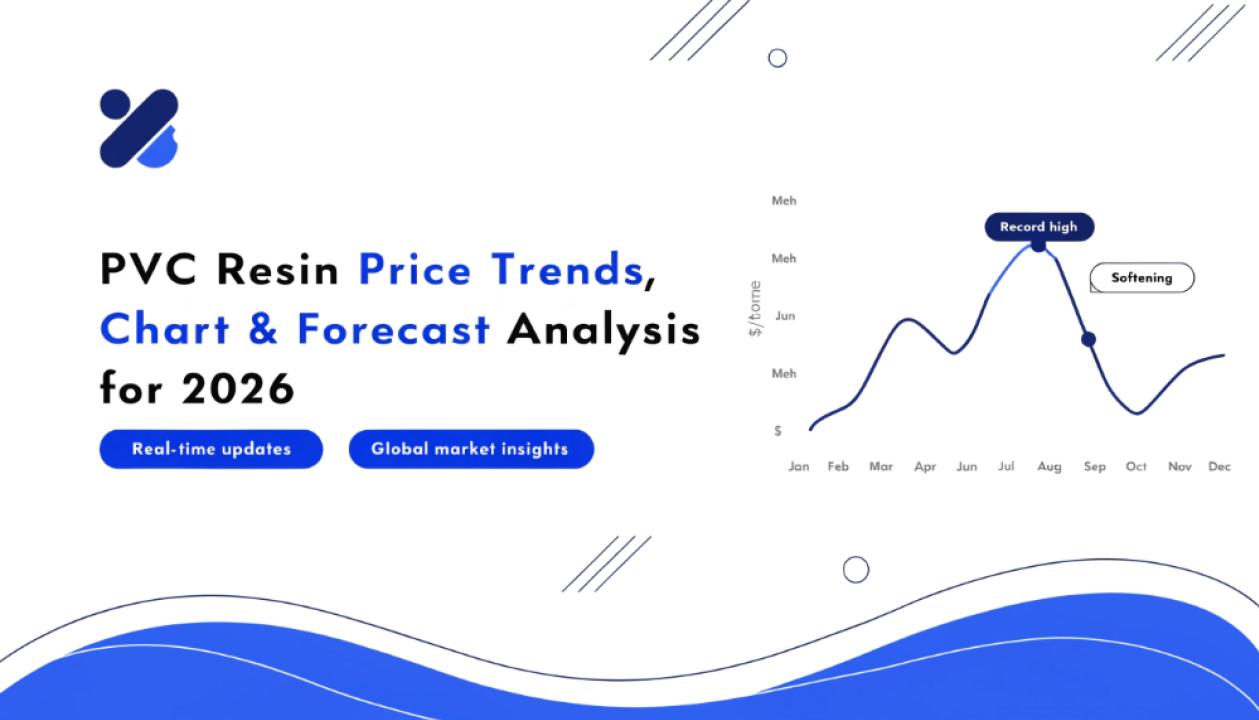
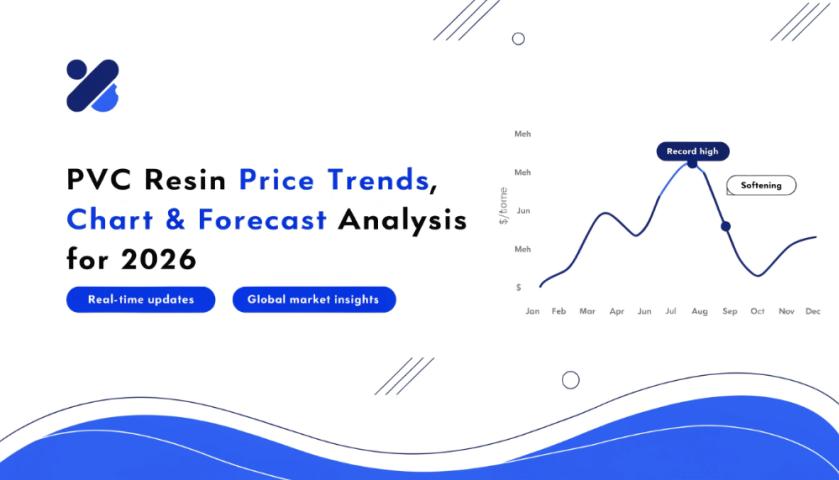
The PVC Resin price history chart highlights this transition phase, with Q2 2026 representing a stabilization period following earlier volatility.
PVC Resin Price Forecast 2026: What to Expect Next?
Over the next 12 months, the PVC Resin price forecast 2026 suggests a range-bound to slightly bearish outlook. Prices are expected to stabilize in the near term, with potential recovery in late 2026 depending on demand revival.
Key expectations include:
- Gradual improvement in construction activity, particularly in emerging markets
- Stable feedstock costs, limiting significant price spikes
- Continued competition from global suppliers, maintaining pricing pressure
Short-term volatility may persist due to geopolitical factors and energy price fluctuations. However, long-term fundamentals indicate a balanced market with moderate growth potential.
Key Factors Affecting Prices: Quarterly Perspective
Several factors influenced pricing trends during Q2 2026:
- Energy Costs: Lower crude oil and natural gas prices reduced production costs, contributing to price declines
- Chlor-Alkali Demand: Weak demand for chlorine derivatives impacted overall PVC production economics
- Freight Rates: Stabilizing shipping costs improved global trade flows but did not significantly boost demand
- Construction Activity: Sluggish infrastructure and housing projects limited consumption
- Supply Levels: Consistent production without major disruptions led to oversupply in certain regions
These factors collectively shaped the pricing environment, reinforcing the downward trend observed during the quarter.
What Is PVC Resin?
PVC (polyvinyl chloride) resin is a widely used thermoplastic polymer produced through the polymerization of vinyl chloride monomer (VCM). It is a key raw material in the construction, automotive, electrical, and packaging industries.
PVC resin is valued for its durability, chemical resistance, and cost-effectiveness. It is commonly used in pipes, fittings, cables, flooring, and profiles. Its demand is closely linked to construction activity and infrastructure development, making it highly sensitive to economic cycles.
Recent Developments (Q2 Highlights)
Several notable developments impacted the market during Q2 2026:
- Stable operating rates across major global producers
- Increased exports from Asia, particularly China, influencing regional pricing
- No significant capacity expansions or shutdowns reported
- Improved logistics and shipping conditions compared to previous quarters
- Continued pressure on margins due to weak downstream demand
These developments indicate a market characterized by supply stability but demand uncertainty.
FAQs About PVC Resin Prices Insights & Market Analysis:
What does the PVC Resin Price Chart show for Q2 2026?
The PVC Resin Price Chart shows a consistent downward trend across most regions during Q2 2026. Prices declined gradually due to weak demand and stable supply conditions, with slight stabilization observed toward the end of June.
How is the PVC Resin Price Index calculated?
The PVC Resin Price Index is calculated based on weighted average prices across key global markets. It reflects quarterly price movements and helps track trends over time, providing insights into market direction and volatility.
What is the outlook based on the PVC Resin price forecast?
The outlook suggests a stable to slightly bearish trend in the short term. Prices may recover gradually in late 2026 if demand improves, particularly in construction and infrastructure sectors.
How IMARC Helps
IMARC Group’s Q2 2026 price-tracking database provides accurate, real-time insights into global PVC resin pricing trends. The data shows a clear short-term correction phase driven by supply-demand imbalances. Going forward, IMARC expects gradual stabilization with potential recovery linked to infrastructure demand and global economic improvement.
Contact Us:
IMARC Group
134 N 4th St., Brooklyn, NY 11249, USA
Email: sales[@]imarcgroup.com
Tel No:(D) +91 120 433 0800
United States: +1-201971-6302