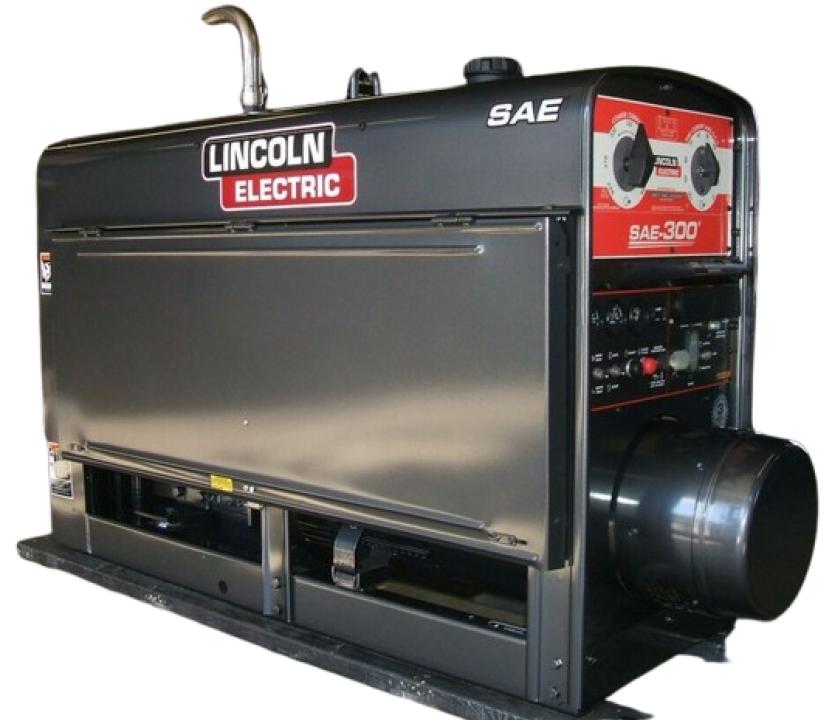
Engine-driven welders are essential for industrial projects where
reliable welding power is needed in locations without access to a stable
electrical supply. In Pakistan, these machines are commonly used in
construction, pipeline installation, oil and gas projects, shipbuilding,
fabrication, infrastructure development, and heavy equipment repair.
Choosing the right engine-driven welder is important because the machine
must be able to handle the required workload, welding process, operating
environment, and working hours. The following factors can help industrial users
make the right decision.
1. Determine the Required Welding
Amperage
The first step is to determine the welding current required for your
applications. Engine-driven welders are available in different amperage
capacities, so the right choice depends on the type and thickness of the
materials being welded.
Light fabrication work may require a lower-amperage machine, while heavy
industrial applications such as pipeline welding, structural fabrication, and
heavy equipment repair may require machines capable of producing several
hundred amps.
Avoid choosing a machine based only on its maximum amperage. Consider the
amperage you will actually need during normal operations.
2. Consider the Welding Processes
Different industrial applications require different welding processes.
Before purchasing an engine-driven welder, determine which processes your
operators will use.
Common processes include:
- Stick welding
(SMAW)
- TIG welding
(GTAW)
- MIG welding
(GMAW)
- Flux-cored
welding (FCAW)
- Air carbon arc
gouging
Stick welding is particularly useful for outdoor and remote applications
because it does not require shielding gas. If your company performs different
types of welding, a multi-process engine-driven welder may provide greater
flexibility.
3. Select the Right Engine
The engine is one of the most important components of an engine-driven
welder. Industrial machines are commonly powered by diesel or gasoline engines.
For heavy-duty industrial applications, diesel-powered models are often
preferred because they are designed for demanding workloads and extended
operation.
When evaluating the engine, consider:
- Engine power
- Fuel
consumption
- Operating hours
- Spare parts
availability
- Maintenance
requirements
- Local technical
support
- Engine
reliability
In Pakistan, spare parts availability should be an important
consideration. A machine can become difficult and expensive to maintain if its
engine components are not readily available.
4. Check the Duty Cycle
Duty cycle indicates how long a welding machine can operate at a specific
output before it needs a cooling period.
This is particularly important for industrial operations where welding
may continue for several hours. If your application involves continuous
high-amperage welding, choose a machine with a duty cycle appropriate for your
workload.
A machine with an unsuitable duty cycle may experience excessive heat and
reduced performance during demanding operations.
5. Compare Fuel Consumption
Fuel consumption can have a major impact on the operating cost of an
engine-driven welder. This is especially important for companies operating
machines for long hours at construction sites, pipelines, workshops, or remote
locations.
Compare the fuel efficiency of different models before making a decision.
A machine with a higher initial purchase price may be more economical over its
working life if it consumes less fuel and requires less maintenance.
6. Consider Auxiliary Power
Many engine-driven welders can provide auxiliary electrical power in
addition to welding output. This feature can be particularly useful at remote
industrial sites.
Auxiliary power may be used for:
- Angle grinders
- Electric drills
- Lighting
- Power tools
- Pumps
- Other site
equipment
If auxiliary power is important for your project, check the generator
capacity and available outlets before selecting a machine.
7. Evaluate Portability
Industrial welding projects in Pakistan can take place in workshops,
factories, construction sites, deserts, pipelines, ports, and other remote
areas.
Consider how the machine will be transported and positioned at the
worksite. Important factors include its weight, dimensions, lifting points,
wheels, and trailer compatibility.
For projects that require frequent movement, portability can be just as
important as welding output.
8. Check Brand and Spare Parts
Availability
The manufacturer's reputation is another important consideration when
choosing an engine-driven welder. Established brands such as Lincoln Electric,
Miller, and ESAB offer a variety of machines for industrial applications.
However, brand reputation should not be the only factor. Check whether
spare parts, technical support, and qualified technicians are available in
Pakistan.
Easy access to replacement components can reduce downtime when the
machine requires maintenance or repairs.
9. Decide Between New and Used
Equipment
Industrial companies may consider both new and used engine-driven welders
depending on their budget and requirements.
A new machine generally provides the advantage of a known operating
history and manufacturer support. Used equipment can offer a lower purchase
price but should be thoroughly inspected before being put into service.
When inspecting a used engine-driven welder, check:
- Engine
condition
- Generator or
alternator
- Welding output
- Control panel
- Wiring
- Cooling system
- Fuel system
- Battery and
charging system
- Welding cables
- Oil pressure
- Unusual noise
or vibration
A professional inspection can identify potential problems before they
result in expensive downtime.
10. Consider Maintenance and Repair
Support
Maintenance and repair support should be considered before purchasing an
engine-driven welder. Industrial machines operate under demanding conditions
and can eventually require mechanical, electrical, or welding-system repairs.
Before choosing a particular model, determine whether qualified
technicians are available to service the engine and welding system.
Regular maintenance can help extend equipment life and reduce unexpected
breakdowns. When a machine develops problems, professional Engine DrivenWelder Repairing can help identify the cause and restore the equipment to
reliable working condition.
11. Calculate the Total Cost of
Ownership
The purchase price is only one part of the total cost of owning an
engine-driven welder.
Industrial companies should also consider:
- Fuel costs
- Routine
maintenance
- Spare parts
- Repair expenses
- Downtime
- Transportation
- Operator
requirements
- Expected
service life
A machine with a lower purchase price may ultimately cost more if it
consumes excessive fuel or requires frequent repairs.
12. Match the Welder to Your
Application
The best engine-driven welder depends on the specific industrial
application.
For example, pipeline contractors may prioritize high welding output,
durability, and portability. Construction companies may need both welding and
auxiliary power, while heavy equipment repair businesses may require high
amperage and reliable operation for demanding jobs.
Understanding the actual requirements of your operation before purchasing
will help you avoid paying for unnecessary features or selecting a machine that
cannot handle the workload.
Conclusion
Choosing an engine-driven welder for industrial applications requires
careful consideration of amperage, welding processes, engine type, duty cycle,
fuel consumption, auxiliary power, portability, spare parts availability, and
maintenance requirements.
For industrial users in Pakistan, local service and parts availability
should also be considered. A properly selected engine-driven welder can provide
dependable welding power for construction, fabrication, pipeline installation,
oil and gas, shipbuilding, and other demanding applications.
The right machine is not necessarily the one with the highest amperage or
the lowest purchase price. It is the one that provides the required
performance, reliability, efficiency, and long-term value for your specific
industrial operation.