Quick Summary: PET acoustic panels have moved well beyond plain, utilitarian noise control. Today's cutting technology, color options, and layering possibilities let them function as genuine design statements. This blog looks at unexpected, creative ways PET polyester acoustic panels and polyester acoustic board products are being used to add real personality to a room, not just quiet it down.
Introduction
Acoustic treatment used to mean choosing between "looks bad" and "sounds bad." PET acoustic panels have quietly dismantled that trade off, offering genuine creative flexibility that lets designers use them as intentional character pieces rather than a purely functional necessity hidden away or apologized for.
This shift opens up some genuinely interesting design possibilities that go well beyond a plain rectangular panel mounted flat against a wall. Let's look at some of the more unexpected, creative ways this material is showing up in real spaces.
Sculptural Wall Installations
One of the more striking applications treats acoustic PET panels as three dimensional sculptural elements rather than flat wall coverings. Layering panels at varying depths, angles, and cut patterns creates genuine dimensional interest, catching light and shadow differently depending on viewing angle, something a flat, uniform surface simply can't achieve.
This approach transforms an entire wall into a genuine art installation that happens to also be doing serious acoustic work behind the scenes. Restaurants and hospitality spaces have particularly embraced this technique, using dimensional PET installations as photogenic focal points that guests genuinely want to photograph, while quietly managing the noise buildup that comes with busy dining environments.
Color Blocking and Gradient Patterns
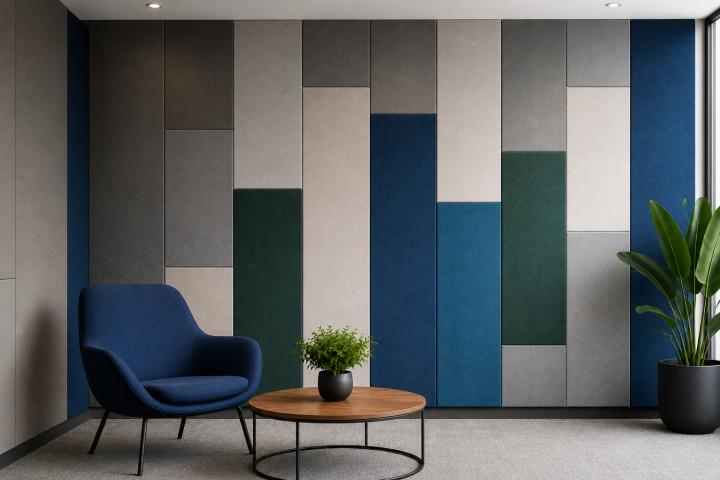
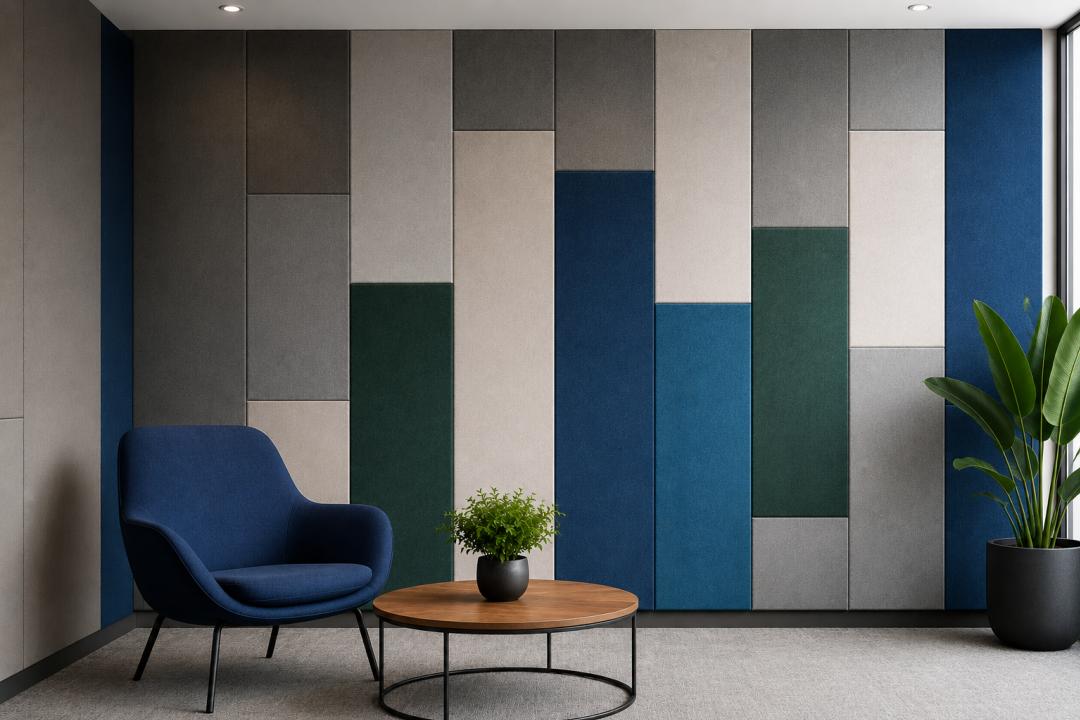
Because PET polyester acoustic panels can be manufactured in an extensive range of colors, designers have started using them for genuine color blocking and gradient effects across large surfaces. Imagine a ceiling or feature wall transitioning gradually from deep blue to soft teal to warm cream, each panel a slightly different shade, creating a genuine visual gradient using nothing but the acoustic material itself.
This technique turns what would otherwise be a purely functional installation into a defining visual feature of a space, giving designers a genuine paint like tool for color composition, except one that also happens to control echo and reverb throughout the room.
Backlit and Illuminated Panel Systems
Some installations incorporate LED lighting behind or within panel assemblies, creating a genuinely striking illuminated effect, especially with panels featuring cut-out patterns that let light filter through in interesting geometric shapes. This combination of acoustic function, visual pattern, and integrated lighting creates a genuinely multi sensory design element.
Retail environments and hospitality venues have used this approach particularly effectively, creating signature lighting features that double as acoustic treatment, giving a space a genuinely distinctive character that purely decorative lighting alone couldn't achieve, since it's simultaneously solving a real functional problem.
Custom Branding and Logo Integration
Because polyester acoustic board cuts precisely into custom shapes, some businesses have started incorporating actual brand elements, logos, custom patterns tied to visual identity, directly into their acoustic treatment. A company's logo, subtly integrated into a ceiling or wall installation through careful panel cutting, turns necessary acoustic treatment into genuine brand expression.
This approach works particularly well in office receptions, retail spaces, and hospitality venues where reinforcing brand identity throughout the physical space genuinely matters, transforming what could be a purely generic acoustic installation into something distinctly, recognizably tied to a specific business's visual identity.
Layered Depth and Shadow Play
Beyond simple color, using multiple panel depths within a single installation creates genuine shadow and depth interest that changes throughout the day as natural light shifts. Panels mounted at slightly different distances from the wall create subtle shadow lines that add visual complexity without needing elaborate patterns or bold color choices.
This more subtle approach appeals particularly to designers wanting sophisticated, understated character rather than bold visual statements, proving that PET acoustic panels can add genuine design interest even through minimal, restrained techniques rather than only through dramatic color or pattern choices.
Read to know more about PET acoustic panels here: What Designers don’t Tell You about PET Acoustic Solutions?
Ceiling Clouds and Floating Installations
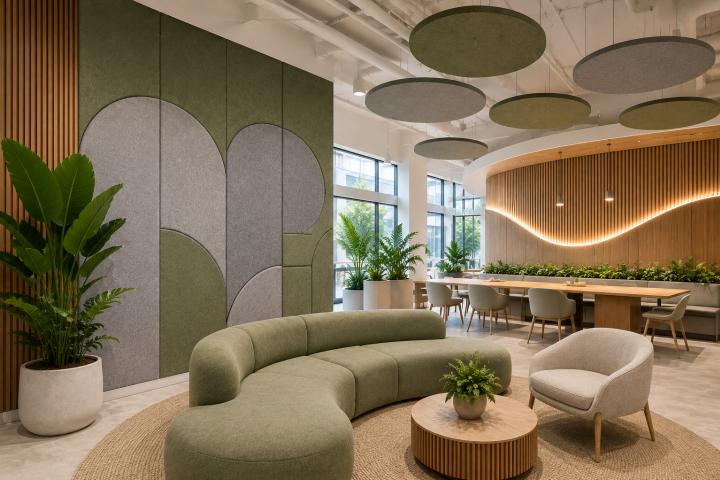
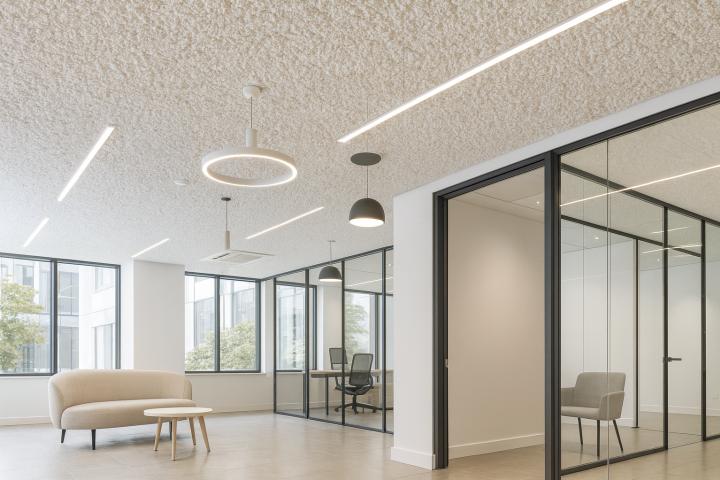
Rather than mounting panels flush against a ceiling surface, some designs use suspended, floating panel clusters, often called acoustic clouds, positioned at varying heights below the actual structural ceiling. These floating installations add genuine architectural interest, breaking up an otherwise flat overhead plane while providing excellent acoustic performance through their exposed surface area and the air gap created by suspension.
This technique has become particularly popular in open plan offices and co-working spaces, where floating clusters can also help define different zones within an open floor plan, adding wayfinding and spatial organization function alongside their acoustic and visual contributions.
Mixed Material Combinations
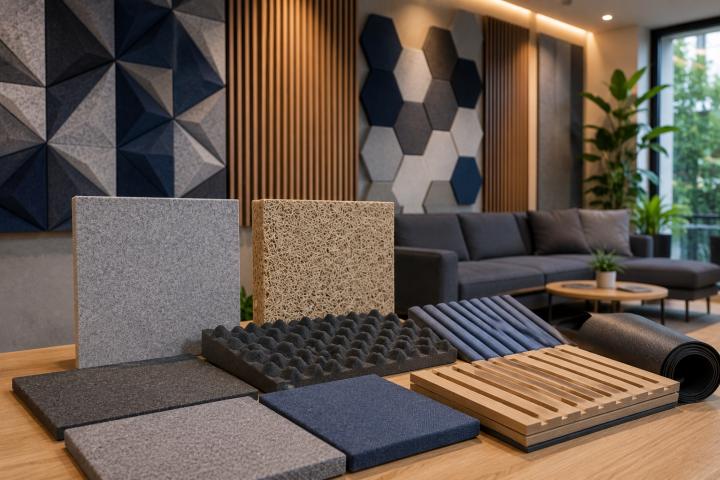
Combining acoustic PET panels with other materials, wood accents, metal trim, glass elements, creates genuinely unique textural combinations that neither material alone could achieve. This mixed material approach lets designers use PET panels as one component within a richer, more layered material palette rather than the sole defining surface treatment.
This technique works particularly well for designers wanting to avoid an overly uniform, single material appearance, using acoustic panels strategically alongside complementary materials to create genuine visual richness while still achieving comprehensive acoustic coverage across a space.
Geometric Tessellation Patterns
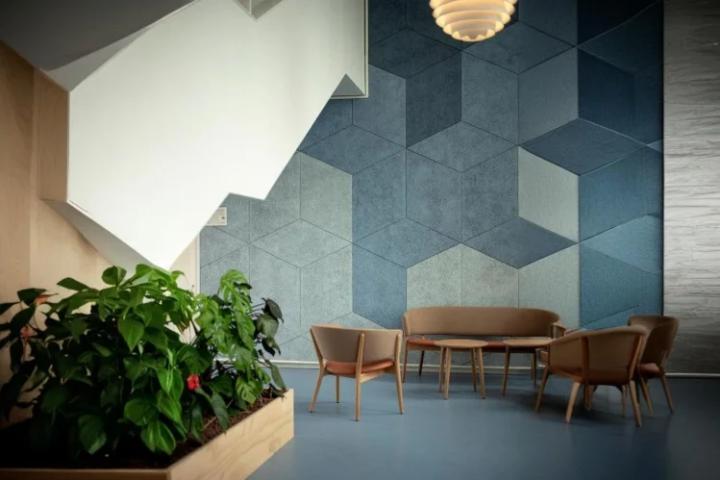
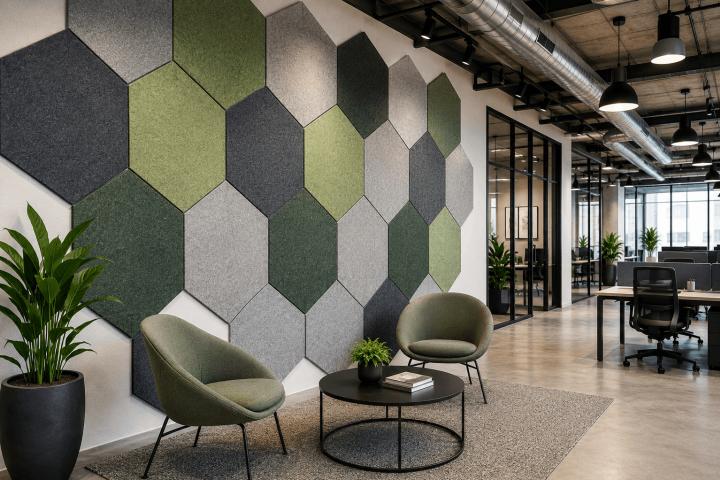
Beyond simple repeating shapes, some installations use genuinely complex geometric tessellation, interlocking patterns that create optical interest through precise, mathematical repetition. These patterns can create subtle visual movement or even mild optical illusions depending on color contrast and shape complexity, turning an acoustic wall into something that genuinely rewards close, extended visual attention.
This approach appeals to designers working in spaces where visual sophistication and intellectual interest matter alongside pure acoustic function, corporate headquarters, cultural institutions, spaces where the design itself communicates something about the organization's values or aesthetic sensibility.
Where these Creative Approaches Show Up Most
- Boutique hotels and restaurants: Using sculptural and illuminated installations as genuine photographic focal points.
- Corporate headquarters: Incorporating branded patterns and sophisticated geometric designs into reception and common areas.
- Retail flagship stores: Using color blocking and custom shapes to reinforce brand identity throughout physical spaces.
- Open plan offices: Deploying floating acoustic clouds for both zoning and genuine visual interest.
- Cultural and creative institutions: Embracing complex tessellation and layered depth techniques that reward close attention.
Each of these applications demonstrates that acoustic PET panels can genuinely function as intentional design statements, not just functional necessities tolerated for their noise control benefits.
Character that Comes from Function, not Despite it
What makes these creative applications genuinely interesting is that they don't compromise acoustic performance to achieve visual character; the cutting, coloring, and layering techniques described here work within the material's genuine acoustic properties rather than fighting against them.
A polyester acoustic board installation can be both a genuine design statement and a fully functional acoustic solution simultaneously.
This combination, real character built directly from a material's functional properties rather than added despite them, represents some of the most interesting contemporary work happening in acoustic design right now, proving that solving a practical noise problem and creating genuine visual distinction aren't mutually exclusive goals.
Ready to Add Real Character to Your Space?
Talk to Tranquil Global about PET acoustic panels and polyester acoustic board options designed for genuine creative expression. From sculptural installations to custom branded patterns, we help you turn acoustic PET panels into a defining feature of your space, not just a functional necessity.
FAQs
1. Can PET acoustic panels really function as genuine design features, not just noise control?
Yes. Techniques like sculptural layering, color blocking, and custom cutting let these panels serve as intentional visual statements while still performing acoustically.
2. Do creative cutting and layering techniques reduce acoustic performance?
It depends on the specific approach. Thoughtful designs balance visual creativity with genuine open area and material depth considerations to maintain real function.
3. Can PET polyester acoustic panels incorporate actual brand elements or logos?
Yes. Precise cutting technology allows custom shapes, including logos or brand specific patterns, to be integrated directly into acoustic installations.
4. What are acoustic clouds, and how do they use polyester acoustic board material?
They're suspended, floating panel clusters positioned below a structural ceiling, adding architectural interest while providing excellent acoustic coverage.
5. Are illuminated or backlit acoustic PET panel installations difficult to achieve?
They require careful integration of lighting elements with panel design, often using cut-out patterns to let light filter through, but are increasingly common in creative installations.
6. Do these creative applications work well in both commercial and residential spaces?
Yes, though commercial and hospitality spaces have particularly embraced bolder techniques, while residential projects often favor more subtle, restrained creative approaches.