For a long time, acoustics and interior aesthetics were treated as separate design conversations. The interior designer would establish the visual language. The acoustic consultant would determine how to control sound. Then the two sides would try to make everything work together.
That approach is changing.
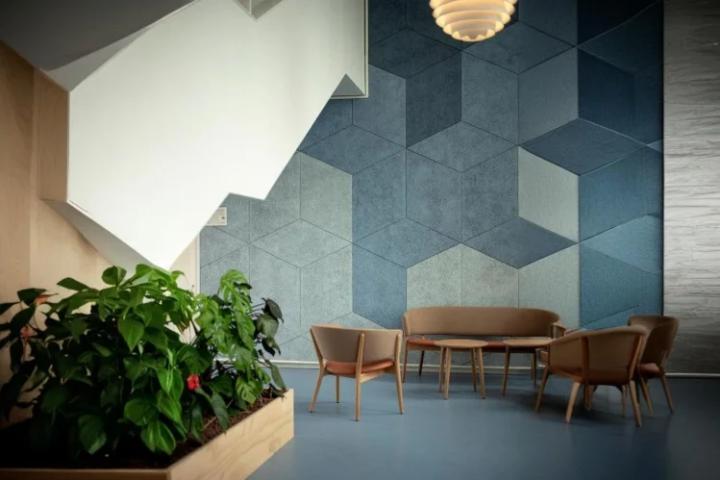
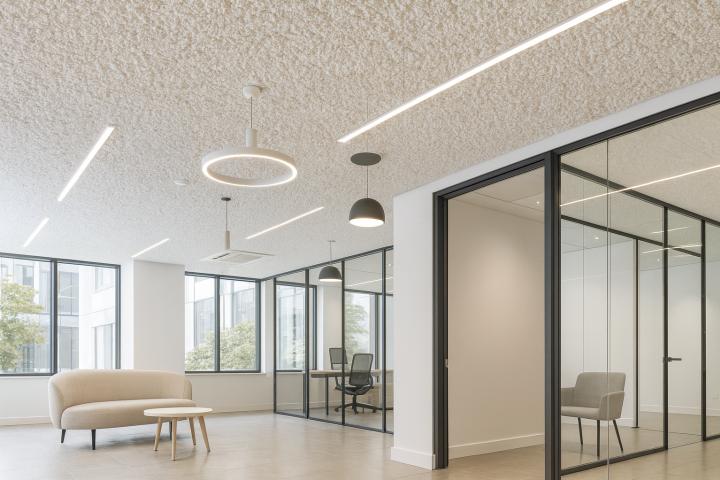
Modern interiors increasingly expect acoustic treatment to contribute to the appearance of the space rather than disappear from it. Walls, ceilings, partitions, furniture, and other surfaces can now become part of the acoustic strategy while also contributing color, texture, pattern, depth, and material character.
This is where acoustic treatment materials are becoming more interesting.
Acoustic Sheet Material can Soften Hard Interiors
Contemporary interiors often contain large amounts of hard material.
Glass partitions.
Concrete.
Metal.
Stone.
Hard flooring.
Painted drywall.
These surfaces can create a clean and sophisticated visual environment, but they can also increase sound reflection. The more reflective surfaces a room contains, the more important it becomes to consider where sound energy will be absorbed. This is why acoustic sheet material can have a dual role.
Texture can Make Acoustic Treatment Architectural
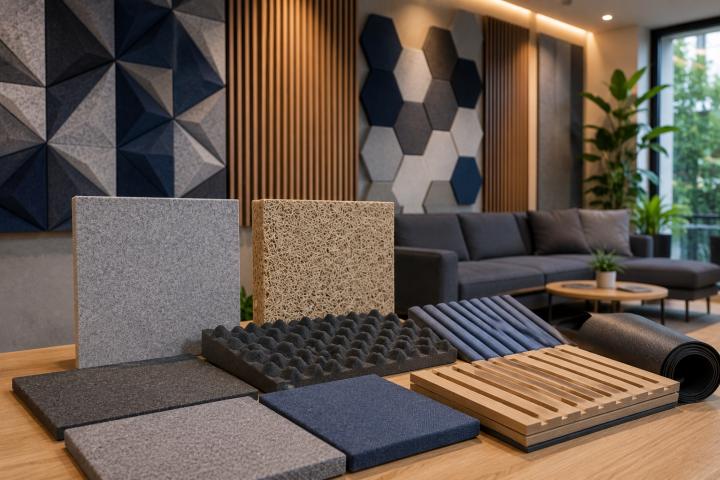
Texture is one of the easiest ways to move an acoustic surface beyond a purely functional appearance.
A completely flat sheet creates a quiet visual background.
A grooved surface can establish direction.
A geometric pattern can become a feature.
A three-dimensional surface can create shadows.
A layered installation can add depth.
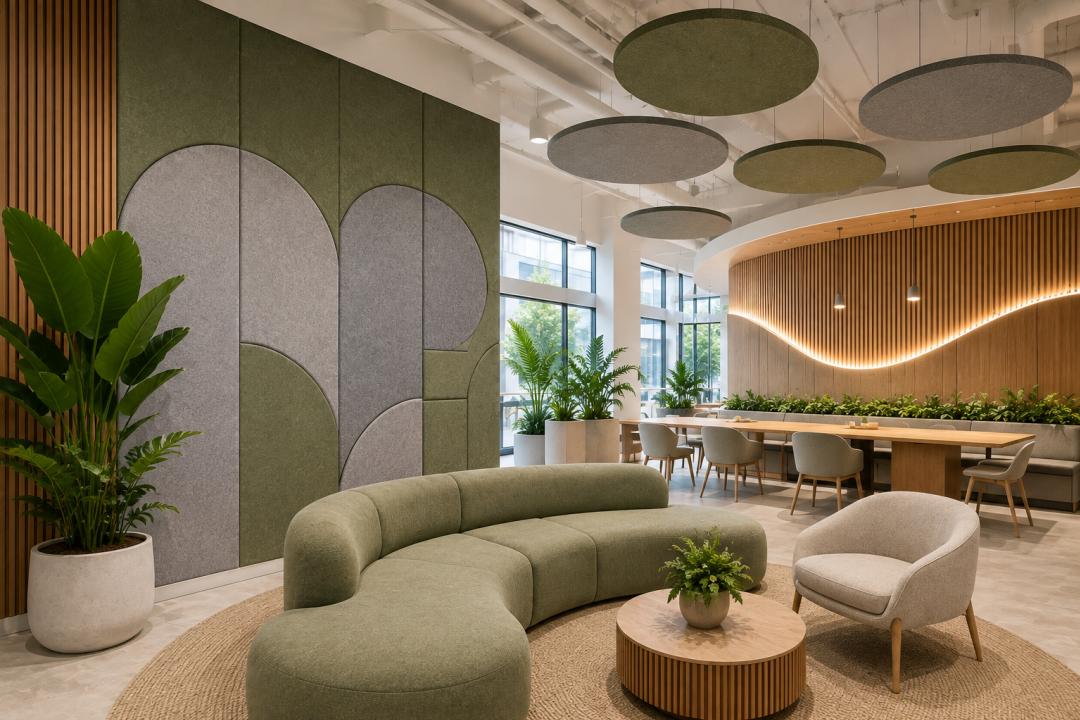
Here, the pattern is not simply decoration. It is part of the product's architectural identity.
Color can Connect Acoustics with Branding
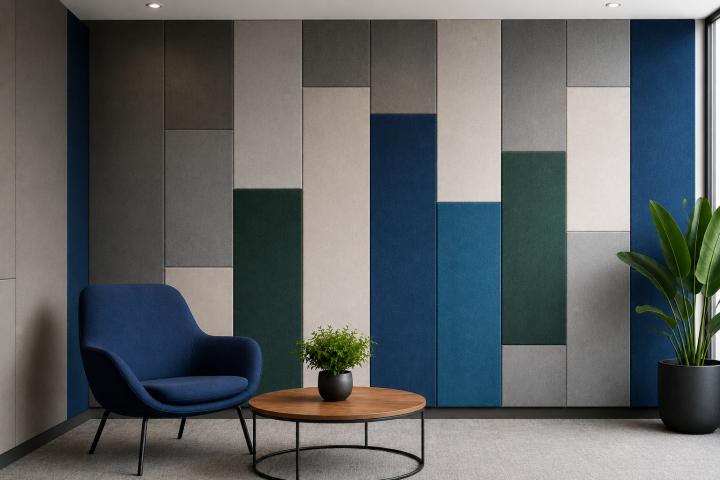
Commercial interiors often need to communicate an identity. Corporate offices may use brand colors. Hospitality projects may have a specific palette. Retail spaces may need recognizable visual cues. Educational spaces may use color to distinguish areas. Acoustic treatment does not have to work against these requirements. PET-based products, in particular, can offer extensive color choices.
This illustrates how acoustic performance and visual identity can occupy the same surface. Instead of asking where to hide the acoustic panel, designers can ask:
How can the acoustic panel contribute to the identity of the space?
Read to know more about acoustic treatment materials here: Why Acoustic Treatment is Essential for Different Spaces Settings?
Material Choice Changes the Mood
Different materials create different emotional associations.
A wood-based acoustic surface may feel warm and natural.
A dark PET surface can create a more dramatic appearance.
A light-colored felt surface can feel softer and calmer.
A patterned panel can introduce energy.
A neutral acoustic sheet can disappear into the architecture.
This means material choice is not merely technical. It can influence how people experience a room visually. The acoustic treatment becomes part of the atmosphere.
Wood can Connect Natural Materials with Acoustic Performance
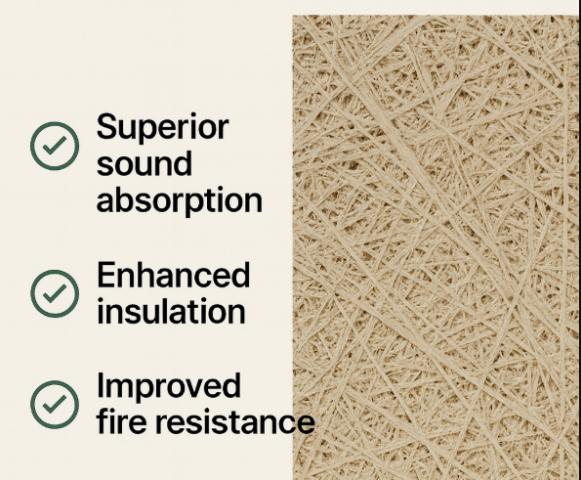
Wood is a good example of how aesthetics and acoustics can meet. A solid, smooth wood surface primarily reflects sound. But acoustic wood systems can incorporate perforations, slots, grooves, microperforations, or absorptive backing. The result is a surface that maintains a timber appearance while allowing the construction behind it to participate in sound absorption.
This approach is increasingly useful in hospitality, workplace, education, and premium commercial interiors where natural materials are an important part of the design concept. The acoustic construction is doing technical work, while the visible wood surface establishes the visual character.
PET makes Geometry Easier to Explore
PET felt has another advantage. Its flexibility as a design material allows manufacturers to create shapes, layers, grooves, curves, and other visual forms. That makes it particularly suitable for interiors where acoustic treatment needs to become a design feature.
The material can be used as:
Flat wall sheets
Geometric panels
Slatted surfaces
Layered forms
Decorative screens
Ceiling elements
Acoustic partitions
The same material family can therefore appear in multiple parts of an interior while maintaining a consistent visual language.
NRC is Useful, but it is not the Whole Design Story
NRC can provide a useful starting point when comparing absorptive products. But it should not become the only specification criterion. NRC summarizes sound absorption under defined laboratory conditions. It does not tell a designer exactly how a particular room will sound after installation.
The actual result also depends on:
Room size
Room geometry
Ceiling height
Existing finishes
Panel coverage
Mounting
Air gaps
Furniture
Occupancy
Frequency range
Placement
This is especially important when acoustic materials are selected primarily for their appearance. A visually beautiful surface still needs enough acoustic area and appropriate positioning to address the room's actual problem.
Conclusion
Acoustic sheet material is helping connect two parts of interior design that were once often treated separately: how a space looks and how it sounds. Material, color, texture, thickness, pattern, and installation can transform an acoustic surface from a technical necessity into an architectural feature. PET can provide color and geometric flexibility. Wood can bring warmth. Fabric can soften the visual environment.
Merge Acoustic Performance with Seamless Interior Design
Acoustic treatment should elevate your interior palette, not clash with it. Discover how Tranquil Global’s acoustic sheet materials bring color, texture, and targeted sound absorption to feature walls and architectural surfaces.
FAQs
What are acoustic treatment materials?
Acoustic treatment materials are materials designed to manage sound within a space, commonly by absorbing reflected sound and reducing reverberation. They can include PET, fiberglass, mineral or stone wool, wood-based systems, and fabric-wrapped constructions.
What is acoustic sheet material?
Acoustic sheet material is a sheet, board, felt, or panel-based material designed to contribute to sound absorption or other acoustic functions. Its performance depends on its construction, thickness, mounting, and application.
Can acoustic materials improve interior aesthetics?
Yes. Modern acoustic materials can provide color, texture, patterns, natural finishes, and three-dimensional forms.