Lathe chucks are only one single type of machine tool accessory, but they are essential when the machine in question is a lathe. Here’s what you should know.
What Is a Lathe Chuck?
Without getting too lost in the weeds, lathe chucks are specialized clamps that are attached to the spindle of a lathe. They hold the workpiece in place safely. That being said, there are many different types of lathe chucks, some of the major classes of which will be covered here.
Number of Jaws
One of the most straightforward ways to classify a lathe chuck is by the number of jaws it has.
There are lathe chucks with two jaws that are opposed to each other, and which are usually operated manually. Two-jaw lathe chucks are ideal for workpieces that are asymmetrical or irregular, as they offer a great deal of flexibility when holding workpieces that are oddly shaped. However, two-jaw chucks cannot be self-centering, which takes additional time during setup.
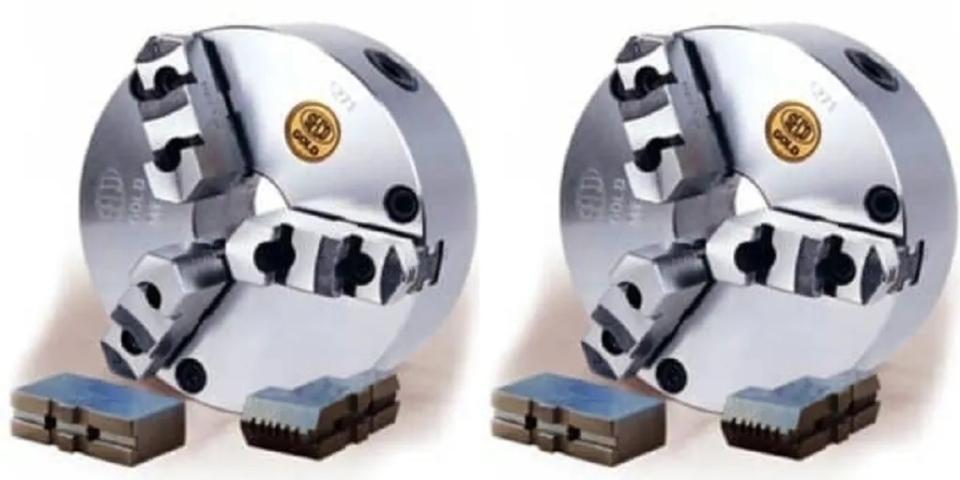
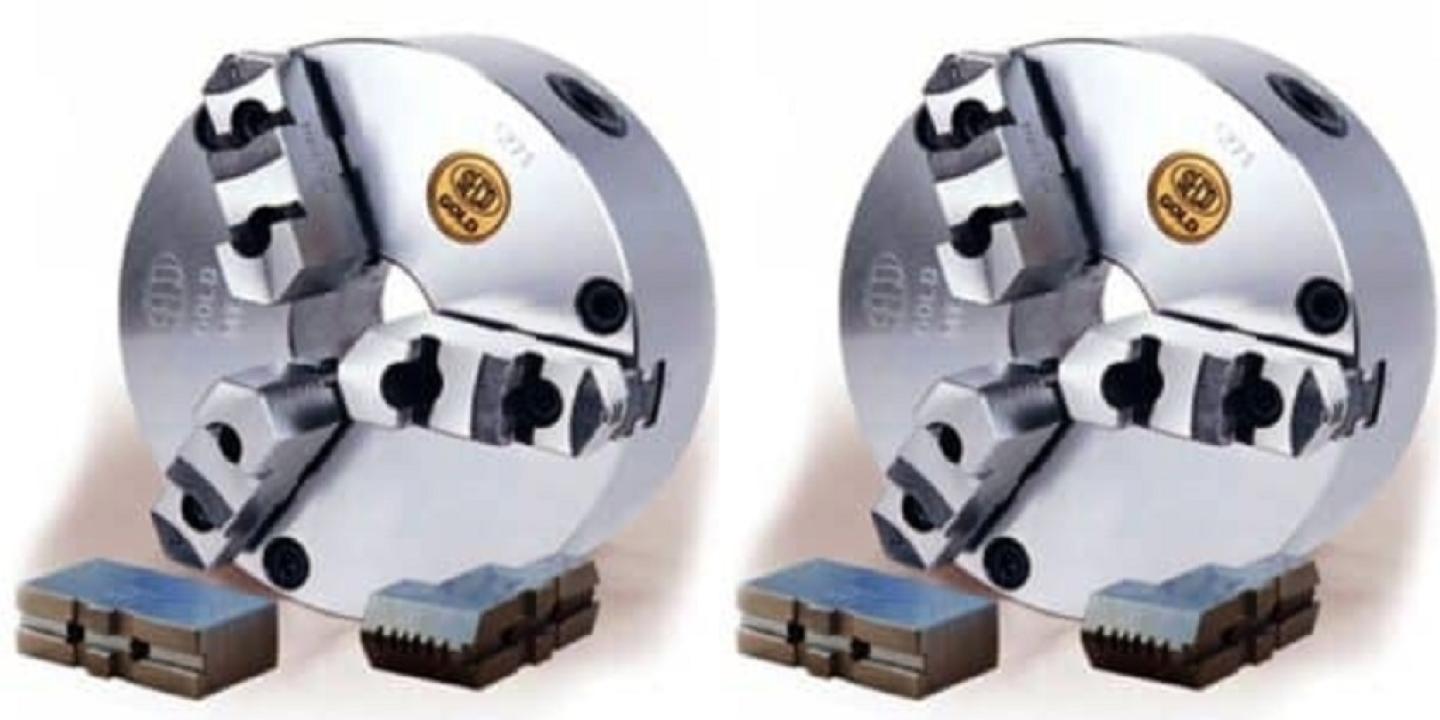
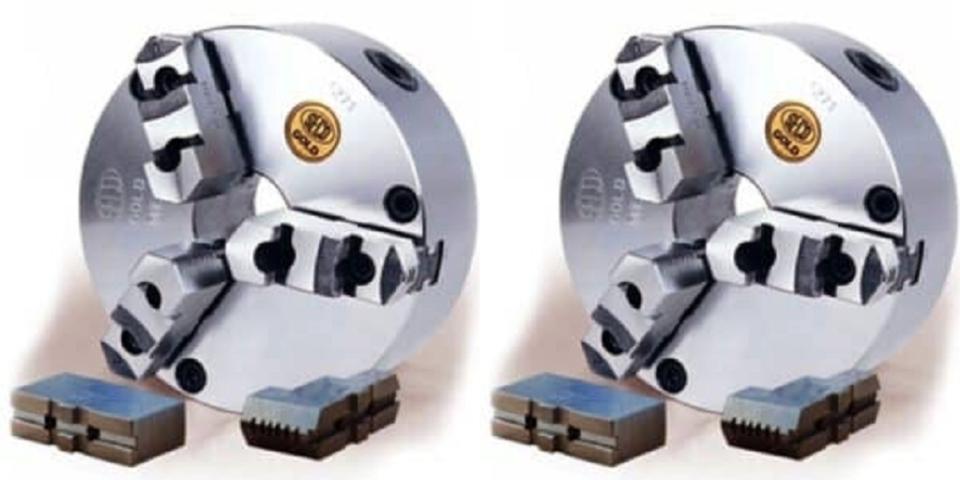
Three-jaw lathe chucks generally have three jaws that are self-centering and which operate together, making it easy to center the workpiece. These are well-designed for cylindrical or symmetrical workpieces. Usually the jaws are driven by a scroll plate which makes three-jaw chucks easy to operate.
Four-jaw lathe chucks have four jaws which are usually independent and can be adjusted separately. This makes four-jaw chucks, like two-jaw chucks, ideal for irregularly shaped workpieces. However, the four-jaw design also means that they are also good with square and rectangular workpieces.
There are also six-jaw lathe chucks that, as the name suggests, have six jaws. These, like three-jaw chucks, are usually scroll chucks that are not only easy to adjust but self-centering. This design does reduce flexibility, but it makes them ideal for precise control over symmetrical workpieces. They are similar to three-jaw chucks, but the additional contact points improve concentric control and generally (holding all else equal) uphold a higher standard of quality in the finished workpiece.
Clamping Mechanism
There are a few different clamping mechanisms in lathe chucks that determine how the chuck’s jaws are operated.
One of the most common types is a scroll chuck, which has a mechanism that simultaneously moves all the jaws inward or outward at once, radially. These are common on three and six-jaw chucks and are usually self-centering.
Then there are independent chucks, in which the jaws must be moved independently. Setup takes longer to get a precise centering, but independent chucks also offer the greatest degree of control and flexibility.
Also, there are collet chucks that are basically a sleeve that partially covers the chuck or part of the workpiece, and which clamps down as it is screwed down.
How the Chuck Is Actuated
In this respect, there are basically two types of lathe chucks; there are manual chucks and power chucks.
Power chucks, which can be either pneumatic or hydraulic, use either compressed air (in the former case) or a hydraulic cylinder (in the latter) to apply pressure to the lathe chuck to clamp down on the workpiece.
Manual chucks must be tightened, loosened or adjusted manually, either via a wrench or a key. They are simpler to operate and maintain than power chucks and are more affordable as well, but they are most suitable for low-volume applications.
Where to Learn More: Shop Machine Tool Accessories at TMT Toolbox
This only scratches the surface of all there is to know about these machine tool accessories. If you want to learn more, visit TMT Toolbox; they carry these and a wide variety of other tools and accessories for machining and other applications.
For more information about Carbide Drills and Turning Inserts Please visit: TMT Toolbox.