What Is Luxury Sustainable Home Decor?
Luxury sustainable home decor is decor made from natural, long-lasting materials — like marble, natural stone, solid wood, and brass — crafted by hand in small batches rather than mass-produced. It earns the word "luxury" through material quality and craftsmanship, not packaging or markup, and it earns "sustainable" through responsible sourcing, durability, and low waste over the life of the piece.
The term gets used loosely, though. A lot of decor calls itself both luxury and sustainable without meeting either bar. Here's what actually separates the real thing from the label.
Quick Answer: What Makes Decor Both Luxury and Sustainable
|
|---|
What Makes Home Decor "Sustainable"
Sustainability in home decor isn't just about the raw material — it's about how much waste the entire process creates, from sourcing to packaging to how long the piece actually lasts in someone's home.
A genuinely sustainable piece usually meets three conditions:
- Responsibly sourced material — natural stone and wood taken from managed sources rather than extracted carelessly
- Low-waste production — handcrafted, small-batch work generates far less waste than mass manufacturing runs
- Long usable life — a piece that lasts decades doesn't need replacing, which is arguably the single biggest sustainability factor in decor
Natural stone fits this especially well. It doesn't degrade, fade, or need replacing the way synthetic or laminate decor does over a few years.
What Makes Home Decor "Luxury"
Luxury in decor comes down to material integrity and craftsmanship — not price alone. A piece earns the word when:
- It's made from a genuine material (real marble, real brass) rather than an imitation finish
- It's shaped by hand, so no two pieces are identical
- The design shows restraint rather than trying to look expensive through excess detail
This is also where luxury and sustainability naturally overlap. Genuine materials and handcraft are inherently slower and lower-waste than synthetic, machine-molded alternatives — luxury and sustainability aren't in tension here; they come from the same process.
Can Decor Really Be Both Luxury and Sustainable?
Yes — and natural stone, wood, and brass are some of the clearest examples of where the two meet. These materials have been used for centuries because they last, not because they were marketed as premium. Their durability is what made them valuable long before "sustainable" was a marketing term.
A handcrafted marble tray or a solid brass candle holder is both objectively durable and, by nature of being hand-shaped rather than mass-molded, lower-waste to produce. The "luxury" and the "sustainable" claim describe the same object, not two separate ones.
How to Identify Genuine Luxury Sustainable Decor Brands
Not every brand using the term backs it up. Before buying, check for:
- Named materials, not vague terms like "premium stone" — real brands specify marble type, wood species, or metal
- Visible craftsmanship marks — slight natural variation between pieces, since handmade work is never perfectly uniform
- Stated sourcing practices — responsible sourcing should be explained, not just claimed
- Packaging details — recycled or minimal packaging is a genuine sustainability signal, not just a sustainability-adjacent one
- A traceable origin — a real craft region or artisan tradition behind the product, not just "handmade" as a generic label
Materials That Define Luxury Sustainable Decor
Marble & natural stone: Durable for generations, naturally veined so no two pieces match, and doesn't degrade with age. Explore finishes like Marquina, Travertine, Arabesca, and Aurelia Green.
Wood: A renewable material when responsibly sourced, and it ages with character rather than wearing out. See the Woodcrest collection.
Brass: Long-lasting, recyclable, and develops patina rather than degrading. Shop brass kitchen utensils for everyday examples.
Where This Shows Up Room by Room
- Living spaces: marble trays, vases, and candle holders from decor
- Kitchen & dining: stone and brass serving pieces from kitchen and dining
- Bathroom: stone soap dispensers and trays from bathware
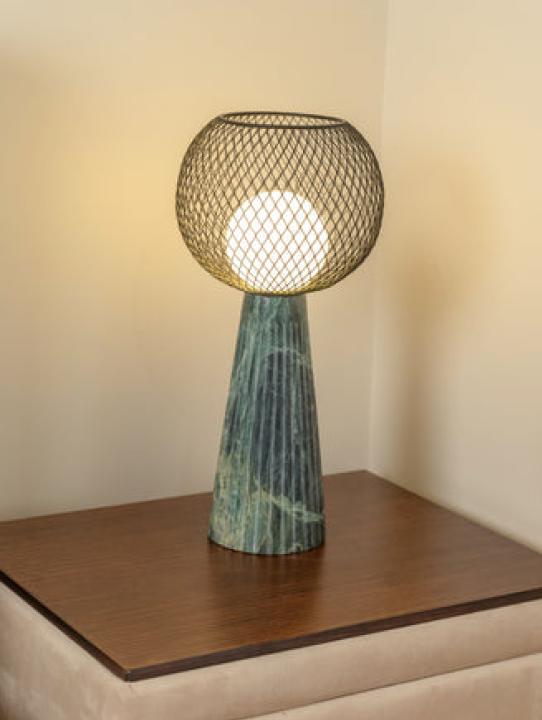
- Lighting: marble and alabaster fixtures from lighting
Why Organic Home Fits This Definition
Organic Home's pieces are handcrafted from Italian marble, Travertine, and Fossil Beige stone by artisans working from a stoneworking tradition rooted in Agra that goes back roughly 400 years. Production runs in small batches rather than mass manufacturing, materials are responsibly sourced, and packaging uses recycled materials — the same criteria outlined above, applied directly.
Read more about the craft behind it on our story, or explore the full range of luxury sustainable home decor across lighting, décor, kitchen and dining, and bath.
FAQs
What does "luxury sustainable home decor" actually mean?
It refers to decor made from genuine, long-lasting materials — like natural stone, wood, or brass — that's handcrafted in small batches using responsible sourcing and packaging, rather than mass-produced from synthetic materials.
Is natural stone decor considered sustainable?
Yes. Natural stone doesn't degrade or need replacing for decades, which significantly reduces the waste associated with disposable or trend-based decor.
How can I tell if a "sustainable" decor brand is genuine?
Look for named materials, visible handcraft variation, stated sourcing practices, and real packaging details — vague claims without specifics are a red flag.
Is handcrafted decor always more sustainable than machine-made decor?
Generally, yes. Handcrafted, small-batch production creates less manufacturing waste than large-scale machine production, and the materials used are typically more durable.
Does luxury decor cost more because it's sustainable, or despite it?
Neither, exactly — the cost reflects the material and craftsmanship. Because genuine materials and handwork are inherently slower and lower-waste, the luxury and the sustainability tend to come from the same process rather than adding cost separately.
What's the most sustainable material for luxury home decor?
Natural stone and solid brass are among the most durable, since both can last generations with basic care and don't need frequent replacement