Promotional SMS for Business Growth: Reach More Customers and Drive Sales
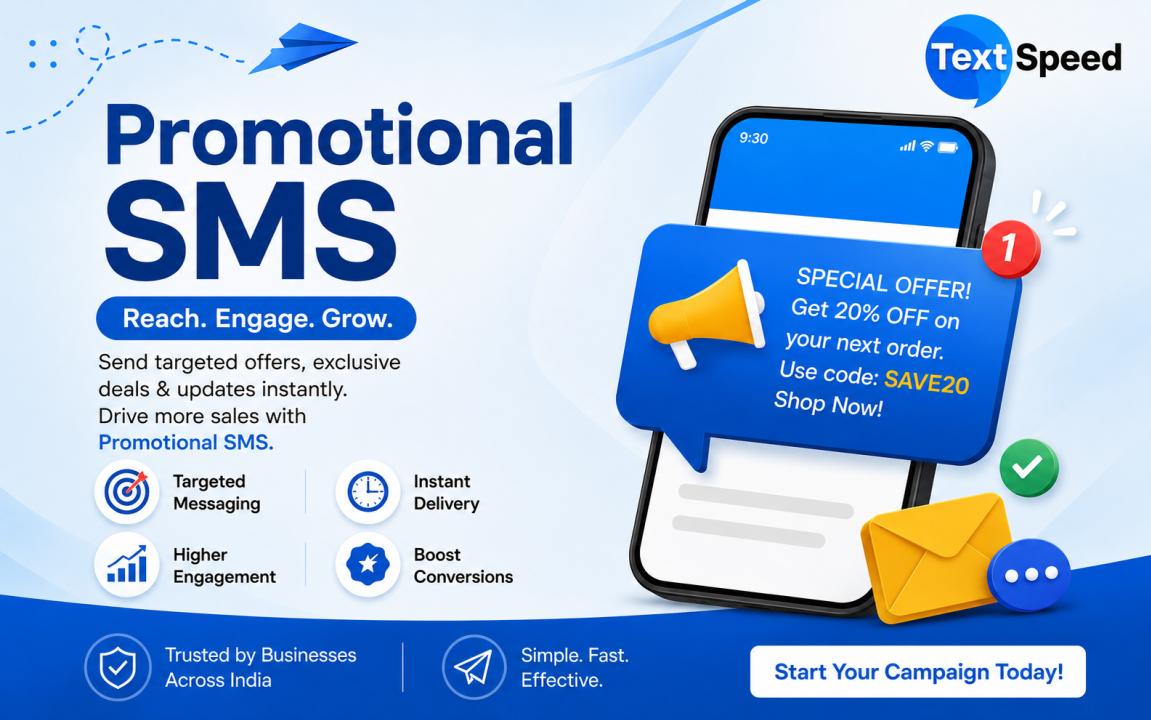
Promotional SMS for Business Growth is a powerful way for businesses to reach customers directly with offers, product updates, discounts, seasonal promotions, and marketing campaigns. With high mobile usage and quick message visibility, SMS marketing can help businesses generate leads, increase customer engagement, and drive conversions.
Unlike many digital marketing channels where messages can get lost among emails, social media posts, and advertisements, promotional SMS delivers marketing messages directly to customers' mobile phones.
What Is Promotional SMS?
Promotional SMS is a marketing message sent to a group of customers to promote products, services, offers, events, discounts, or business campaigns.
Businesses can use promotional SMS marketing to:
Promote discounts and special offers
Generate new leads
Drive website traffic
Increase sales
Promote new products
Announce events and campaigns
Re-engage existing customers
Share limited-time deals
Support seasonal marketing campaigns
A well-planned bulk SMS marketing campaign can help businesses communicate with a large audience quickly while keeping the message short, clear, and action-oriented.
How Does Promotional SMS Help Business Growth?
Promotional SMS can support different stages of the customer journey—from attracting prospects to bringing existing customers back.
1. Generate More Leads
Businesses can use SMS campaigns to promote lead-generation offers such as free consultations, product demonstrations, discounts, registrations, and special deals.
For example:
“Get 20% off your first purchase. Visit our website today to claim your offer.”
A clear offer combined with a strong call to action can encourage customers to take the next step.
2. Increase Sales and Conversions
Time-sensitive promotions can encourage customers to act quickly.
Businesses can promote:
Flash sales
Weekend offers
Festival discounts
Clearance sales
New product launches
Limited-period offers
Special customer discounts
Using relevant offers and clear CTAs can turn promotional messages into measurable sales opportunities.
3. Reach Customers Directly
SMS marketing provides a direct communication channel between businesses and customers. Instead of depending entirely on social media algorithms or crowded email inboxes, businesses can send concise promotional messages directly to opted-in customers.
4. Re-Engage Existing Customers
Customer retention is an important part of business growth. Promotional SMS can help businesses reconnect with customers who have not purchased recently.
For example:
“We miss you! Enjoy an exclusive discount on your next order. Offer valid this weekend.”
Personalized re-engagement campaigns can encourage previous customers to return.
Promotional SMS vs Other Marketing Channels
Every marketing channel has a different purpose. SMS can work particularly well when a campaign requires fast and direct communication.
| Marketing Channel | Main Advantage |
|---|---|
| Promotional SMS | Direct and immediate customer communication |
| Email Marketing | Detailed promotional content |
| Social Media | Brand awareness and engagement |
| Search Advertising | Capturing active purchase intent |
| Content Marketing | Long-term organic visibility |
For stronger results, businesses can combine SMS marketing with email, social media, WhatsApp, and other digital channels as part of an omnichannel marketing strategy.
How to Create an Effective Promotional SMS Campaign
A successful SMS marketing campaign is not simply about sending more messages. It is about sending the right message to the right audience at the right time.
Step 1: Define Your Marketing Goal
Start by identifying what you want the campaign to achieve.
Your goal could be:
Generate leads
Increase sales
Promote a product
Drive website visits
Increase event registrations
Bring back inactive customers
A specific goal makes campaign performance easier to measure.
Step 2: Segment Your Audience
Avoid sending the same offer to every customer.
Segment audiences based on factors such as:
Previous purchases
Location
Customer type
Interests
Purchase frequency
Engagement history
Audience segmentation can make promotional SMS campaigns more relevant.
Step 3: Write a Short and Clear Message
SMS has limited space, so communicate the main benefit quickly.
A strong promotional SMS usually includes:
Offer + Benefit + Urgency + Call to Action
For example:
“Flat 30% OFF this weekend! Shop now and save on your favorite products. Limited-time offer. Visit: example.com”
Step 4: Add a Strong Call to Action
Tell customers exactly what they should do next.
Examples include:
Shop Now
Claim Offer
Book Now
Register Today
Learn More
Get Discount
Visit Website
A clear CTA can reduce confusion and improve campaign engagement.
Step 5: Track Campaign Performance
Monitor important metrics such as:
Messages sent
Delivery rate
Failed messages
Click-through rate
Website visits
Leads generated
Conversions
Revenue generated
Tracking these metrics helps businesses identify which campaigns produce the best results.
Promotional SMS Use Cases Across Industries
Retail and E-commerce
Retail businesses can promote discounts, flash sales, new collections, coupons, and seasonal offers.
Real Estate
Real estate companies can promote new properties, open-house events, project launches, and limited-time offers.
Education
Educational institutions can promote admissions, courses, webinars, workshops, and enrollment campaigns.
Healthcare
Healthcare businesses can use promotional communication for wellness packages, health check-up offers, and service promotions, while ensuring that all applicable messaging and consent requirements are followed.
Travel and Hospitality
Hotels and travel companies can promote seasonal packages, holiday offers, room deals, and travel campaigns.
Financial Services
Eligible financial businesses can use promotional messaging to communicate permitted products and offers while following applicable regulatory and consent requirements.
Promotional SMS Best Practices
To build effective and sustainable SMS campaigns, businesses should follow these practices:
Keep Messages Concise
Focus on one offer or action instead of trying to communicate too many details in one SMS.
Personalize Where Appropriate
Using relevant customer information can make promotional messages more useful and engaging.
Create Urgency Carefully
Words such as “limited time,” “today only,” or “offer ends soon” can encourage action when the urgency is genuine.
Use a Clear CTA
Customers should immediately understand what action they need to take.
Respect Customer Consent
Send promotional messages only to audiences who have provided the required consent and follow applicable SMS marketing regulations.
Avoid Excessive Messaging
Too many promotional messages can lead to customer fatigue, complaints, and unsubscribes.
Test Different Campaigns
Experiment with different offers, audience segments, CTAs, and sending times to identify what works best.
Promotional SMS and Lead Generation
One of the biggest opportunities for businesses is using promotional SMS for lead generation.
A business can promote an offer and direct customers to:
A landing page
Lead-generation form
Product page
Appointment booking page
Registration page
WhatsApp conversation
Sales team
Promotional website page
For example:
SMS → Landing Page → Lead Form → Sales Follow-Up → Conversion
This creates a measurable path from an SMS campaign to potential revenue.
Why Choose Bulk SMS for Business Marketing?
When businesses need to communicate with a large customer base, bulk SMS marketing can make campaign management easier.
A business can upload or integrate its customer database, create a campaign, select the target audience, schedule the message, and monitor delivery reports through an SMS platform.
For growing businesses, an SMS platform should ideally provide:
Bulk SMS capabilities
Campaign management
Delivery reports
Scheduling
API integration
Contact management
Message templates
Campaign analytics
Scalable infrastructure
Compliance support
Promotional SMS API for Businesses
Businesses with custom applications or CRM systems can integrate an SMS API to automate promotional messaging.
An SMS API can connect a company's software with its messaging platform, allowing campaigns to be triggered or managed programmatically.
For example:
CRM → SMS API → SMS Gateway → Customer Mobile
This approach can be useful for businesses that want to integrate SMS marketing into their existing technology stack.
Frequently Asked Questions About Promotional SMS
What is Promotional SMS for Business Growth?
Promotional SMS for Business Growth is a marketing strategy where businesses send promotional text messages to customers to generate leads, increase sales, promote offers, and improve customer engagement.
Is promotional SMS effective for marketing?
Yes, promotional SMS can be an effective marketing channel when messages are relevant, concise, timely, properly targeted, and sent with the required customer consent.
How can promotional SMS generate leads?
Businesses can include a strong offer and CTA that directs customers to a landing page, registration form, website, booking page, or sales channel.
What businesses can use promotional SMS?
Retail, e-commerce, real estate, education, travel, hospitality, and many other businesses can use promotional SMS depending on their industry, audience, and applicable messaging regulations.
What should a promotional SMS contain?
A promotional SMS should generally communicate the key offer or benefit, create a clear reason to act, and include a straightforward call to action.
What is bulk promotional SMS?
Bulk promotional SMS allows a business to send marketing messages to a large, opted-in customer audience through an SMS platform.
Can promotional SMS be automated?
Yes. Businesses can use an SMS API and marketing automation tools to trigger, schedule, and manage SMS campaigns based on predefined customer actions or campaign requirements.
How can I improve promotional SMS conversion rates?
Use audience segmentation, relevant offers, concise copy, strong CTAs, appropriate timing, landing-page optimization, and campaign tracking to identify and improve what converts.
Conclusion
Promotional SMS for Business Growth can be an effective component of a modern digital marketing strategy. By combining targeted customer segmentation, compelling offers, clear calls to action, automation, and campaign analytics, businesses can use SMS to generate leads, drive website traffic, increase sales, and strengthen customer engagement.
The best results come from treating SMS as part of a broader marketing strategy rather than simply sending bulk messages. When combined with SMS APIs, CRM systems, landing pages, email marketing, WhatsApp, and other digital channels, promotional SMS can become a scalable channel for customer acquisition and business growth.