India's electric vehicle (EV) revolution has moved past the "early adopter" phase and is now a mainstream infrastructure opportunity. With EV sales growing at a rapid pace year after year and the government pushing charging infrastructure through schemes like PM E-DRIVE, an EV charging station franchise in India is one of the most future-proof retail-infrastructure businesses you can start in 2026.
If you're searching for the right EV charging franchise to invest in, this guide gives you a complete, no-fluff breakdown — investment range, expected monthly earnings, ROI timeline, space requirements, and how this opportunity compares to other players in the market like Tata Power EZ Charge, Zeon Charging, and ChargeZone.
Quick Answer: An EV charging station franchise in India typically requires an investment of ₹15 Lakh to ₹2 Crore, needs 500 sq. ft. of space, and delivers ROI within 8 to 24 months, with monthly earning potential of ₹1.5 Lakh to ₹10 Lakh depending on station capacity and location.
Why EV Charging Is India's Next Big Franchise Opportunity
Electric vehicles are no longer a niche segment in India. Two-wheeler and three-wheeler EVs already command a meaningful share of new registrations, and passenger EV adoption is accelerating on the back of falling battery prices, new model launches from every major OEM, and state-level EV policies offering road-tax and registration benefits.
But here's the real opportunity: vehicle sales are growing faster than charging infrastructure. India still has a massive shortfall of reliable, fast-charging stations — especially outside metro cities. This demand-supply gap is exactly where a franchise partner can step in and build a profitable, low-competition business with long-term recurring revenue.
Key reasons this business model is attracting serious investors right now:
Recurring, asset-backed revenue — unlike most franchises, you're not selling a consumable; you're selling electricity through hardware that keeps earning for years.
Government push — subsidy schemes, DISCOM support for commercial EV tariffs, and infrastructure mandates are actively lowering the barrier to entry.
Low competition, high demand — most highways, malls, hotels, and city hubs in India still don't have a fast charger within easy reach.
Multiple entry points — from a small 500 sq. ft. city station to a large highway hub, investment can be scaled to match your budget.
Brand-agnostic customer base — every EV owner, regardless of car brand, needs to charge somewhere. You're not restricted to one vehicle manufacturer's customers.
Understanding the EV Charging Franchise Business Model
Before comparing numbers, it helps to understand how an EV charging franchise actually makes money. Unlike a food or retail franchise where you sell a product that needs constant restocking, an EV charging station is closer to an infrastructure asset — you install the hardware once, and it earns revenue every time a vehicle plugs in, for years, with comparatively low recurring cost.
Revenue in this business comes from a simple formula: (Electricity units sold to customers × billing rate) minus (electricity units purchased from DISCOM × procurement rate) minus operating costs. The gap between what you pay for power and what you charge the customer per unit is your core margin — which is why location, tariff category, and charger utilisation matter far more than in most conventional franchises.
Typically, the franchisor (brand) handles the technology stack — hardware sourcing, billing software, mobile app integration, and remote monitoring — while the franchisee (you) provides the land or leased space and handles day-to-day site operations, local promotion, and customer service. This division of responsibility is fairly consistent across the industry, whether you look at Tata Power's CPO-franchisee structure, Zeon's franchisee requirements, or ChargeZone's DOCO (Dealer Owned Company Operated) model — and it's the same structure this franchise follows.
Read Also:
EV Charging Franchise Business in India
EV Charger Installation in Housing Society
What's Included in Franchise Support
A good EV charging franchise partner should do more than just sell you hardware. Here's what franchise partners typically get as part of the package:
Site feasibility assessment — power load availability, footfall analysis, and commercial viability check before you commit capital
Design and engineering support — station layout, canopy design, and electrical planning
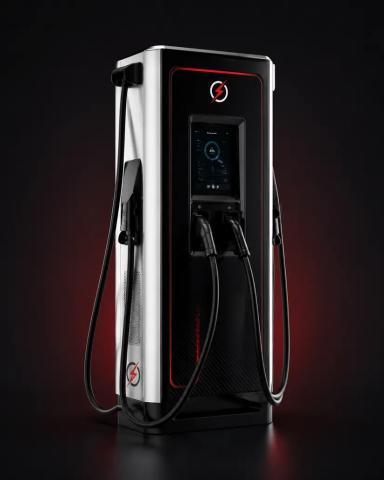
Charger procurement and installation — access to approved charger brands with quality assurance
Billing and payment infrastructure — automated, GST-compliant billing through an integrated app
24×7 remote monitoring — real-time uptime tracking so downtime is caught and resolved quickly
Marketing support — brand visibility, digital promotion, and listing on the charging network app so EV drivers can find your station
Ongoing operational guidance — ROI tracking, performance reviews, and troubleshooting support throughout the franchise term
Franchise Investment Details: What It Takes to Get Started
Here's a clear breakdown of what's required to set up your own EV charging station franchise:
Parameter | Details |
Investment Range | ₹15 Lakh – ₹2 Crore |
Expected Monthly Earning | ₹1.5 Lakh – ₹10 Lakh (based on investment tier) |
Expected ROI | 8 – 24 Months |
Space Required | 500 Sq. Ft. |
Expansion Availability | Pan-India (all states) |
How Investment Tiers Work
The beauty of this franchise model is its flexibility. You don't need crores to get started — you can begin with a compact, single/dual-gun DC charging setup within a 500 sq. ft. footprint and scale up as revenue grows.
Entry-level investment (₹15–30 Lakh): Ideal for a single high-traffic city location — think retail complexes, IT parks, apartment clusters, or petrol pump forecourts. Lower charger capacity, faster to commission, quicker to break even.
Mid-tier investment (₹30 Lakh–₹1 Crore): Suited for highway-facing or multi-charger city sites with higher daily vehicle throughput and stronger monthly earning potential.
Premium investment (₹1–2 Crore): Positioned for highway corridors, logistics hubs, and high-footfall commercial locations where multiple high-power chargers can run simultaneously, maximizing monthly revenue toward the ₹10 Lakh range.
This tiered structure means whether you're a first-time small investor or an established business owner looking to diversify, there's an entry point that fits your capital and risk appetite.