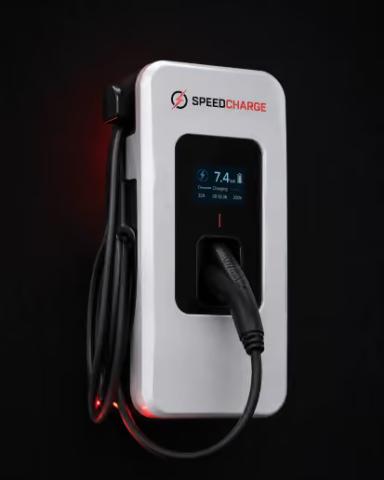
India's charging infrastructure is expanding rapidly. The Government reported 52,718 public charging stations as of July 21, 2026, including 16,561 public stations equipped with fast chargers for cars. Setting up an EV charging station is also an unlicensed activity, allowing private entrepreneurs to participate subject to the applicable charging, electricity, safety and property framework.
For anyone evaluating the EV charging franchise business in India, those national figures are useful market context—but they do not prove that a particular franchise location will generate attractive returns. Charging infrastructure remains highly dependent on site demand, electrical capacity, utilisation, operating costs, charger availability and the exact commercial agreement.
A franchise can reduce some of the complexity of building a charging business independently. It can provide hardware standards, software, station discovery, operations, maintenance or commercial support depending on the model. But investors still need to understand exactly what they own, who operates it, how revenue is calculated and who carries the risk when utilisation is lower than expected.
Why the EV Charging Franchise Business in India Is Growing
The policy environment is supportive of private charging infrastructure. India's current Ministry of Power guidelines apply to private, semi-public and public charging locations, including Group Housing Societies, offices, commercial properties, petrol pumps and highways. Their objectives include making charging safer and more accessible, improving charging-station viability and preparing the electricity grid for increased demand.
PM E-DRIVE adds another national infrastructure push. The scheme has allocated ₹2,000 crore for EV Public Charging Stations, and as of July 1, 2026, ₹689 crore had been approved for deployment of 6,562 chargers through three Oil Marketing Companies and nine States.
However, investors should distinguish growth of the charging industry from profitability of one franchise asset.
The investment case still comes down to:
Demand × utilisation × retained unit economics − operating costs − capital recovery
What Is an EV Charging Franchise?
An EV charging franchise or network partnership is a commercial arrangement in which an investor, property owner or entrepreneur participates in charging infrastructure using the technology, operating platform or brand of a charging-network company.
The EV charging franchise business in India can use several structures, and the labels alone do not tell you who carries the commercial risk.
EV Charging Franchise Models Explained
Model | Asset Ownership | Daily Operations | Best Suited For | Main Due-Diligence Question |
FOCO | Franchise partner | Company | Investors seeking company-managed operations | What costs and utilisation risk remain with investor? |
FOFO | Franchise partner | Franchise partner | Active business operators | What technical/operating support does network provide? |
Company-owned/operator-managed | Company | Company | Host properties | What does property owner receive? |
Host / Revenue Share | Varies | Network/operator | Landlords and commercial properties | Who funds infrastructure and electricity? |
Charging-as-a-Service | Service provider | Service provider | Businesses wanting charging without asset ownership | What recurring fee and SLA apply? |
Fleet/captive model | Fleet/site operator or provider | Contract-specific | Commercial fleets | Is energy demand sufficiently predictable? |
Do not assume FOCO automatically means “passive income.”
FOCO means the company operates the station, but the agreement determines who carries asset, electricity, land, financing, maintenance and utilisation risk.
What FOCO Means for an EV Charging Investor
FOCO — Franchise Owned, Company Operated separates infrastructure ownership from daily operation.
Depending on the agreement, the operator may manage:
Charging software
Customer sessions
Payments
Remote monitoring
Pricing
Maintenance coordination
Customer support
Settlement reporting
Network visibility
This can be attractive to investors who do not want to build a charging-management operation themselves.
But FOCO should never be marketed as a guarantee that a station will be profitable. The investor still needs to understand the commercial contract and site economics.
SpeedCharge's FOCO Franchise Structure
SpeedCharge's franchise model is FOCO only. It should not be described as offering a FOFO alternative.
Under the current SpeedCharge franchise commercial framework, the standard Revenue Share is ₹7 per eligible kWh/unit.
The programme also includes a Minimum Guaranteed Monthly Payout of ₹20,000 per eligible month for the first 36 months from the Commencement Date, as per the franchise agreement and applicable T&C.
Importantly, this does not mean ₹20,000 is added on top of Revenue Share every month.
The mechanism works as follows:
If actual monthly Revenue Share is below ₹20,000, SpeedCharge pays only the shortfall required to reach the Minimum Guaranteed Monthly Payout.
If actual monthly Revenue Share is ₹20,000 or more, no top-up is payable.
After the first 36 months, the Minimum Guaranteed Monthly Payout ends and only actual Revenue Share continues.