STO Investor Dashboard: Features Security Token Platforms Need
Launching a security token offering involves more than issuing tokens on a blockchain. Once investors participate in an offering, they need a reliable way to monitor their holdings, review transactions, access offering documents, manage wallets, and respond to investment-related events. An investor dashboard brings these activities into one interface and gives investors a clearer view of their relationship with the issuer. For businesses building such a platform, an STO development company can help translate investor workflows, blockchain requirements, and third-party integrations into a functional product.
Give Investors a Clear View of Their Holdings
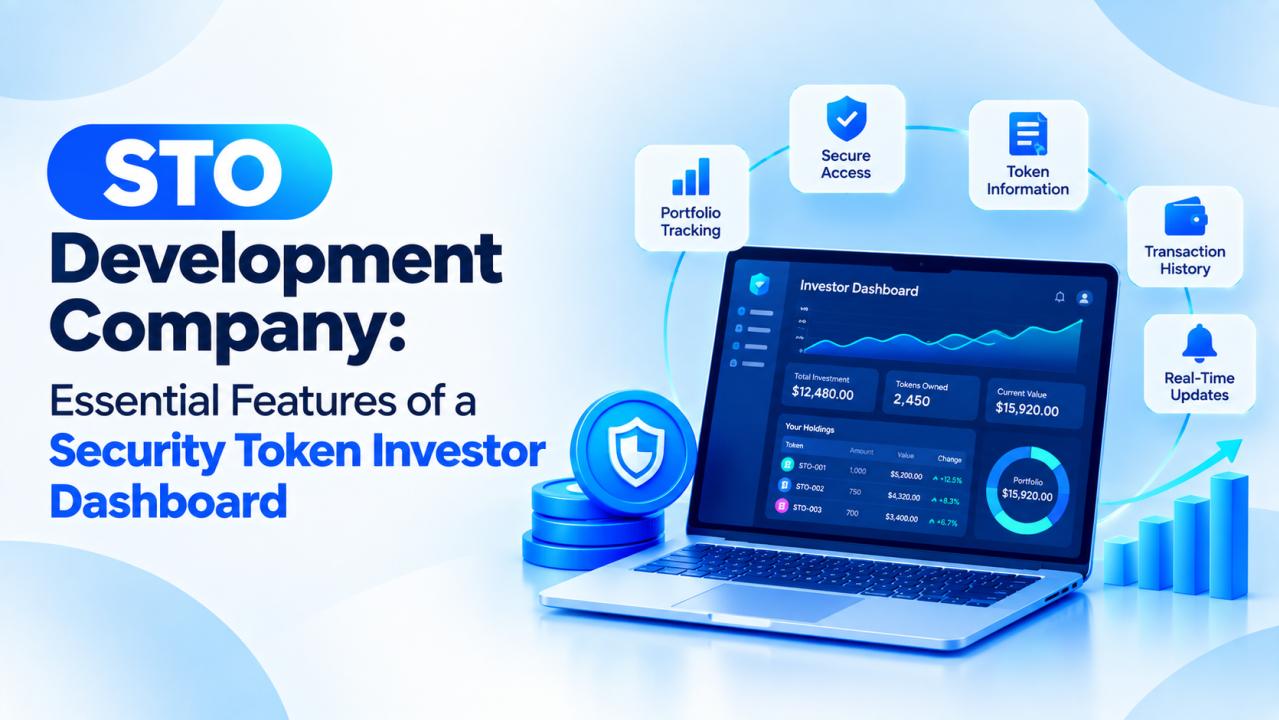
The first job of an investor dashboard is to show investors what they own and what has happened to their investments. Instead of requiring users to check separate pages for their portfolio, tokens, and transactions, these details can be connected within a single account.
Portfolio and Token Holdings
A portfolio section can provide a quick overview of an investor's position. Depending on the offering, it may display total portfolio value, individual security tokens, quantities held, ownership information, token status, and recent account activity.
The token holdings section can provide more detail for each asset. Investors may need to see when tokens were acquired, which wallet holds them, whether restrictions apply, and how many tokens are currently available.
An STO development company can connect these interfaces with blockchain data and the platform's internal investor records so that the information presented to users remains consistent.
Transaction History
Investors also need access to a clear record of their account activity. This can include token purchases, transfers, distributions, redemptions, fees, and other transactions supported by the offering.
Useful filters can include:
Transaction type
Token
Date
Transaction status
Blockchain transaction reference
Providing this information in a searchable format makes it easier for investors to understand how their holdings have changed over time.
Keep Documents and Investor Verification in One Place
Investors may need to access both offering information and their verification status during the investment lifecycle. Keeping these details within the same account can reduce unnecessary communication with the issuer.
Offering Documents
The dashboard can provide access to documents associated with a particular offering, such as offering memoranda, subscription agreements, token terms, risk disclosures, and issuer communications.
Documents should be organized by offering and presented with clear titles and relevant dates. If documents are updated, the platform can also indicate that a newer version is available.
An STO development company can build document-management functionality into the investor portal while allowing the issuer to control which materials are available to each investor.
KYC Status
Investors should also be able to see where they stand in the verification process. A dashboard might display statuses such as verification pending, approved, additional information required, or review required.
The platform can also show the next action an investor needs to take without exposing unnecessary personal information.
The specific KYC, AML, accreditation, and investor eligibility requirements should be established by qualified legal and compliance professionals. The development team can then implement the corresponding workflows and status displays.
Make Wallet Management Part of the Investor Experience
Wallet functionality should be connected to the investor's broader account rather than treated as a separate blockchain feature.
Depending on the platform, investors may need to view a connected wallet, verify a wallet address, add or change an approved wallet, and review wallet-related transaction activity. The platform may also need to support specific blockchain networks and apply transfer rules before a transaction is processed.
This creates a connection between the investor's identity, wallet, token holdings, and transaction records.
An STO development company can integrate wallet functionality with the rest of the platform so that changes to an investor's wallet do not become disconnected from their account and token records.
Security should also be considered throughout the wallet workflow, particularly for authentication, address changes, transaction approvals, and administrative access.
Support What Happens After the Investment
An investor relationship does not end after tokens are purchased. Depending on the structure of the offering, investors may receive distributions, submit redemption requests, or participate in corporate actions.
Distribution History
A distribution section can show the amount, distribution date, applicable token holdings, payment status, and previous distributions. This gives investors a record of payments associated with their holdings.
The platform may also distinguish between scheduled, pending, processed, and completed distributions where those states apply.
Redemption Requests
If the offering supports redemptions, investors can use the platform to submit and monitor requests.
The workflow may include:
- Eligible holdings
2. Requested amount
3. Submission date
4. Review status
5. Completion status
6. Related transaction records
The exact process will depend on the terms of the offering and applicable requirements.
Corporate Actions
Corporate actions can cover events that require investor awareness or participation. Depending on the offering, these may include dividends, buybacks, redemptions, voting events, or other issuer actions.
The dashboard can notify eligible investors, provide relevant information, and allow them to complete required actions through the platform.
An STO development company can help connect these workflows with token records, investor eligibility, notifications, and transaction systems.
What Powers the Dashboard Behind the Scenes?
The dashboard that investors see is only one layer of the overall platform. Several systems may need to work together to keep information accurate and accessible.
The underlying technology can include:
Blockchain and smart-contract integrations
KYC and AML provider integrations
Wallet services
Investor records
Transaction databases
Document management
Notification systems
Role-based access controls
Audit logs
APIs for external services
For example, a token transfer may involve the investor profile, wallet address, eligibility rules, smart contract, transaction record, and notification system. These components need to exchange the right information for the investor dashboard to show an accurate status.
This is where an STO development company can contribute beyond front-end design by connecting the investor interface with the platform's underlying technical systems.
When Custom STO Platform Development Makes Sense
A standard investor portal may be sufficient for a simple offering, but businesses with more specific workflows may need custom development.
Custom development can be useful when a platform needs to support multiple security-token offerings, different investor categories, external KYC providers, multiple wallet integrations, automated distributions, redemption workflows, or several administrative roles.
Businesses can also require custom rules for investor access, token transfers, document availability, notifications, and reporting.
An STO development company can help convert these requirements into the platform architecture, user workflows, integrations, and dashboard functionality required for the specific business model.
For businesses planning an STO platform, Debut Infotech can support the development of investor-facing and platform-level functionality based on defined product and technical requirements.
Conclusion
An STO investor dashboard should do more than display token balances. It should bring portfolio information, transaction records, documents, verification status, wallet activity, distributions, redemptions, and corporate actions into a connected investor experience. Building these functions as part of a wider STO platform can also make it easier to manage the technical workflows behind them. Businesses should define their investor journeys, integrations, and platform requirements before development begins.