
Businesses often outgrow generic software when their workflows, customer experiences, integrations, or scalability requirements become too specific for an off-the-shelf platform. Custom web application development provides a way to build software around those requirements instead of forcing business processes to fit within predefined features. With the right approach, organizations can create secure, scalable applications that support current operations while leaving room for future growth. If you are evaluating a tailored application for your business, explore our custom web application development services to understand how a purpose-built solution can align technology with your goals.
What Is Custom Web Application Development?
Custom web application development is the process of designing and building a web-based application specifically around an organization's business requirements, users, workflows, and technical environment.
Unlike an off-the-shelf platform, a custom application can be designed around processes that are unique to your organization. It may include custom dashboards, role-based access, workflow automation, third-party integrations, analytics, payment systems, or specialized business logic.
This approach is particularly useful when existing software creates operational workarounds, requires multiple disconnected tools, or cannot scale with changing business requirements.
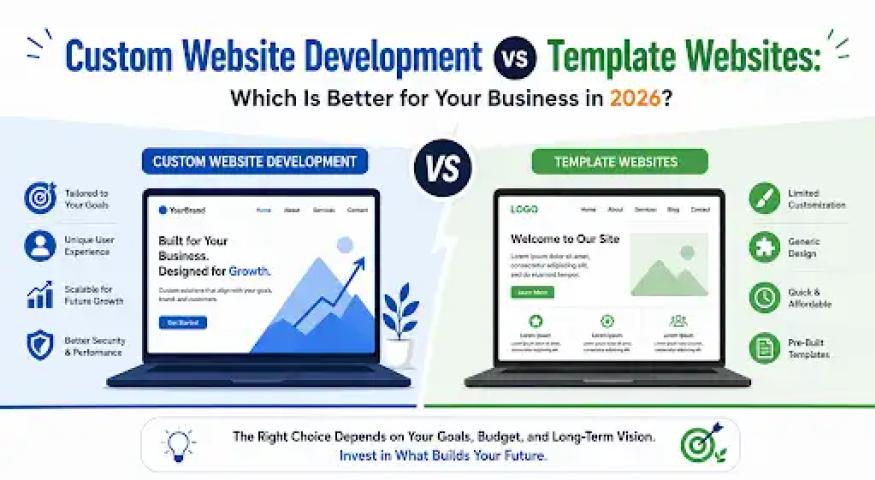
Custom Web Applications vs. Off-the-Shelf Platforms
Off-the-shelf software can be useful when your requirements closely match the capabilities of an existing product. It can reduce initial development effort and provide standard features quickly.
However, limitations can appear as your business grows. You may need to change established workflows, purchase additional modules, depend on vendor-specific integrations, or accept functionality that does not match your users' needs.
A custom application takes a different approach. Instead of adapting your processes to the software, the software is designed around your processes.
- Consider a custom solution when you need:
- Business-specific workflows that standard platforms cannot support
- Integration with existing CRM, ERP, payment, analytics, or operational systems
- Customized user experiences for different customer or employee groups
- Greater control over application architecture and data
- Scalability for increasing users, transactions, or business locations
- Specialized security, permissions, or compliance requirements
- Flexibility to introduce new capabilities as your business evolves
- The decision should ultimately depend on your requirements, expected growth, budget, and the limitations of available platforms.
Key Benefits of Custom Web Applications
1. Business-Specific Workflows
Your application can reflect how your business actually operates. Teams can automate approval processes, assignments, notifications, reporting, data processing, and other workflows instead of relying on manual workarounds.
This can reduce unnecessary steps and make the application more useful to the people who use it every day.
2. Flexible Integrations
Modern businesses rarely operate through a single system. A web application may need to communicate with CRMs, ERPs, payment gateways, communication platforms, cloud services, analytics tools, or internal databases.
Well-designed APIs and webhooks can connect these systems and create a more consistent flow of information.
3. Scalable Architecture
Growth should be considered before development begins. The application architecture, database design, caching strategy, infrastructure, and deployment model should support increasing traffic and data volumes.
Depending on the product, teams may consider modular architectures, cloud infrastructure, containerization, serverless components, or microservices. The right choice depends on actual application requirements rather than following a technology trend.
4. Better UX Customization
Generic software usually provides a predefined user experience. Custom applications allow teams to design interfaces around specific user roles and journeys.
For example, administrators, customers, managers, and operational teams can receive different dashboards and functionality based on their responsibilities. This can make complex processes easier to understand and use.
5. Stronger Control Over Security
Security should be part of the architecture from the beginning. Custom applications can incorporate authentication, authorization, role-based permissions, encryption, secure API access, audit logging, monitoring, and other controls based on the application's risk profile.
Security requirements should also account for the type of data being handled and the regulations relevant to the business.
The Custom Web Application Development Process
A structured development process helps reduce technical risk and keeps the product aligned with business objectives.
1. Requirements Discovery and Planning
The first stage is understanding the business problem.
The development team identifies target users, workflows, functional requirements, integrations, security requirements, performance expectations, and success metrics. The scope is then converted into a practical product roadmap.
This stage is important because unclear requirements can lead to scope expansion and unnecessary development costs later.
2. UX/UI Design and Prototyping
The next step is designing how users will interact with the application.
Teams typically create user journeys, wireframes, prototypes, and high-fidelity interfaces. Early usability testing can identify navigation or workflow problems before they become expensive to fix.
The objective is not simply to make the application visually appealing. The interface should make important tasks clear, efficient, and accessible.
3. Architecture and Technology Selection
Technology decisions should support the application's business and technical requirements.
The team evaluates frontend and backend frameworks, databases, APIs, hosting infrastructure, authentication mechanisms, third-party services, and deployment requirements.
Architecture decisions should consider scalability, maintainability, performance, security, integration requirements, and long-term operating costs.
4. Development and Integration
Developers then build the application in planned iterations. Core functionality, business logic, APIs, integrations, authentication, dashboards, and other components are implemented progressively.
An experienced custom web app development company can also structure the development team around the project's requirements, whether you need a complete engineering team or additional developers for an existing product team.
5. Testing and Quality Assurance
Testing should cover more than basic functionality.
Depending on the application, this can include functional testing, integration testing, usability testing, performance testing, security testing, compatibility testing, and regression testing.
Load testing is particularly important for applications that are expected to handle significant traffic or transaction volumes.
6. Deployment and Continuous Improvement
After testing and validation, the application is deployed to the production environment.
Development does not end at launch. Monitoring, security updates, performance optimization, bug fixes, feature enhancements, and infrastructure improvements help keep the application reliable as requirements change.
How Much Does Custom Web Application Development Cost?
There is no universal price for a custom web application because development cost depends on the scope and technical complexity of the product.
Key cost factors include:
- Number and complexity of features
- UI/UX design requirements
- Third-party integrations
- Backend and database complexity
- User roles and permissions
- Security and compliance requirements
- Technology stack and architecture
- Performance and scalability requirements
- Testing requirements
- Cloud infrastructure
- Post-launch support and maintenance
A simple internal application can require significantly less effort than a multi-tenant SaaS platform, marketplace, enterprise portal, or transaction-heavy application.
For this reason, businesses should define the product scope and technical requirements before comparing development estimates.
Key Considerations Before Choosing a Development Partner
Choosing a development partner involves more than comparing hourly rates. Look for a team that can understand your business requirements and translate them into a practical technical solution.
Consider the following:
- Technical Expertise
- Review experience with the technologies, architectures, integrations, and application types relevant to your project.
- Development Process
- Understand how the team handles discovery, design, development, testing, deployment, communication, and change management.
- Security Practices
- Ask how the team approaches authentication, authorization, data protection, secure coding, testing, monitoring, and vulnerability management.
- Scalability Planning
- Discuss how the architecture can evolve as your users, data, integrations, and feature requirements increase.
- Long-Term Support
- A reliable partner should be able to support improvements, security updates, performance optimization, and future feature development after launch.
If your application is part of a broader digital product initiative, custom software development services can also help address requirements that extend beyond the web application itself.
When Should You Choose a Custom Web Application?
Custom development can make sense when your business depends on workflows or functionality that existing platforms cannot provide efficiently.
It is particularly relevant when you need a differentiated customer experience, multiple system integrations, specialized business logic, extensive automation, or an application that must evolve alongside your business.
The goal should not be to build custom software simply because customization is possible. The investment should solve a meaningful business problem and provide enough flexibility, efficiency, or differentiation to justify the development effort.
Build a Web Application Around Your Business
The right application should do more than digitize existing processes. It should create a foundation that can support your users, integrations, security requirements, and future growth.
With a structured approach to custom web application development, businesses can move from fragmented tools and rigid workflows toward software designed around their specific operational needs. From requirements discovery and UX design to architecture, development, testing, and ongoing optimization, each stage contributes to the application's long-term value.
If you are evaluating web application development services for a new product, business platform, internal system, or digital transformation initiative, start by defining the problem, users, workflows, integrations, and growth expectations. These decisions provide the foundation for selecting the right web application development solutions and development partner.