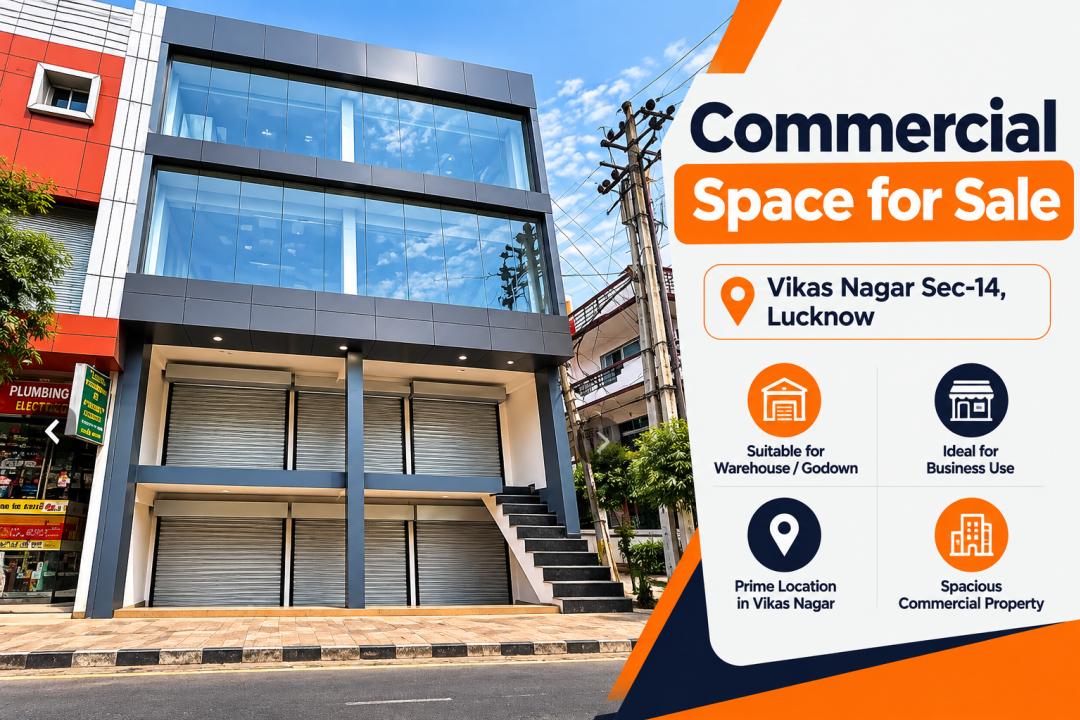
Choosing a Commercial Space for Lease is a decision that can directly affect how comfortably a business operates. The property may look suitable during the first visit, but factors such as location, monthly expenses, usable area, parking, accessibility and available facilities become much more important once the business starts operating from there.
A small retail shop, an office, a showroom and a service centre can have completely different space requirements. For example, a customer-facing business may need visibility and parking, while an office may give more importance to employee accessibility, internet connectivity and an efficient layout.
This is why commercial property should not be selected on rent alone. A better approach is to compare the complete cost, practical requirements and lease conditions before making a commitment.
What Makes a Commercial Space Suitable for Your Business?
A suitable commercial property is one that matches the business requirement, location, budget and day-to-day operations.
The cheapest property is not necessarily the most economical choice. Suppose two shops have similar sizes, but one is easier to reach and has better visibility. The second option may make more sense for a retail business even if its rent is slightly higher.
The same principle applies to an office. An attractive interior cannot compensate for poor accessibility, inadequate parking or insufficient workspace if these issues affect employees and clients every day.
Before starting your property search, clearly define:
- Type of business
- Required usable area
- Preferred location
- Maximum monthly budget
- Expected lease duration
- Parking requirements
- Customer or employee accessibility
- Interior and fit-out requirements
Having these points ready makes it easier to reject unsuitable properties early instead of spending time visiting every available option.
Important Factors to Consider
1. Location Should Match the Business
Location is one of the first things to evaluate because different businesses depend on different types of accessibility.
A retail shop or showroom may benefit from visibility, nearby markets and customer movement. An office may work better in an area that employees can reach conveniently. A warehouse may prioritise road access and loading facilities instead.
For someone searching for office space for rent in Lucknow, factors such as connectivity, nearby commercial activity, parking and employee travel time can be more relevant than simply choosing the most prominent location.
Also look at the surrounding area during different times of the day. A location that seems quiet during an afternoon visit may experience heavy traffic during business hours.
2. Calculate the Real Monthly Budget
Rent is only one part of the occupancy cost.
Depending on the property and agreement, you may also have to consider:
- Security deposit
- Maintenance or CAM charges
- Electricity and water
- Parking charges
- GST, where applicable
- Interior or fit-out expenses
- Signage and branding costs
- Repairs or modifications
Lease agreements address several aspects of the use of commercial property, including rent and deposit payments, maintenance, utilities, permitted use, lock-in periods, escalation and termination provisions.
Before signing a lease, calculate the estimated total cost of using the property rather than comparing only rent.
3. Check the Usable Space
A property can have a good advertised area but still feel smaller after furniture, partitions, storage and circulation space are considered.
Think about how the space will actually be used.
For an office, consider workstations, cabins, meeting space, reception and pantry requirements. For a shop, consider customer movement, display areas, storage and billing space. A showroom may require wider display areas and better frontage.
It is useful to make a rough layout before signing the agreement. If the required furniture or equipment cannot fit comfortably, the property may not be suitable regardless of how attractive the rent appears.
4. Look Beyond Basic Facilities
Facilities can influence both operating costs and convenience.
Depending on the business, check for:
- Parking
- Power backup
- Reliable water supply
- Washrooms
- Internet availability
- Lift access
- Security
- Fire-safety arrangements
- Loading/unloading access
- Signage space
- Air-conditioning provisions
Not every business needs every facility. The important point is to identify which ones are essential before comparing properties.
5. Understand the Lease Terms
Never make a decision based only on a verbal discussion about rent.
The agreement must clearly outline the commercial terms of the arrangement including permitted business activities, term of the lease, security deposit, maintenance obligations, rent reviews, termination, and all other material obligations. Commercial agreements may include other clauses relating to fit-outs, signage, CAM, subleasing and a number of other relevant matters.
If your business requires modifications, ask whether you are allowed to install partitions, signage, equipment or other fixtures. Get important permissions in writing rather than relying on informal assurances. Where legal, tax or registration requirements are involved, professional advice is sensible because requirements can vary depending on the state, property and nature of the business.
How to Shortlist the Right Commercial Property
A simple comparison process can make the search much more manageable.
Step 1: Set your requirements
Decide the location, approximate area, property type and maximum budget before contacting owners.
Step 2: Create a shortlist
Compare several properties instead of immediately choosing the first one that looks attractive.
Step 3: Visit the properties
Check the actual road access, surrounding businesses, parking, building condition, natural light, ventilation and usable space.
Step 4: Calculate total expenses
Add rent, deposit, maintenance, utilities, taxes where applicable and expected fit-out costs.
Step 5: Check suitability
Review whether the property can legally and practically be used for your planned business activity. Permitted use should also be reflected in the agreement.
Step 6: Review documents and agreement
Verify the landlord's details and property documents. If the premises is for business registration, confirm which documents are required. For example, for GST registration of rented premises, depending on the situation, supporting property documents and lease/rental agreements may be required.
Step 7: Negotiate before signing
Discuss rent, deposit, escalation, lock-in, notice period, maintenance and fit-out responsibilities before the final agreement is executed.
Common Mistakes to Avoid
One of the most common mistakes is choosing a property simply because its rent appears affordable. A low monthly rent can become less attractive when maintenance, renovation and other recurring expenses are included.
Another mistake is ignoring the surrounding area. A business may need customer parking, easy road access or a certain level of visibility. These requirements are difficult to fix after moving in.
Some tenants also underestimate the importance of the lock-in period. If the business changes direction or the location does not work as expected, an inflexible exit clause can create financial difficulties.
It is also risky to rely on verbal promises about repairs, parking, signage or future modifications. Important commitments should be included in the written agreement.
Finally, avoid rushing after seeing one attractive property. Comparing three or four realistic options can reveal differences in rent, usable space and facilities that may not be obvious initially.
Compare Properties Before Finalising the Lease
The most practical way to approach a commercial property search is to compare properties using the same criteria.
Create a simple table with columns such as location, monthly rent, area, property type, parking, maintenance, condition, facilities and lease terms. This makes the differences easier to understand and helps prevent an attractive photograph or low headline rent from influencing the decision too quickly.
For people searching for commercial property in Lucknow for rent, commercial space for rent in Lucknow or specific options such as shops for rent in Lucknow and showroom for rent in Lucknow, online property listings can make the initial comparison easier.
For example, Rentwala's commercial listings in Lucknow provide a relevant starting point for exploring commercial property options by location. The platform categorises commercial spaces separately, which can help property seekers narrow their search before arranging physical visits.
It is still important to verify the property's actual availability, condition, documents, charges and lease terms directly before making any financial commitment. An online listing should be treated as the beginning of the evaluation process, not a substitute for due diligence.
For broader property searches, Rentwala also includes commercial spaces alongside residential properties, plots and other property categories.
Finding the right commercial space requires more than comparing monthly rent. Location, usable area, total occupancy cost, facilities and lease conditions all influence whether a property will work for the business in the long run.
Start by defining your actual requirements, shortlist properties that fit those requirements and visit them personally. Compare the complete cost rather than just the advertised rent, and carefully review the agreement before signing.
Whether you are looking for an office, shop, showroom or another type of commercial rental property in Lucknow, taking time to compare your options can make the leasing decision more practical and informed.