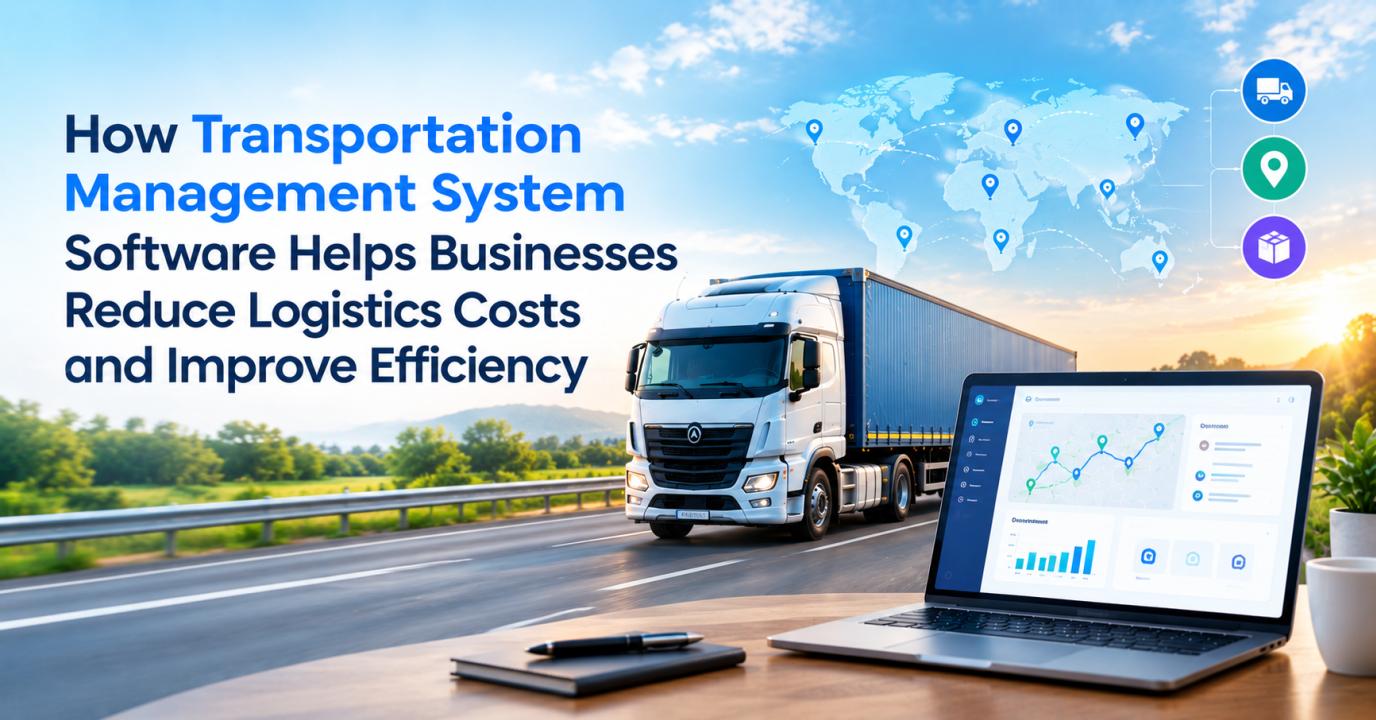
Logistics costs can quickly erode margins when businesses manage transportation through disconnected tools, manual processes, inefficient routes, and limited shipment visibility. Transportation management system software gives logistics teams a centralized way to plan, execute, track, and optimize transportation operations. By bringing shipment planning, carrier coordination, route optimization, tracking, and performance analysis into one system, businesses can control transportation spending while improving operational efficiency.
For logistics heads, COOs, and supply-chain managers, the value of a modern transportation management system software goes beyond automating routine tasks. It helps teams make faster decisions, improve asset utilization, reduce avoidable transportation expenses, and respond more effectively to disruptions.
What Is a Transportation Management System?
A transportation management system (TMS) is a technology platform that helps businesses manage transportation activities from planning through delivery. It can connect shipment information, transportation providers, vehicles, drivers, routes, orders, and operational data within a centralized environment.
Instead of relying on spreadsheets, emails, phone calls, and disconnected tracking systems, transportation teams can use TMS software to coordinate transportation workflows and gain better visibility into ongoing operations.
Depending on business requirements, a transportation management system can support capabilities such as:
Shipment and order management
Route planning and optimization
Carrier and transporter management
Vehicle and driver coordination
Real-time transportation visibility
Dispatch and scheduling
Freight and transportation cost management
Delivery tracking
Performance analytics and reporting
Integration with ERP, WMS, CRM, and other business systems
The result is a more connected transportation operation where teams can identify inefficiencies earlier and act on operational data instead of relying entirely on manual decisions.
How TMS Software Helps Reduce Logistics Costs
Transportation expenses involve more than fuel or freight rates. Empty miles, inefficient routes, vehicle downtime, poor load utilization, manual administration, delays, and missed delivery windows can all increase the overall cost of moving goods.
A well-designed transportation management system addresses these cost drivers across the transportation lifecycle.
1. Optimizes Routes and Reduces Unnecessary Miles
Poor route planning can lead to longer distances, unnecessary stops, excessive fuel consumption, and inefficient vehicle utilization.
A TMS can analyze factors such as distance, delivery locations, schedules, vehicle availability, and operational constraints to help planners identify more efficient routes. Route optimization also becomes more valuable when transportation teams manage multiple vehicles, locations, shipments, or delivery windows simultaneously.
Reducing unnecessary mileage can lower fuel consumption and vehicle operating costs while helping drivers complete more trips within available capacity.
2. Improves Vehicle and Asset Utilization
A vehicle that sits idle or returns without a suitable load represents unused transportation capacity.
Transportation teams can use centralized planning and operational visibility to understand vehicle availability, assigned shipments, route schedules, and utilization patterns. This makes it easier to identify underused assets and improve trip planning.
For businesses operating their own fleet, TMS capabilities can also complement dedicated Fleet Management Software by connecting transportation planning with vehicle-level operational data.
This combination can help businesses improve asset utilization while reducing avoidable idle time and operational inefficiencies.
3. Reduces Manual Administrative Work
Transportation operations often involve repetitive activities such as entering shipment information, coordinating with carriers, updating delivery statuses, checking schedules, and preparing reports.
When these activities remain manual, teams spend significant time moving information between spreadsheets, emails, and separate systems.
Logistics management software can automate many of these workflows and centralize operational information. This reduces repetitive administrative work and allows transportation teams to focus more on exception management, planning, cost control, and strategic decision-making.
4. Helps Control Transportation and Freight Costs
Transportation costs can vary based on carriers, routes, shipment volumes, vehicle types, distances, and service requirements.
A centralized TMS gives businesses better visibility into transportation activity and associated costs. Teams can analyze transportation performance, compare operational data, identify expensive routes, and detect recurring cost patterns.
This makes it easier to move from reactive cost control to proactive transportation management.
Instead of asking why transportation costs increased after the fact, managers can use historical and current operational data to identify where costs are accumulating and determine which processes require attention.
5. Improves Load Planning and Capacity Utilization
Poor load planning can result in partially utilized vehicles, unnecessary trips, and higher transportation costs.
A transportation management system can help teams coordinate shipments based on factors such as destination, capacity, timing, and vehicle availability. Better planning can increase the amount of freight moved per trip while reducing avoidable transportation movements.
For high-volume operations, even incremental improvements in load utilization can contribute to meaningful cost savings over time.
How a Transportation Management System Improves Operational Efficiency
Cost reduction is only one part of the equation. Transportation teams also need speed, visibility, reliability, and control to keep supply chains moving.
1. Provides Real-Time Transportation Visibility
Limited visibility creates uncertainty. When teams do not know where vehicles or shipments are, they may struggle to respond to delays, customer requests, or operational disruptions.
Modern transportation platforms can provide real-time tracking and centralized shipment information. Managers can monitor transportation activity, identify exceptions, and take action before minor disruptions become larger operational problems.
Improved visibility also helps teams communicate more accurate shipment and delivery information to internal stakeholders and customers.
2. Makes Dispatch and Scheduling More Efficient
Manual dispatching becomes increasingly difficult as shipment volumes, vehicles, drivers, and delivery locations increase.
A centralized TMS can help dispatch teams organize transportation requests, assign resources, manage schedules, and monitor execution from one environment.
This reduces unnecessary coordination and helps transportation teams respond faster when schedules change or exceptions occur.
3. Supports Better Decision-Making With Analytics
Transportation operations generate large amounts of data. However, data only creates value when teams can turn it into actionable information.
Transportation management systems can consolidate operational information and provide reports around areas such as transportation costs, route performance, shipment activity, vehicle utilization, delivery performance, and operational exceptions.
Managers can use these insights to identify recurring bottlenecks and determine where process improvements will have the greatest impact.
4. Improves Last-Mile Coordination
The final stage of transportation can be particularly complex because businesses need to manage multiple delivery locations, time windows, customer expectations, and driver activities.
Integrating TMS workflows with Delivery Management Software can help businesses connect broader transportation planning with last-mile execution.
This can support route planning, dispatch, real-time tracking, delivery status updates, proof of delivery, and other last-mile workflows without creating disconnected operational processes.
5. Enables Faster Exception Management
Transportation rarely operates exactly according to plan. Traffic, vehicle issues, weather, capacity constraints, delays, and changes in customer requirements can affect planned schedules.
The objective of a modern TMS is not simply to create an ideal plan. It should also help teams respond when actual operations differ from that plan.
With centralized visibility and alerts, transportation managers can identify exceptions faster and coordinate corrective actions before they create larger delays or additional costs.
Key Features to Look for in TMS Software
Businesses evaluating a transportation management system should focus on capabilities that directly support their operational and financial objectives.
Important features can include:
Route optimization and planning
Real-time vehicle and shipment tracking
Centralized dispatch management
Carrier and transporter management
Shipment scheduling
Load and capacity planning
Transportation cost monitoring
Automated alerts and notifications
Performance dashboards and analytics
Digital proof of delivery
ERP, WMS, CRM, and third-party integrations
Mobile applications for drivers and field teams
Configurable workflows and business rules
The right feature set will depend on shipment volume, transportation model, fleet structure, geographic coverage, and the level of automation required.
How to Measure the Business Impact of a TMS
Implementing TMS software should be connected to measurable operational goals. Businesses can track key performance indicators such as:
Transportation cost per shipment
Cost per mile
Empty miles
Vehicle utilization
On-time delivery rate
Average delivery time
Route efficiency
Fuel consumption
Driver productivity
Shipment visibility
Order-to-delivery cycle time
Manual processing time
Tracking these metrics before and after implementation helps leadership teams understand whether the transportation technology is delivering measurable operational improvements.
Choosing the Right Transportation Management System
A TMS should fit the way your transportation operation works rather than forcing your team into a rigid process.
Before selecting a solution, assess your current transportation workflows, major cost drivers, integration requirements, fleet structure, shipment volumes, and future scalability needs.
You should also consider whether the platform can integrate with existing enterprise systems and whether it supports the level of customization your operation requires.
For growing transportation networks, scalability is particularly important. The system should be capable of supporting additional vehicles, routes, carriers, locations, users, and shipment volumes without creating operational complexity.
The Future of Transportation Management Is More Connected
Transportation management is moving toward increasingly connected and data-driven operations. Real-time tracking, automation, advanced analytics, AI-assisted decision-making, telematics, and intelligent route planning are changing how businesses manage transportation.
The objective is not simply to automate existing processes. It is to create a transportation network that can identify inefficiencies, respond to changing conditions, and continuously improve operational performance.
For businesses dealing with rising transportation costs and increasingly complex logistics networks, investing in the right TMS can create a stronger foundation for scalable operations.
Final Thoughts
Reducing logistics costs requires more than negotiating lower freight rates. Businesses need to understand where transportation resources are being used, where inefficiencies occur, and how operational decisions affect the overall cost of moving goods.
Transportation management system software brings planning, execution, visibility, and analytics together to help businesses address these challenges systematically. From optimizing routes and improving vehicle utilization to reducing manual work and strengthening delivery visibility, the right TMS can improve both cost control and operational efficiency.
As transportation networks become more complex, businesses that centralize transportation data and automate critical workflows can make faster decisions, respond to disruptions more effectively, and build a more efficient logistics operation.