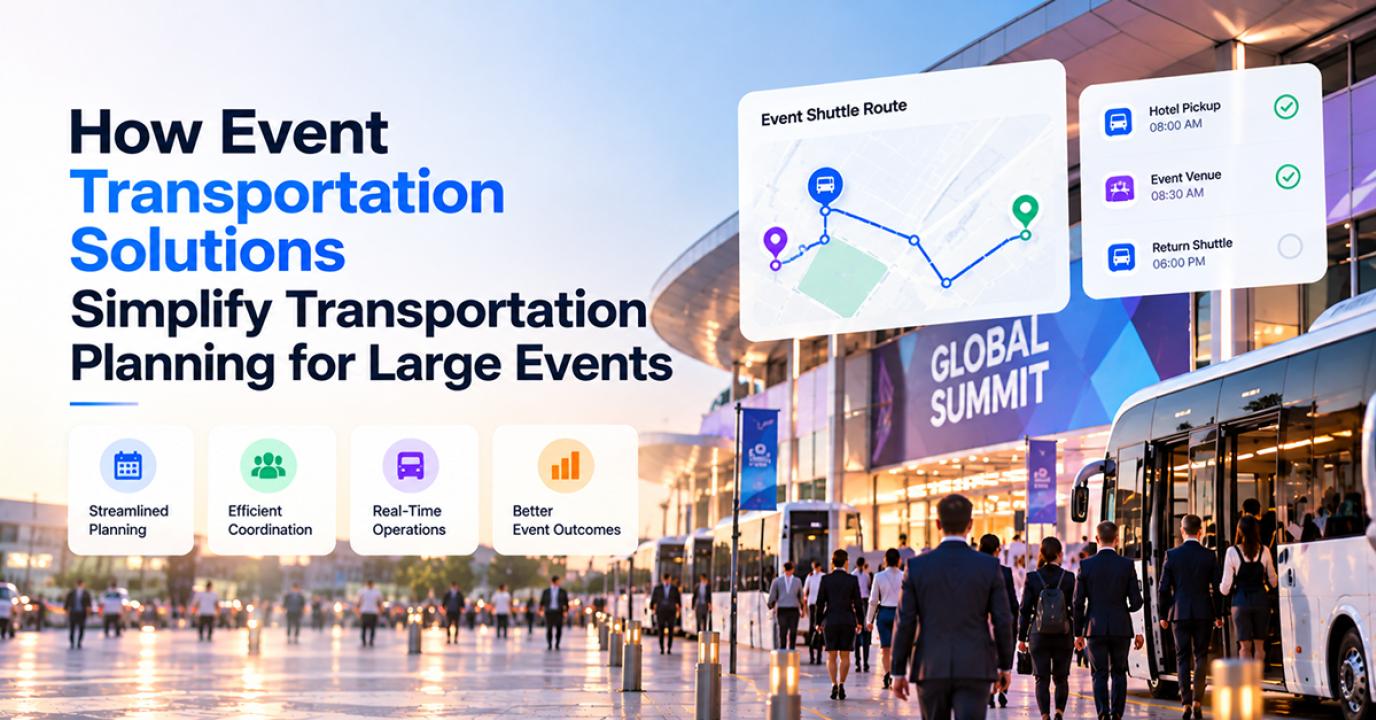
Large events can involve thousands of attendees, multiple venues, changing schedules, dozens of vehicles, and tight arrival and departure windows. Managing all of this through spreadsheets, calls, and disconnected tools quickly becomes difficult. Modern event transportation solutions help event planners and transportation managers centralize scheduling, dispatching, route coordination, passenger communication, and fleet visibility in one system, making complex event mobility easier to manage.
Whether you are coordinating a corporate conference, sports event, festival, wedding, exhibition, or multi-venue gathering, transportation directly affects the attendee experience. A well-planned transportation operation reduces waiting, improves punctuality, and gives planners better control when conditions change.
Why Transportation Planning Becomes Difficult at Large Events
Transportation planning becomes increasingly complex as an event grows. A small event may require only a few vehicles and simple pickup arrangements. A large event can involve multiple pickup points, hotels, parking areas, venues, shuttle loops, VIP movements, and driver teams operating at the same time.
Several challenges make manual planning inefficient:
Matching vehicles with changing passenger demand
Assigning drivers across multiple routes and shifts
Coordinating pickup and drop-off schedules
Managing traffic, road closures, and venue access restrictions
Communicating delays and schedule changes
Tracking vehicles during active trips
Supporting VIP, accessibility, and priority transportation
Keeping planners, dispatchers, drivers, and attendees aligned
Without centralized visibility, even a minor delay can affect several routes. Transportation teams need the ability to monitor operations in real time and adjust schedules without rebuilding the entire plan.
How Event Transportation Solutions Simplify Planning
1. Centralize Transportation Data
One of the biggest advantages of digital transportation management is centralized information.
Instead of maintaining separate spreadsheets for vehicles, drivers, routes, passengers, and schedules, event teams can manage these details through a unified platform. This creates a single operational view for planners and transportation managers.
A centralized dashboard can provide visibility into vehicle assignments, driver activities, routes, bookings, and transportation status. This helps teams identify conflicts earlier and make decisions using current operational information.
For large events, centralized planning also makes it easier to coordinate transportation across several locations and event sessions.
2. Automate Scheduling and Dispatch
Creating transportation schedules manually can consume significant time, particularly when vehicle availability and passenger requirements change throughout the event.
Modern event transportation scheduling software can help automate repetitive scheduling and dispatch tasks. Planners can assign vehicles and drivers based on route requirements, capacity, availability, and timing.
Automated dispatching can also reduce assignment errors while allowing transportation managers to retain manual control when special situations require human intervention.
This becomes especially valuable when multiple vehicles need to depart within narrow time windows. Instead of coordinating every assignment through phone calls and messages, teams can manage dispatch activity from a centralized system.
3. Improve Shuttle and Route Coordination
Shuttle operations are often the backbone of transportation for large conferences, festivals, sporting events, and corporate gatherings.
When several hotels, parking areas, and venues are involved, planners need to create routes that balance passenger demand with available vehicle capacity. Continuous loops, scheduled departures, and venue transfers all require careful coordination.
An integrated Event Shuttle Software platform can help manage shuttle schedules, pickup points, route information, and real-time transportation updates.
This allows transportation teams to provide attendees with clearer pickup instructions while giving dispatchers better visibility into active shuttle operations.
4. Provide Real-Time Vehicle Visibility
A transportation plan is only useful if the team can respond when reality differs from the plan.
Traffic congestion, delayed sessions, unexpected passenger demand, road restrictions, and vehicle issues can quickly disrupt an event schedule. Real-time vehicle tracking gives transportation managers greater visibility into what is happening on the ground.
Teams can monitor vehicle locations, review estimated arrival times, identify delays, and communicate route changes when necessary.
For attendees, real-time updates can reduce uncertainty. Instead of waiting without knowing when a shuttle will arrive, passengers can receive information about arrivals, delays, pickup points, or schedule changes. Modern event transportation platforms can support live shuttle tracking, ETA visibility, and automated notifications.
5. Improve Fleet Utilization
Large events often require a combination of buses, vans, cars, shuttles, and other vehicles. Managing these resources efficiently can have a direct impact on transportation costs.
Without proper visibility, some vehicles may remain idle while other routes experience capacity pressure. Fleet-focused technology helps transportation managers understand where vehicles are assigned and how they are being utilized.
Event Transportation Fleet Management can support vehicle assignment, driver coordination, route visibility, maintenance-related information, and operational monitoring from a centralized environment.
Better fleet coordination helps planners reduce unnecessary vehicle movement, improve utilization, and make adjustments as demand changes during the event.
6. Keep Drivers and Ground Teams Aligned
Drivers are responsible for executing the transportation plan on the ground, but event conditions can change quickly.
Drivers may need updated pickup instructions, revised routes, new parking directions, or information about passenger demand. Sending these updates through multiple communication channels can create confusion.
Modern event transportation systems can provide drivers with trip instructions, route information, pickup details, navigation support, and direct communication with dispatch teams.
Ground teams can also use centralized workflows to report incidents, manage transportation zones, and coordinate activities around pickup and drop-off areas. This creates a stronger connection between planning and execution.
7. Strengthen Attendee Communication
Transportation is part of the overall event experience. Even when the event itself is well organized, long waits or unclear pickup instructions can create frustration.
Digital transportation platforms can give attendees access to important trip information before and during their journeys. Depending on the system, this can include pickup locations, route information, vehicle details, live ETAs, and service alerts.
Automated notifications can also help attendees stay informed when transportation schedules change.
This is particularly important for large events where attendees may be unfamiliar with the venue, hotel locations, parking areas, or designated pickup zones.
8. Manage VIP and Priority Transportation
Large events frequently include executives, speakers, sponsors, performers, or other VIP guests who require dedicated transportation arrangements.
Managing these trips alongside standard attendee transportation requires additional coordination. A centralized platform can help transportation teams prioritize specific journeys, assign appropriate vehicles, and monitor critical trips.
Priority dispatching and dedicated routing can help ensure that important movements receive the required attention without disrupting the broader transportation operation.
9. Respond Faster When Plans Change
No event transportation plan remains completely static.
A keynote may run late. A venue entrance may become unavailable. Traffic conditions may deteriorate. Passenger demand may increase unexpectedly. A vehicle may require replacement.
The value of digital event transport solutions becomes particularly clear in these situations.
Instead of manually rebuilding schedules, transportation managers can update routes, assignments, or dispatch instructions and communicate those changes to the relevant teams. This gives planners greater flexibility while reducing the operational impact of unexpected events.
What to Look for in an Event Transportation System
When evaluating event transportation systems, event planners should focus on capabilities that support both planning and real-time execution.
Key capabilities include:
Centralized transportation management
Vehicle and driver scheduling
Automated and manual dispatching
Route and trip management
Live vehicle tracking
Real-time ETA visibility
Attendee notifications
Driver communication
Fleet monitoring
VIP and priority ride management
Role-based access
Reporting and operational insights
Mobile access for drivers and attendees
Integration with existing event or transportation workflows
The right solution should also be flexible enough to support different event formats and transportation models. A corporate conference may require hotel-to-venue shuttles, while a festival may need continuous loops and parking transfers.
Supporting Corporate Event Transportation at Scale
Corporate events often involve multiple stakeholders, fixed schedules, and high expectations around punctuality. Conferences, annual meetings, product launches, employee events, and executive gatherings may require transportation between airports, hotels, offices, conference centers, and other venues.
Digital corporate event transportation tools can help teams coordinate booking, dispatch, scheduling, live route monitoring, alerts, and reporting from a centralized environment.
This allows transportation managers to focus less on manual coordination and more on maintaining reliable service throughout the event.
Turn Complex Event Mobility Into a Controlled Operation
Transportation planning does not have to become more complicated as your event grows. The right technology can bring scheduling, dispatching, fleet coordination, driver communication, attendee updates, and real-time visibility into a single operational workflow.
For event planners and transportation managers, event transportation solutions provide a practical way to reduce manual coordination, respond faster to disruptions, improve vehicle utilization, and create a smoother experience for attendees.
As events become larger and more operationally complex, investing in a centralized transportation platform can help your team move from reactive coordination to proactive transportation management. The result is better visibility, more efficient operations, and more reliable mobility from the first pickup to the final drop-off.